
Asprumnas Ready to Support Public Housing Programme, Proposes Special Financing Scheme for Low-Income Earners
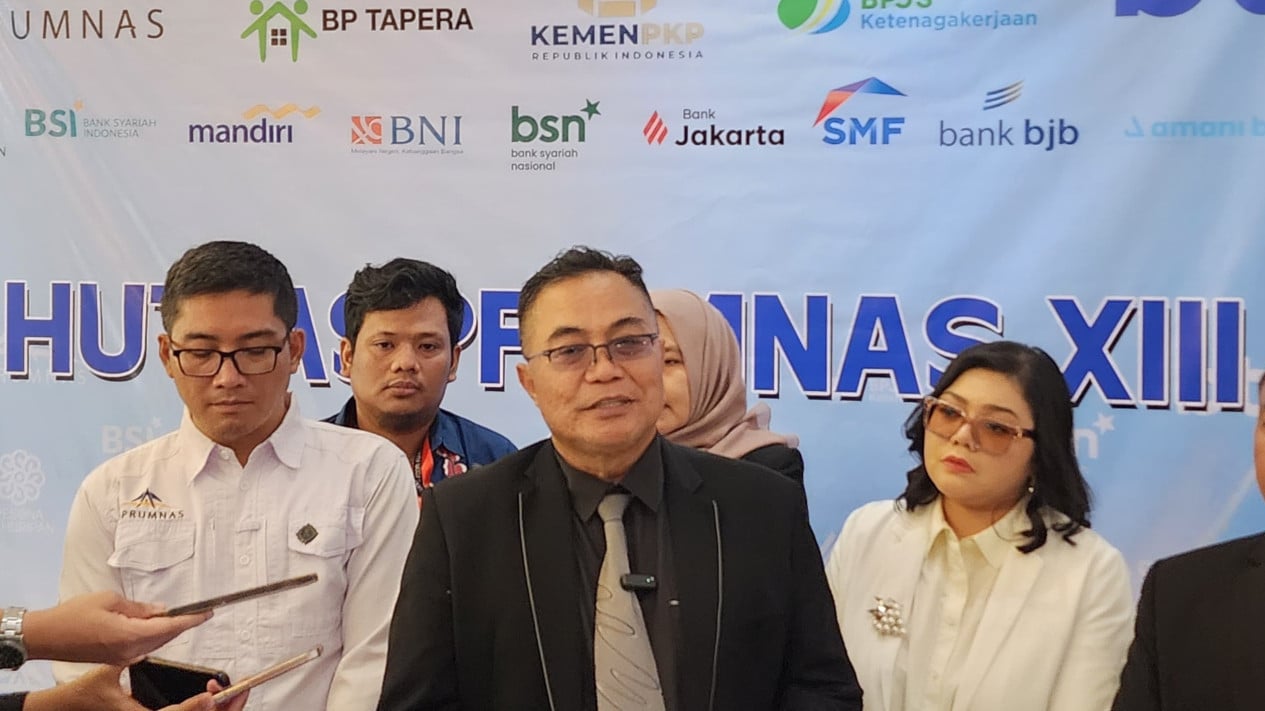
Jakarta, VIVA – The Minister of Housing and Settlement Areas (PKP), Maruarar Sirait, has responded positively to the commitment of the National Simple/Healthy Housing Developers Association (Asprumnas) in supporting the accelerated provision of homes for the public. He commended the association’s role in continuing to work in synergy with the government and opened the door to expanding the scope of cooperation in the future.
“I am pleased that Asprumnas has supported the government’s programme, particularly in the field of public housing; perhaps later its size or reach will be enlarged,” said Minister Maruarar Sirait whilst attending Asprumnas’s 13th anniversary and National Working Meeting in Jakarta on Monday, 20 July 2026.
In response, the Chairman of Asprumnas, M. Syawali Pratna, affirmed that the primary focus of the association’s National Working Meeting (Rakernas) agenda is to fully champion the government’s programme in order to meet the need for decent housing for the wider public.
This step is considered crucial given that the national housing shortage figure has reached deeply concerning levels.
“The foremost priority is certainly the provision of decent homes for the wider public. So the association is focused on building a strong ecosystem capable of unravelling the property backlog that has persisted, which now stands in the double digits. This is our major task in championing the government’s programme,” said M. Syawali Pratna.
Nevertheless, Syawali offered a critical note regarding the currently running subsidised housing financing schemes, including the option of long tenors of up to 40 years, which he deemed inadequate in absorbing the needs of low-income communities (MBR). The majority of MBR groups in the field still struggle to access banking because they are categorised as unbankable.
“We need to be more attractive in shaping new schemes, because the existing schemes have not been optimal. Many in the MBR group cannot gain access because they are regarded as unbankable. It is not only a matter of SLIK issues, but they genuinely have no credit history, so banks cannot accept them,” Syawali explained.
For this reason, Asprumnas is encouraging the emergence of new financing scheme variations that do not rely solely on formal financial institutions, so that the distribution of subsidised homes can genuinely reach the intended targets.
“This means that, for instance, if the government could consider a new scheme that does not involve financial institutions, that would be better for us to untangle this property backlog more quickly,” he asserted.