
Asprindo Proposes Hybrid Scheme for Andaman Block Development
The Indonesian Bumiputera Entrepreneurs Association (Asprindo) has proposed a hybrid scheme for the development of the Andaman Block as a middle ground between investment interests and regional economic benefits. This proposal emerges amidst discussions regarding the Plan of Development (POD) for South Andaman, which is currently awaiting a government decision.
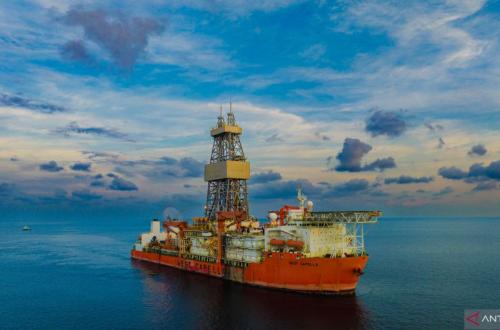
Asprindo Chairman Jose Rizal stated that two main options are currently being considered for the gas project’s development. The first option involves processing all gas offshore using Floating Production Storage Offloading (FPSO) facilities, as proposed by the operator. The second option involves processing all gas onshore through an Onshore Processing Facility (OPF), an approach advocated by the Aceh Government.
According to Jose, each option carries different consequences for both investment and the economic benefits received by the region. Under the FPSO scheme, gas is processed directly at sea, which is considered more investment-efficient and allows for an accelerated Final Investment Decision (FID). However, the economic impact on local communities is deemed relatively limited.
Conversely, the OPF scheme requires the construction of additional onshore infrastructure, necessitating larger-scale investment. On the other hand, this model is considered capable of creating broader employment opportunities and supporting the energy needs of industries in Aceh.
Jose believes a hybrid scheme could serve as a solution to accommodate both interests. “Investors are eased, the central government is not disadvantaged, and the people of Aceh will still receive long-term benefits,” Jose said in a written statement on Sunday (14/06/2026).
In his proposal, approximately 60 per cent of the gas would be processed via FPSO facilities to maintain the project’s economic viability and provide certainty for investors. The remaining 40 per cent would be piped to onshore processing facilities built in Aceh.
“Do not put everything offshore. Do not put everything onshore. Split it: 60 per cent of the gas processed via FPSO, so that investor Mubadala remains confident and the 2026 FID proceeds. The remaining 40 per cent of the gas is piped to a mini OPF in Lhokseumawe. This is sufficient to power PLN’s power plants in Aceh and revitalise Pupuk Iskandar Muda. This could simultaneously create 3,000 to 5,000 permanent jobs for the people of Aceh,” he explained.
According to Jose, this approach can maintain a balance between state revenue, investment certainty, and economic benefits for local communities. “The central government still receives state revenue. Investors get certainty. The people of Aceh get jobs and cheap gas to build their own industries,” he added.
He warned that discussions regarding the development of the Andaman Block should not be prolonged, as this could hinder the realisation of investments estimated to reach 7 billion USD. Jose also encouraged the Aceh Government to propose the hybrid option to the central government as an alternative solution to the gas project development controversy. “Aceh agrees to the POD, provided the scheme is hybrid and gas for the people of Aceh is prioritised,” he added.
Jose noted that the development of the Andaman Block needs to consider not only investment aspects but also the long-term economic impacts that can be felt by the communities in the producing regions.