
Askarindo urges gradual transition towards 2027 zero ODOL implementation
Jakarta (ANTARA) - The Indonesian Bodywork Association (Askarindo) is urging that the implementation of zero over dimension overloading (ODOL) in 2027 be carried out gradually, based on the commitment of business players. This is to ensure that fleet normalisation proceeds optimally, logistics operations remain stable, jobs are protected, and inflation risks are controlled.
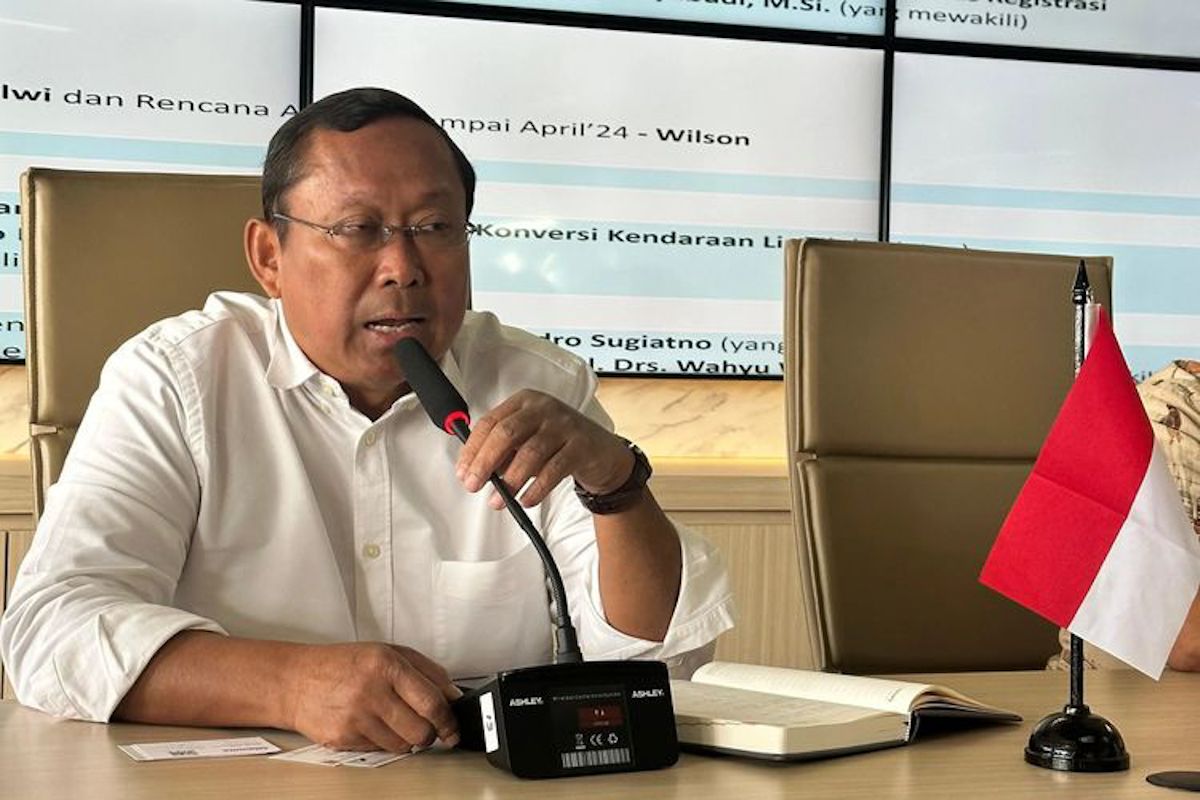
Vice Chairman of the Askarindo Central Executive Board, Budi Setiyadi, stated that normalising ODOL trucks requires time, and companies with large fleets need relaxation so that adjustments can be carried out gradually and optimally.
“Especially for companies that already possess a significant number of trucks and have numerous over-dimension violations, they need at least some time to undergo normalisation, followed by a period of relaxation,” Budi confirmed in Jakarta on Saturday.
Therefore, the association requests that the enforcement of zero ODOL not be based on existing violations, but rather on the commitment of the companies involved. This is because companies require time to comply with the zero ODOL regulations.
“I have previously conveyed this to colleagues at the Ministry of Transportation,” he said.
According to him, the enforcement of zero ODOL laws should consider a company’s commitment to normalising its fleet, rather than solely focusing on violations that are still being discovered.
He emphasised that companies must be given the opportunity to rectify their fleets while continuing to operate, ensuring that logistics activities proceed and drivers maintain their livelihoods during the normalisation process.
“This means that if a company’s commitment is already evident, law enforcement should not be applied immediately. Let them fix their trucks while remaining operational so that drivers can continue to work,” he said.
Consequently, he hopes that until mid-next year, law enforcement will be conducted selectively and not sporadically, particularly for companies that have demonstrated a commitment to fleet adjustment.
“Making these adjustments takes a long time, and that is indeed a challenge in implementing zero ODOL 2027,” he noted.
According to Budi, the normalisation of ODOL trucks also has the potential to affect corporate cash flow. Therefore, business players require strategies to ensure that the fleet adjustment process does not disrupt logistics transport operations.
He hopes the Ministry of Transportation will prioritise the commitment of cargo owners and vehicle owners in executing fleet normalisation before implementing full-scale law enforcement.
Budi suggested that the implementation of zero ODOL starting in early 2027 could be done selectively and gradually. Law enforcement is expected not to be applied sporadically against companies currently completing their fleet normalisation processes.
“The important thing is that there is commitment from the company,” he said.
Furthermore, he noted that the impact of ODOL normalisation and law enforcement on rising logistics costs, which could lead to increased commodity prices, must be considered.
“The issue is that this affects the livelihoods of many people. We must ensure that once ODOL normalisation is implemented, there is no inflation in various regions due to high logistics costs,” he said.
He also expressed hope for government intervention to provide incentives for truck owners who are committed to normalisation.
“So far, the government has never provided subsidies for logistics transport,” he added.
On the other hand, he also highlighted that many bodywork manufacturers (karoseri) have not yet met the required licensing standards. He noted that this also poses a challenge to achieving zero ODOL.
“Products from bodywork manufacturers must adhere to the regulations of the Ministry of Transportation, regarding both dimensions and the necessary components required by regulatory aspects,” he said.
Meanwhile, the government, through the Directorate General of Land Transportation, Ministry of Transportation (Kemenhub), continues to make preparations to mature the steps towards implementing zero ODOL in early January 2027.
Various policies and efforts are being undertaken, including the operation of ETLE HUB (Electronic Traffic Law Enforcement Hub), which serves as electronic evidence for recording violations regarding excess dimensions and loads, as well as the preparation of the List of Problem Identification (DIM) for the Draft Law on the Third Amendment to Law Number 22 of 2009.
Furthermore, the government is also undertaking improvements for freight vehicles from upstream to downstream.
Director General of Land Transportation, Aan Suhanan, stated that the government is striving to strengthen the supervision of freight vehicles, one method being through the implementation of ETLE HUB.
“The goal of utilising technology is not merely to increase the number of enforcement actions, but also to encourage compliance, improve safety, protect road infrastructure, and build a fairer logistics ecosystem,” Aan said in a written statement in Jakarta on Thursday (24/9).