
Asia's New Magnet: Indonesia Enters Top Five Global Investment Destinations - Stability
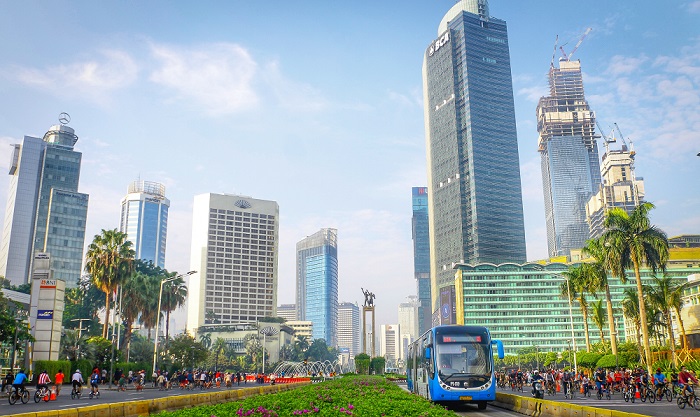
Amid geopolitical uncertainties and global supply chain shifts, Indonesia is solidifying its position as a world investment magnet. The latest Opportunity Index 2026 report places Indonesia fifth globally, surpassing several advanced nations. Downstreaming of natural resources and the explosion of the digital economy are the main engines attracting major investors.
The global economic landscape in 2026 marks a new chapter for developing countries in Asia. In the Opportunity Index 2026 report released by CS Global Partners, a dramatic shift has occurred on the world investment opportunity map. Indonesia, Southeast Asia’s largest archipelago nation, has successfully secured fifth place in the list of the world’s top economic opportunity destinations with a score of 74.2.
This achievement places Indonesia in the elite ranks alongside other global economic giants: China in first place (87.4), followed by the United States (84.7), India (78.5), and Japan (74.8). Indonesia’s success in breaking into the top five is not merely a statistical figure but a reflection of its fundamental economic resilience, which has continued to grow steadily at 5 percent in recent years.
Engines of Growth: Downstreaming and Demographics
There are two main pillars that make Indonesia so attractive to global investors today. The first is the strategic policy of downstreaming natural resources. The government is no longer merely exporting raw materials such as nickel or coal but has shifted to value-added processing domestically.
This policy has triggered massive capital inflows, particularly in the electric vehicle (EV) sector, clean energy, and semiconductors. Investors now see Indonesia not only as a raw material supplier but as a future manufacturing hub at the heart of Asia.
The second pillar is the demographic dividend. With a continuously growing young population, Indonesia has a massive and technology-adaptive workforce. This is driving the emergence of a new consumptive middle class and a thriving digital economy. Digital infrastructure projects are now attracting global technology companies to build data centres and artificial intelligence (AI) facilities in the country.
Regional Dynamics and Asia’s Strength
The report affirms that Asia is now the epicentre of global economic dynamics. Alongside India and Vietnam, Indonesia is leading the wave of manufacturing diversification as global companies begin relocating their supply chains.
“Indonesia’s rise in this ranking reflects the growing appeal of a resource-rich economy capable of embracing technological transformation,” the report states. The scale of this archipelago economy, combined with its contribution to global growth, makes it a market that serious investors can no longer ignore.
However, amid this optimism, challenges remain. Geopolitical tensions in the Middle East, for example, demonstrate how quickly economic opportunities can be disrupted by regional conflicts. Additionally, competition within Southeast Asia itself is increasingly fierce, with Vietnam also targeting the position of a major manufacturing hub through aggressive infrastructure investments.
Towards a Future Economy
One differentiating factor in this year’s index is the emphasis on economic potential rather than output volume alone. Focus on an environment that enables businesses and individuals to thrive is the key. In this regard, Indonesia is assessed as having successfully created a business-friendly ecosystem through infrastructure upgrades and national priorities under the new administration.
The AI sector is also starting to be eyed as a new opportunity. Countries that invest seriously in this future technology are believed to have sustainable competitive advantages. Indonesia, with its digitally literate population, has the basic capital to integrate AI into its services and manufacturing sectors to boost productivity.
For high-net-worth individuals (HNWIs), Indonesia offers a dynamic where ambition and hard work are rewarded commensurately. The presence of various investment-based residency programmes also serves as an entry point for global talent and capital to participate in national development.
Reflection and Challenges
Although in the top five, Indonesia’s journey is still long to match the market depth of China or the innovation of the United States. Improving human resource quality, policy consistency, and political stability are absolute requirements to maintain or even improve this position.
This success in 2026 should be viewed as momentum. In a world that is increasingly connected yet volatile, Indonesia has proven itself as a safe harbour for global capital. The next challenge is to ensure that this investment flow not only strengthens GDP figures but also delivers real impacts for equitable welfare across the archipelago.
Key Data from Opportunity Index 2026:
China: 87.4
United States: 84.7
India: 78.5
Japan: 74.8
Indonesia: 74.2
Source: Opportunity Index 2026, CS Global Partners.