
Asia's Irony: Trade Surpluses Pile Up, Yet Currencies Continue to Plummet
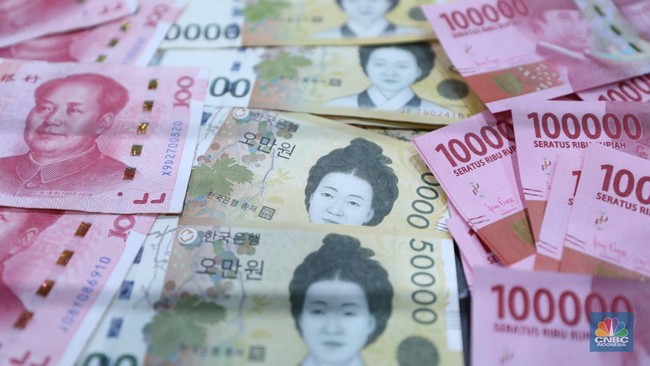
Several Asian countries are still recording large trade surpluses. However, this situation does not always strengthen their currencies against the US dollar. This phenomenon is noteworthy because, in theory, countries with large trade surpluses typically have stronger currencies. A surplus means exports exceed imports, which should increase demand for the country’s currency. Yet, the current situation in Asia is not that straightforward. Large Surpluses, But Currencies Remain Under Pressure Indonesia provides one of the clearest examples of a trade surplus that does not automatically strengthen the currency. The Central Statistics Agency (BPS) recorded Indonesia’s trade balance with a surplus of US$3.32 billion in March 2026. This achievement marks 71 consecutive months of trade surplus since May 2020. However, this long streak of surpluses has not made the rupiah strong. From May 2020 to the end of April 2026, the rupiah exchange rate has depreciated by around 15% against the US dollar. Similar phenomena are observed in other Asian countries, particularly South Korea and Vietnam. Both have recorded trends of trade surpluses, but their currencies remain under pressure from the US dollar. South Korea, for instance, recorded a trade surplus of US$23.77 billion in April 2026. This also marks 15 consecutive months of trade surplus, or since around February 2025. The surplus was mainly supported by strong semiconductor exports, in line with high global demand related to artificial intelligence (AI). However, this surplus trend did not immediately strengthen the South Korean won. According to Refinitiv, during the period of trade surplus, the won still depreciated by around 1.03% against the US dollar. Vietnam also shows the same pattern. The country has recorded a trade surplus for 10 consecutive years since 2016. In 2025, Vietnam’s trade surplus remained in the range of US$20 billion to US$21.2 billion, indicating that the country’s export performance remains solid. Nevertheless, the Vietnamese dong continues to weaken. Over the past five years, the dong has depreciated by around 14.25% against the greenback. This condition shows that a trade balance surplus is indeed important, but it is not the only determinant of exchange rate direction. Citing Commerzbank analysis, the relationship between trade surpluses and currency strengthening has now weakened. Currency movements are no longer determined solely by the trade balance but are also influenced by capital flows, central bank policies, and the dominance of the US dollar in the global financial system. The Role of Central Banks and Currency Interventions One of the main factors preventing Asian currencies from automatically strengthening is central bank policy. Many central banks in Asia do not fully allow their exchange rates to move freely. They maintain currency stability using various instruments, including interventions in the foreign exchange market and management of foreign exchange reserves. Central banks also must balance multiple interests. On one hand, a currency that is too weak can add inflationary pressure because import prices become more expensive. On the other hand, a currency that is too strong can disrupt export competitiveness. Therefore, monetary authorities in Asia tend to keep their currencies stable and not strengthen too quickly, especially for countries whose economies are highly dependent on exports. The US Dollar Remains King Another equally important factor is the dominance of the US dollar. In global trade and financing, the US dollar remains the primary currency. Many export-import transactions, commodity payments, and international financing still use the US dollar. As a result, demand for the dollar remains high, even though many Asian countries record trade surpluses. Additionally, Federal Reserve (The Fed) interest rate policies exert significant pressure on Asian currencies. When US interest rates are high, dollar-based assets become more attractive. Global investors tend to place their funds in US dollar instruments. This inflow of capital into dollar assets ultimately creates pressure on Asian currencies, even though the region’s trade fundamentals are actually strong. Capital Flows Can Override Trade Surpluses In the increasingly integrated era of global finance, capital flows now have a very significant influence on exchange rates. Foreign direct investment still flows into manufacturing hubs like Vietnam and Thailand. However, portfolio investment flows can move very quickly following global sentiment. When global investors tend to avoid risk, funds can exit emerging markets and return to safe assets like the US dollar and US government bonds. At the same time, Asian institutional investors are increasingly placing funds abroad. This capital outflow can offset the positive impact of trade surpluses on domestic currencies. In other words, trade surpluses do provide support, but pressure from capital flows can make currencies remain difficult to strengthen. Each Asian Country Has Its Own Story Commerzbank also highlights that currency dynamics in Asia cannot be explained by the same pattern. Manufacturing countries like South Korea and Taiwan have different characteristics from commodity-exporting countries like Indonesia and Malaysia. Meanwhile, financial centres like Singapore and Hong Kong have dynamics more influenced by international capital mobility. Manufacturing countries usually strive to keep exchange rates competitive for exports. Commodity countries are more sensitive to