
Asia’s EVolution: China’s electric vehicle dreams meet the realities of wear and tear
Asia’s EVolution: China’s electric vehicle dreams meet the realities of wear and tear
As China’s electric cars age, the promise of cheap, clean mobility is colliding with the practical costs of battery degradation and upkeep. CNA unpacks the issue as part of a series examining the forces powering Asia’s electric transition.
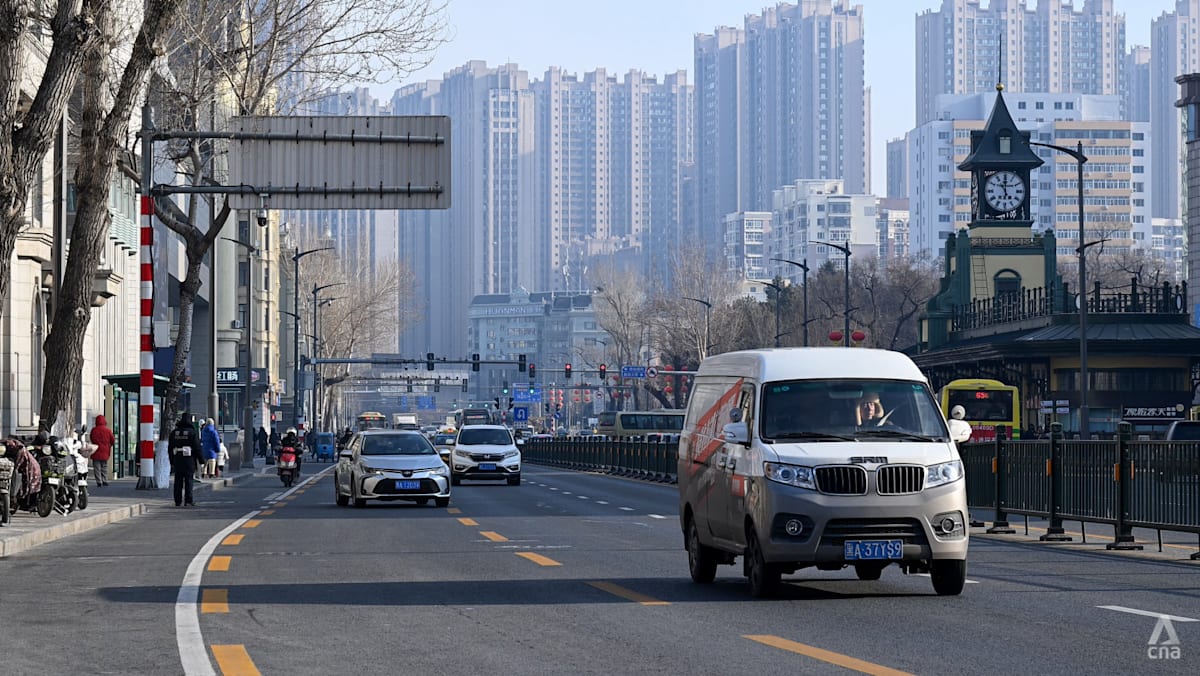
HARBIN/BEIJING: Snug inside his electric vehicle (EV) as snow and -15°C cold grip the streets of Harbin in northeast China, Zhao Li waits as the minutes tick by - not in traffic, but at a roadside charging station.
“I bought this electric car thinking I would save on petrol,” said the 45-year-old white-collar worker.
Charging Zhao’s EV costs under 100 yuan (US$14.40), compared with about 350 yuan to fill the 50-litre tank of his previous petrol car.
“Who knew I’d end up spending so much more time charging instead. Time is money - I think I’ve lost more than I’ve gained,” he told CNA, adding that a typical charging session at a fast-charging station takes him around 30 minutes.
What frustrates Zhao most is the growing gap between what his dashboard promises and the reality on the road.
In extreme cold - and increasingly as the vehicle ages - he said the distance he can actually drive often falls well short of the remaining range displayed on his screen.
When Zhao bought the brand-new car two years ago, it was advertised with a range of about 450km on a full charge - enough to cover his daily commute for an entire work week.
“In cold weather, I’m getting barely half of what was promised,” Zhao said, adding that he now has to charge the vehicle about twice a week, compared with roughly once weekly under normal conditions.
The limitations have reshaped how he uses the car. “Now I mostly use it for short trips on weekends - running errands or going to the mall,” he said.
“For longer distances, I rely on a hybrid car at home. It doesn’t have these problems.”
Zhao’s experience reflects a reality confronting China’s early EV adopters: as vehicles get older, more of the long-term costs - in time, money and convenience - fall on owners.
Climate is proving an unforgiving stress test, particularly for batteries, while ageing hardware and discontinued software updates can affect everything from navigation to driver-assistance features.
After more than a decade of rapid adoption, these growing pains in the world’s largest and most mature EV market are testing the promise of cleaner, cheaper mobility - and offering a case study for regions such as Southeast Asia, where EV adoption is gathering pace.
WEATHERING THE ENVIRONMENT
The appeal of EVs comes from their lower day-to-day running costs, quieter ride and smoother acceleration, as well as reduced maintenance needs due to having fewer moving parts than conventional petrol cars.
These advantages are most evident in short-distance commuting, where charging costs remain low and performance is generally consistent.
But the gap between promise and reality often widens fastest when the weather comes into play - from the deep freeze of China’s northeastern winters to the heat and humidity typical in the south.
Climate acts as a stress multiplier for EVs as they age, said Mei Ao, founder and chief executive of Guangzhou-based battery technology firm LEADINX.
With more than a decade of experience overseeing EV battery development at Chinese automaker GAC, Mei has worked across the full lifecycle of battery packs, from research and mass production to safety standards.
Battery degradation, he explained, typically shows up in two main ways. “One is capacity loss - the battery can store less energy,” Mei told CNA.
“The other is an increase in internal resistance over time, which affects power output.”
For drivers, that translates into shorter range and weaker performance, including slower acceleration.
Cold weather reduces battery capacity, but the effect is often amplified by heating needs, creating a sharper - and sometimes misleading - sense that batteries are deteriorating rapidly.
“At -10°C or -20°C, battery capacity might only drop by around 10 to 20 per cent,” he said. “But users often feel like the range has been cut in half.”
That perception, he added, is largely because far more energy is diverted to heating.
“Heating the cabin and other systems uses a lot of electricity in winter,” Mei said. “So the energy left for driving is much less, even though the battery itself hasn’t degraded that much.”
Charging in frigid weather can also have lasting effects on battery health, said analysts.
In cold conditions, lithium ions - which carry charge inside most EV batteries - move more slowly, increasing the risk that lithium deposits as metal rather than storing energy properly, said Hung Dinh Nguyen, an associate professor from the School of Electrical and Electronic Engineering at Singapore’s Nanyang Technological University (NTU).
“This permanently reduces capacity,” he said, adding that in severe cases it can also raise safety concerns.
At the other end of the spectrum, hot and humid climates pose a different challenge.
While high temperatures do not necessarily reduce driving range immediately, Nguyen said they accelerate long-term battery degradation.
“Research shows that at temperatures around 55°C, battery capacity loss can be an order of magnitude higher than at moderate temperatures,” he said. Prolonged heat also causes internal damage.
Those risks are compounded in humid environments as heat dissipation becomes less efficient, further raising internal temperatures and the risk of battery failure, Nguyen said.
While modern EVs are equipped with thermal management systems to mitigate these risks, prolonged exposure to extreme temperatures places sustained strain on batteries and supporting systems.
Extreme cold and heat do not simply affect EV performance; they shape how quickly owners begin to feel the limits of ageing technology, often long before a car reaches the end of its advertised lifespan, said Mei from LEADINX.
PERILS OF AN A
Source: jawawa.id (https://jawawa.id/newsitem/asias-evolution-chinas-electric-vehicle-dreams-meet-the-realities-of-wear-and-tear-1775659912)
Originally published by CNA (https://www.channelnewsasia.com/east-asia/china-electric-vehicles-age-costs-range-charging-repairs-time-money-6004211)