
Asia’s Currencies Under Heavy Pressure: Ringgit and Rupiah Slump, but Won Gains
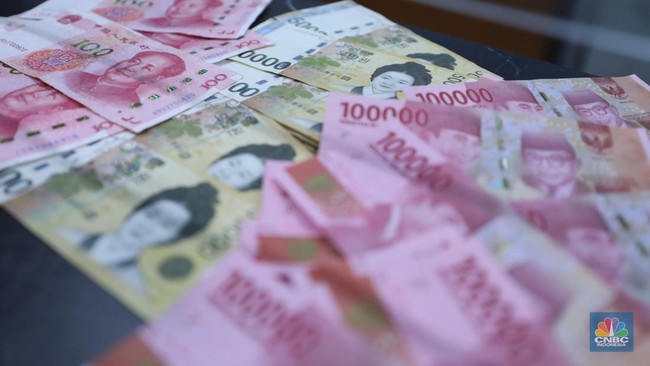
Jakarta, CNBC Indonesia — Most Asian currencies weakened against the US dollar in trading on Friday (6 November 2026), the final trading day of the week. Although the US dollar remained under pressure, most regional currencies were unable to make gains.
Refinitiv data at 9.19am Western Indonesian Time showed that seven of the nine Asian currencies monitored had fallen against the US dollar. Only two currencies strengthened.
The Malaysian ringgit was the biggest loser that morning, weakening 0.30% to MYR4.056 per US dollar.
The rupiah followed, falling 0.19% to Rp18,110 per US dollar and remaining above the psychological threshold of Rp18,100.
The Japanese yen also slipped 0.17%, followed by the Singapore dollar, down 0.15%, and the Philippine peso, which lost 0.13%.
The Thai baht weakened 0.09%, while the Chinese yuan edged down 0.01%.
Against the broad decline in Asian currencies, the Taiwan dollar was the strongest performer, rising 0.18% to TWD33.009 per US dollar.
The South Korean won was the only other currency to gain, rising 0.12% to KRW1,356.39 per US dollar.
Asian currencies were moving amid continued pressure on the US dollar from turmoil in US equity markets.
At the same time, the US Dollar Index (DXY) was down 0.12% at 101.669.
The dollar’s decline followed a major sell-off on Wall Street on Thursday local time, driven chiefly by technology and artificial intelligence (AI) stocks.
The Democratic Party’s strong showing in the US midterm elections raised fresh concerns about possible tighter regulation of the AI industry, particularly the construction of data centres.
Technology shares came under sharp pressure as a result. The Nasdaq recorded its steepest daily fall since April 2025, when markets were shaken by President Donald Trump’s announcement of sweeping trade tariffs.
The share sell-off prompted investors to seek safer places to put their money, including US government bonds.
Higher demand for bonds pushed prices up and yields down, reducing the appeal of the US dollar.
The yield on 10-year US government bonds fell to about 4.84%, close to its lowest level since 10 September.
Meanwhile, the two-year Treasury yield, which is more sensitive to expectations for Federal Reserve interest rates, fell by about 10 basis points to 4.47%.
OCBC analysts said the latest bout of volatility in AI stocks was having an unusual effect on the US dollar.
“The AI stock sell-off is creating two opposing forces for the US dollar,” OCBC analysts wrote, according to Reuters.
OCBC said that although market volatility usually boosts demand for the dollar as a safe-haven asset, falling Treasury yields were curbing gains in the greenback.
Markets await US jobs data
Alongside developments in technology shares, markets are now focused on the US employment report due on Friday local time.
The October non-farm payrolls (NFP) report will offer an important indication of the state of the US economy and the Federal Reserve’s next interest-rate move.
Ahead of its release, weekly jobless claims data offered an initial picture, suggesting that the US labour market remained relatively strong.
The number of Americans filing initial claims for unemployment benefits fell by 6,000 to 189,000.
That was below economists’ forecast of 196,000 and matched a 57-year low previously recorded in July.
MUFG analysts said the figures indicated that the US labour market was continuing to improve.
“The latest data point to an improving labour market, and we expect that to continue in this report,” MUFG analysts wrote, according to Reuters.
Labour-market conditions matter because they could influence the Federal Reserve’s interest-rate decision in December.
The probability of a 25-basis-point rate rise at the December meeting has now fallen to about 70%, from more than 80% on Wednesday.
The lower expectations have also put pressure on the US dollar.
However, if the employment data released later that evening prove stronger than expected, markets could once again raise the likelihood of a Federal Reserve rate increase.
With the US dollar still weakening and markets awaiting the jobs report, Asian currencies have yet to show broad-based gains.
Source: jawawa.id (https://jawawa.id/newsitem/asias-currencies-under-heavy-pressure-ringgit-and-rupiah-slump-but-won-gains-1793937039)
Originally published by CNBC Indonesia (https://www.cnbcindonesia.com/research/20261106092027-128-782845/asia-kebakaran-hebat-ringgit--rupiah-terkapar-tapi-won-perkasa), translated from Indonesian