
Asian Stock Market Performance in First Half: Indonesia's IHSG Suffers Deepest Losses
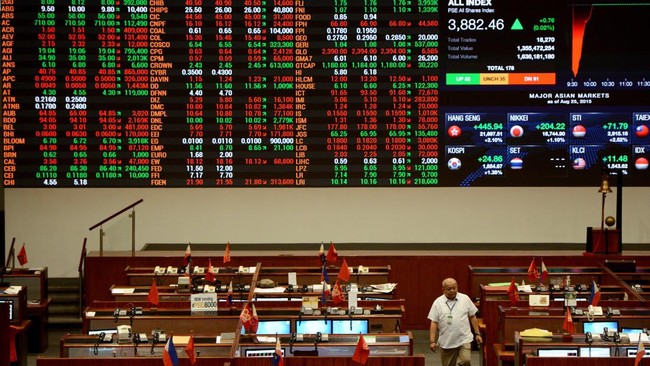
Jakarta, CNBC Indonesia - Approaching the close of the first half of 2026, stock markets across the Asia-Pacific region exhibited highly varied dynamics. Based on historical data of major benchmark indices up to the end of June 2026, foreign capital flows and global macroeconomic sentiment significantly impacted each country’s performance. Global interest rate conditions and regional economic growth projections were determining factors for investment direction. Overall, East Asian stock markets recorded a solid track record and dominated performance, while several bourses in Southeast Asia and South Asia struggled against selling pressure from market participants.
Dominance of East Asian Bourses
Throughout the first six months of this year, South Korea’s KOSPI index led the gains, recording a very significant growth of 99.59% year-to-date. Positive sentiment from the technology sector and global demand for semiconductor products continued to underpin the benchmark index in Seoul. Following in second place, Taiwan’s TAIEX also posted an impressive performance with an appreciation of 55.26%. The sustained expansion of the global information technology industry was considered the main driver for the Taiwanese stock market. Not to be outdone, Japan’s Nikkei 225 also recorded strong positive growth of 37.79%. Supportive monetary policy and adjustments in the yen’s exchange rate were seen as successfully boosting the competitiveness of Japanese export products on the international stage. This directly triggered investor buying interest in large-capitalisation stocks in Tokyo. On the other hand, China’s Shanghai Composite moved more moderately with a limited increase of 1.57%. Unlike its regional peers, the Hang Seng Index in Hong Kong suffered a deep correction, reaching -12.31%.
Challenges in Southeast Asia and Beyond
Turning to the Southeast Asian region, stock market performance showed a much more diverse trend. Thailand’s SET index and Singapore’s STI managed to stay in positive territory and maintain momentum with gains of 22.44% and 11.52%, respectively. Vietnam’s VN-Index also joined the list of strengthening bourses with an appreciation of 5.94%. The positive performance in these markets was driven by domestic economic stability and the release of relatively stable macroeconomic data. In the Oceania region, Australia’s ASX All Ordinaries index grew slightly by 0.72%.
However, severe challenges still loom over the equity market in Indonesia. The Jakarta Composite Index (IHSG) experienced the deepest pressure, with a decline recorded at -31.81% year-to-date. This condition placed the IHSG as the worst performer among other major Asian bourses in the first half of the year. Foreign capital outflows were suspected to be one of the main triggers for the market’s weakness. In neighbouring countries, Malaysia’s KLCI and the Philippines’ PSEi also slipped into the red with corrections of -1.00% and -1.02%, respectively. Meanwhile, in the South Asian region, India’s BSE SENSEX recorded a decline of -8.95%.
Source: jawawa.id (https://jawawa.id/newsitem/asian-stock-market-performance-in-first-half-indonesias-ihsg-suffers-deepest-losses-1782647483)
Originally published by CNBC Indonesia (https://www.cnbcindonesia.com/research/20260628144228-128-746301/intip-kinerja-bursa-asia-dalam-enam-bulan-ihsg-ri-paling-ancur-lebur), translated from Indonesian