
Asian Para Games Feel Like the Paralympics
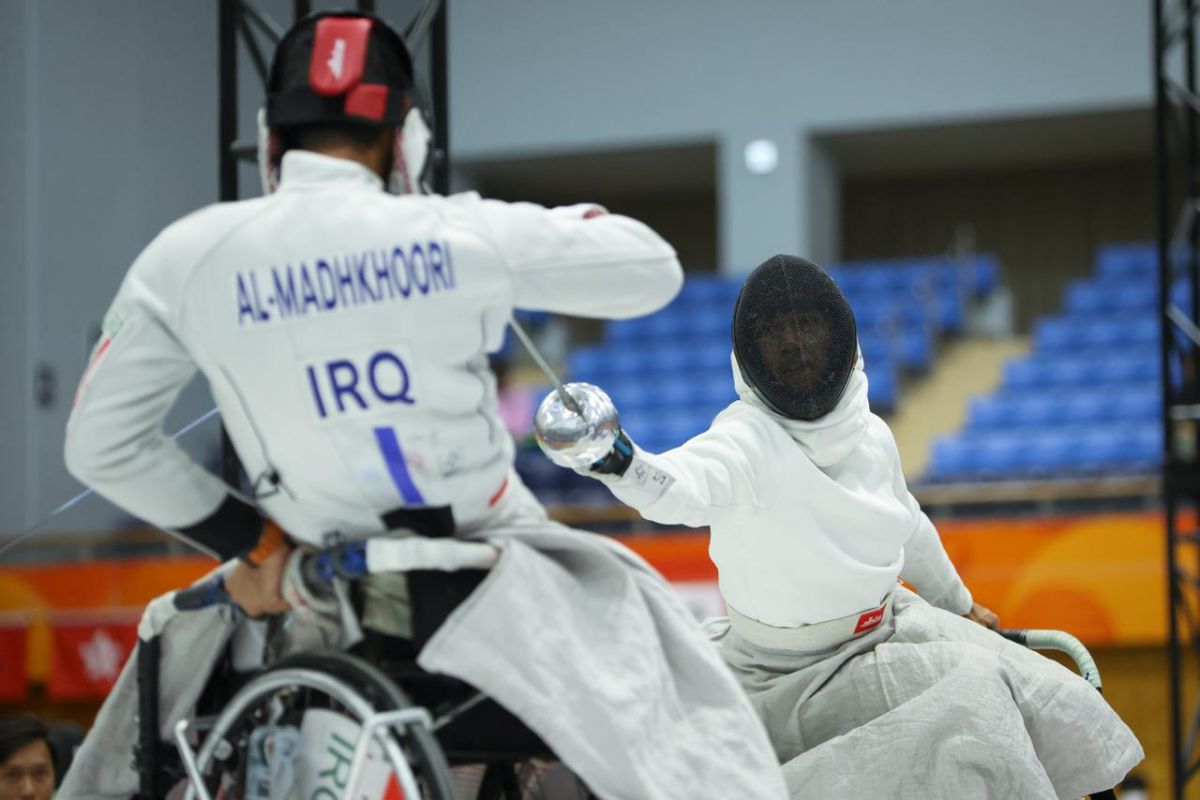
Nagoya (ANTARA) – The final score of 0-15 was displayed after Indonesian para-fencer Didit Diantoro faced Iraq’s Zainulabdeen Al-Madhkoori at the Nagoya City Inae Sports Centre in Japan on Wednesday (21 October).
Didit failed to score a single point in the men’s Category A epee round of 16 at the 2026 Aichi-Nagoya Asian Para Games.
His opponent was no ordinary athlete. Al-Madhkoori was part of the Iraqi team that won silver in the men’s team epee at the Paris 2024 Paralympics.
Before facing the Iraqi fencer, Didit had come through the group stage and beaten the Philippines’ Wilfredo Li Bugayong 15-9 in the round of 32.
The difference in ability became apparent when he faced an athlete with greater experience on the international stage.
“It was difficult. My opponent is world-class and I fought hard. I learnt a lot, including about his agility in the bout,” Didit said after the match.
The experience gave Didit a particular impression of the intense competition at Asia’s biggest sporting event for people with disabilities.
“This is the Asian Para Games, but it feels like the Paralympics. It’s really exciting, and frightening too,” he said.
Didit’s comment was not without reason.
At the Paris 2024 Paralympics, China dominated para-fencing, winning 10 gold, five silver and four bronze medals. Thailand finished second with three gold, one silver and one bronze.
The two Asian countries therefore won 13 of the 16 gold medals contested at the world’s premier sporting event for people with disabilities.
Several Paralympic medallists have returned to compete in Nagoya.
One is Thailand’s Saysunee Jana, who made history by winning three individual gold medals at the Paris 2024 Paralympics.
In Nagoya, however, Jana was beaten 15-14 by South Korea’s Eunhyo Cho in the women’s Category B epee final on Wednesday.
The result showed just how fierce the competition is among Asia’s leading para-fencing nations, even for athletes who have claimed the world’s highest honours.
After eight years
For Indonesia, the 2026 Aichi-Nagoya Asian Para Games also mark para-fencing’s return to Asia’s biggest disability sports event after the team missed the previous edition in Hangzhou, China.
Indonesia last competed in the sport at the 2018 Asian Para Games in Jakarta.
As hosts, Indonesia fielded 11 athletes and won one bronze medal in the women’s team sabre event.
The medal was won by Elih, Sri Lestari, Survaya Dewi Ningrum and Suwarsih.
The achievement was significant, as it was Indonesia’s first appearance in wheelchair fencing at the Asian Para Games.
However, the progress did not continue at the Hangzhou Asian Para Games, which were held in October 2023 after being postponed from 2022.
Para-fencing was not among the 12 sports contested by the Indonesian team.
Eight years after competing in Jakarta, Indonesia has once again sent representatives to the 2026 Asian Para Games.
This time, only three athletes are representing the country: Didit Diantoro from Central Java, Ryo Afandi from Jakarta and Alika Shalshabilah Lamasano from West Java.
All three face a major challenge in keeping pace with athletes accustomed to competing at world championships and the Paralympics.
Didit has felt the difference in the level of competition.
At the ASEAN Para Games in Thailand in January 2026, he reached the men’s individual Category A epee semi-finals before losing 15-12 to Malaysia’s Krisana Sriujun.
But in the Asian-level competition in Nagoya, he had to face opponents with more experience and greater achievements.
Ryo faces a similar challenge as he continues to build his international experience.
The Jakarta athlete won gold in the men’s individual Category B sabre at the 2024 National Paralympic Week (Peparnas XVII) in Solo.
A year later, Ryo had the opportunity to face world-class athletes at the 2025 Para Fencing World Cup, also held in Solo.
He reached the quarter-finals of the men’s Category B sabre, but struggled to keep up with international competition in the epee event.
The experience made him realise that success at national level was not enough preparation for competing on the world stage.
Alika is also part of a generation of athletes developing their skills for international competition.
The West Java athlete competed at Peparnas 2024 before taking part in the 2025 Para Fencing World Cup in Solo.
Experience still needed
Indonesian para-fencing coach Firman Raflesio acknowledged that the competition at this Asian Para Games had been difficult for his athletes.
However, he said their ability to progress through the initial rounds and reach the knockout stage was still a development worth recognising.
“Our level may still be some way off. But, in terms of the group-stage system and progressing to the round of 16, it has been quite good,” Firman said.
He said fencing is a fast-paced sport in which competitive experience is needed to hone athletes’ ability to read their opponents’ movements and attacks.
“Experience is the most important thing. Match experience is definitely the best way for the athletes to learn and assess their performance,” he said.
The lack of experience is linked to limited opportunities to compete in international tournaments.
Firman said Indonesia had had the opportunity to take part in tournaments in the United States and Hungary, but did not attend.
International competition is needed to earn world rankings, including in the team events.
“We actually had opportunities in the United States and Hungary, but we didn’t go. There was a team event there, and by not taking part, we naturally couldn’t earn world ranking points,” Firman said.
Indonesia therefore did not field a team in the event in Nagoya.
Under the qualification rules, only teams listed in the World Para Fencing rankings as of 15 July 2026 could be considered for the Asian Para Games team events.
Firman said team events were one area Indonesia could develop if its athletes had more opportunities to compete.
The need for greater international experience is particularly important because the para-fencing competition in Nagoya is also the Asian Championships and forms part of the initial points race for qualification for the Los Angeles 2028 Paralympics.
For Didit, facing the world’s top athletes has at least given him a clear picture of what he needs to improve.
He said training bouts against stronger opponents and participation in international tournaments were essential to closing the gap.
“What we need to compete is sparring, especially sparring against even stronger opponents. Taking part in tournaments, such as trial events, is important too,” he said.
Didit and his teammates’ campaign in Nagoya is not over. They are scheduled to compete in the sabre event on Friday (23 October), hoping to improve on their earlier results.
“My target is to reach at least the semi-finals,” Didit said.