
Asian Markets Open Mixed as Investors Monitor US-Iran Conflict
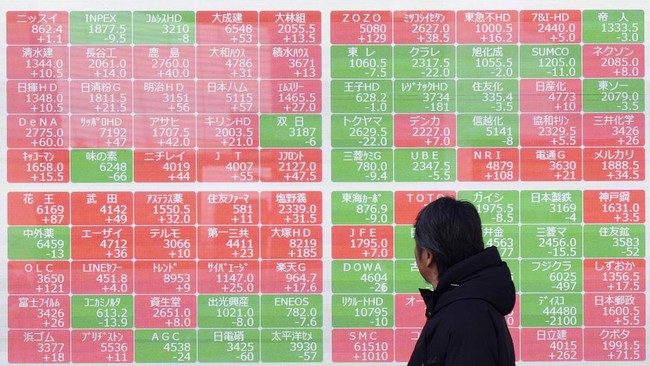
Asia-Pacific markets moved in various directions during trading on Monday (29/6/2026) after geopolitical tensions in the Middle East intensified following the latest clashes between the United States and Iran. Market participants are now closely monitoring the potential for a prolonged conflict that could destabilise the global economy and energy supplies.
According to CNBC, Japan’s Nikkei 225 index fell 0.35% at the start of trading. Meanwhile, the Topix index managed to gain 0.43% amidst generally cautious market sentiment.
South Korean equity markets faced significant pressure, with the Kospi index dropping 2.29% at the opening. Conversely, the small-cap Kosdaq index rose by 0.97%.
In Australia, the benchmark S&P/ASX 200 index increased by 0.41%. This mixed movement across the region reflects investor responses to the heightened geopolitical risks in the Middle East.
Tensions escalated after the US struck several Iranian military targets over the weekend. The strikes were carried out in retaliation for Tehran’s actions involving attacks around the Strait of Hormuz, one of the world’s most critical oil shipping lanes.
US President Donald Trump subsequently issued stern threats against Iran via a post on Truth Social. Trump stated that US military aircraft had hit Iranian missile and drone storage sites, as well as coastal radar sites, because they were deemed to have violated ceasefire agreements.
On the diplomatic front, efforts to negotiate an end to the conflict are reported to have reached a deadlock. A source from Pakistan, involved in the negotiation process, stated that talks are currently suspended, although all parties are maintaining their representatives in Switzerland to resume discussions if the situation permits.
Global oil prices also responded to these developments with gains at the start of trading. Brent crude rose 0.8% to US$72.57 per barrel, while West Texas Intermediate (WTI) increased 1.1% to the US$70 level.
In the United States, major stock futures moved higher despite the market being overshadowed by geopolitical uncertainty. Dow Jones futures rose 124 points or 0.2%, while S&P 500 and Nasdaq-100 futures gained 0.4% and 0.5%, respectively.
Wall Street recently closed a mixed week, characterised by an investment rotation out of technology stocks into other sectors. Throughout last week, the S&P 500 corrected by almost 2% and the Nasdaq Composite plummeted 4.6%, while the Dow Jones actually gained 0.6%.
Giant technology stocks were the primary source of pressure on the market. Nvidia and Alphabet each lost more than 8%, while Meta Platforms, Apple, and Amazon fell by more than 4%.
Ed Yardeni, President of Yardeni Research, assessed that investors are beginning to experience “AI fatigue”. According to him, the market is starting to question whether the massive spending by technology companies on artificial intelligence infrastructure will yield commensurate returns in the future.
This week also marks the end of June trading. As of last Friday’s close, the S&P 500 was down approximately 3% for the month, the Nasdaq fell by more than 6%, while the Dow Jones recorded a gain of over 1%.
Source: jawawa.id (https://jawawa.id/newsitem/asian-markets-open-mixed-as-investors-monitor-us-iran-conflict-1782701455)
Originally published by CNBC Indonesia (https://www.cnbcindonesia.com/market/20260629083351-17-746387/pelaku-pasar-pantau-konflik-as-iran-bursa-asia-dibuka-beragam), translated from Indonesian