
Asian Currencies Under Pressure: Rupiah and Won Tumble, Only Two Gain
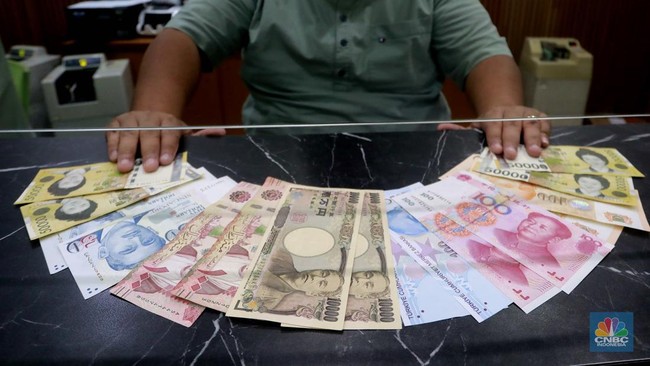
The majority of Asian currencies weakened against the United States (US) dollar in trading on Tuesday (30/6/2026), as the US dollar index regained strength. According to Refinitiv data as of 09:10 Western Indonesia Time (WIB), seven out of ten Asian currencies fell against the greenback, while three others strengthened. The rupiah was among the currencies in the red this morning. The Garuda currency weakened by 0.25% to Rp17,880/US, movingitclosertothepsychologicallevelofRp17, 900/US. The South Korean won experienced the deepest pressure, falling 0.54% to KRW 1,549.09/US.TheVietnamesedongfollowedwitha0.28. The Philippine peso also weakened 0.13% to PHP 61.259/US, whiletheSingaporedollarslipped0.08. The Taiwan dollar corrected 0.07% to TWD 31.872/US, andtheThaibahtweakened0.03. On the other hand, the Malaysian ringgit led gains in Asia, rising 0.30% to MYR 4.055/US.TheJapaneseyenalsostrengthened0.14, while the Chinese yuan edged up 0.01% to CNY 6.793/US$. Meanwhile, the US dollar index (DXY) was observed strengthening 0.17% to 101.280 at 09:10 WIB. This increase came after the DXY had fallen 0.26% in the previous session. Despite the earlier correction, the US dollar remains at a relatively high level, with the DXY showing upward momentum of around 1.3% throughout the second quarter of 2026. This indicates the US dollar is still quite robust amid a combination of sentiment regarding the Federal Reserve’s interest rates, US economic data, and geopolitical uncertainty. The market’s primary focus this week is on US labour data. The nonfarm payrolls report, scheduled for release on Thursday, is a key event as it could provide new insights into the strength of the US labour market and the policy direction of the US central bank, the Federal Reserve. Market participants are also observing several US Supreme Court decisions, including one that rejected President Donald Trump’s attempt to dismiss Federal Reserve Governor Lisa Cook. This decision helped alleviate some market concerns about the Fed’s independence under the Trump administration. From a geopolitical perspective, market attention remains on US-Iran relations. Iranian and US negotiating teams are scheduled to be in Doha this week, although Iran has stated no meeting is currently scheduled after missile attacks from both sides over the weekend tested a temporary ceasefire aimed at ending the four-month war. However, media reports citing US officials suggest both countries have agreed to exercise restraint ahead of the next round of negotiations, and ships may once again be able to move freely through the strait. Based on the CME FedWatch Tool, market participants are now pricing in a 31.50% probability that the Federal Reserve will raise interest rates by 25 basis points at its 28-29 July meeting, while the probability of rates being held steady stands at 68.50%. Investors are now awaiting US employment data, from the ADP report to nonfarm payrolls this week, which will serve as crucial indicators for assessing whether the Fed still has room to raise interest rates in the near term.