
Asian Currencies Tumble, Rupiah and Philippine Peso Hit Hard, Yen Stands Alone in Green
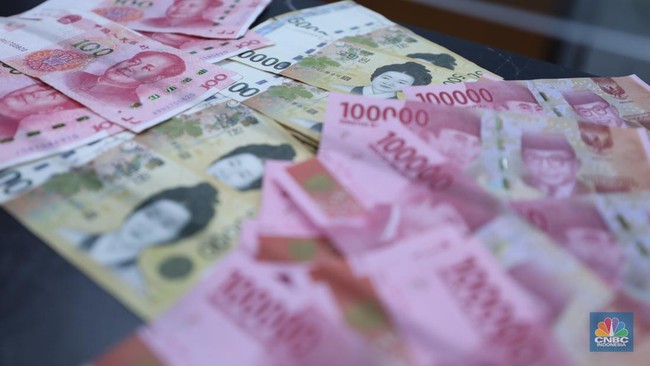
The majority of Asian currencies depreciated against the United States dollar in trading on Wednesday (24/6/2026), pressured by a strengthening greenback in global markets. According to Refinitiv data as of 09:24 Western Indonesia Time, nine out of ten monitored Asian currencies weakened against the dollar, with only one managing to advance. The Indonesian rupiah suffered the deepest losses in the region this morning, falling 0.64% to Rp17,955/US, edgingitclosertothepsychologicalthresholdofRp18, 000/US. The Philippine peso also experienced significant pressure, dropping 0.60% to PHP 61.430/US, followedbytheThaibahtwhichcorrected0.57. The South Korean won entered negative territory, slipping 0.29% to KRW 1,536.95/US, whilsttheVietnamesedongdeclined0.24. Milder depreciations were observed in the Malaysian ringgit, which fell 0.10% to MYR 4.142/US.BoththeTaiwandollarandtheSingaporedollaredgeddown0.03 and SGD 1.296/US$ respectively. The Chinese yuan also faced slight pressure, easing 0.02% to CNY 6.791/US.Amidthebroad − basedweakness, theJapaneseyenwasthesoleAsiancurrencytostrengthen, inchingup0.02. The US Dollar Index (DXY), which measures the greenback against six major currencies, was marginally lower by 0.01% at 101.401 this morning. Despite the slight dip, the dollar remains robust, having closed Tuesday’s session up 0.38% at 101.408, its highest level in 13 months. The dollar’s strength continues to be underpinned by rising demand for safe-haven assets. Investors sought protection after a sell-off in global technology and semiconductor stocks, sectors that had previously driven market rallies. The correction prompted a shift of capital flows into perceived safer assets, including the US dollar and US government bonds. Concurrently, expectations for further interest rate hikes by the US Federal Reserve have intensified. Recent hawkish signals from Fed officials, supported by a resilient US economy, have led markets to price in a greater likelihood of tightening. According to the CME FedWatch Tool, the probability of a 25-basis-point rate increase at the July meeting has surged to 37%, up from just 8.5% a week earlier. For the September meeting, the chance of a hike has jumped to 70% from 29.1%. The prospect of higher US interest rates makes the dollar more attractive, as it boosts the potential returns on dollar-denominated assets and widens the yield differential with other currencies, including those in Asia. Ray Attrill, head of FX strategy at National Australia Bank, noted that the dollar remains the preferred safe-haven asset for market participants, though he added that much of the positive sentiment is already priced in. He suggested that broader risk aversion, beyond just the technology sector, or further increases in rate hike expectations would be needed to propel the dollar significantly higher from current levels.