
Asian Currencies Mixed: Won and Yen Strong, Rupiah and Ringgit Plunge
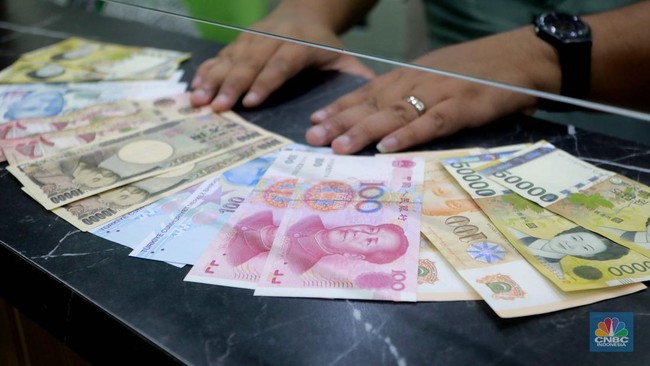
Jakarta, CNBC Indonesia - The performance of Asian currencies against the US dollar has been mixed on Thursday (4 June 2026). The Rupiah and Malaysian Ringgit are the two currencies that have experienced considerable pressure this morning.
According to Refinitiv data as of 09.15 WIB, of the 10 Asian currencies monitored, five weakened against the US dollar, while five others strengthened.
Unfortunately, the Indonesian Rupiah is still on the list of Asian currencies that weakened this morning. The Rupiah weakened 0.39% to Rp18,010/US, whichisalsoanewall − timelowandhasbrokenthepsychologicallevelofRp18, 000/US.
The pressure on the Rupiah is in line with the Malaysian Ringgit, which weakened the most in Asia. The Ringgit corrected 0.55% to MYR 4.012/US$.
In addition to the Rupiah and Ringgit, the Vietnamese Dong weakened 0.17% to VND 26,335/US, theTaiwanesedollarfell0.14, and the Chinese Yuan depreciated to CNY 6.775/US$, correcting 0.09%.
On the other hand, the South Korean Won is the currency with the sharpest gains in Asia, rising 0.34% to KRW 1,529.4/US$. The Philippine Peso also strengthened 0.18%, the Japanese Yen rose 0.09%, the Thai Baht strengthened 0.09%, and the Singapore dollar rose slightly by 0.02%.
Meanwhile, the US dollar index (DXY) was observed to weaken slightly by 0.09% to 99.436 this morning. However, this weakening occurred after the DXY closed sharply higher by 0.31% to 99.552 in the previous trading session on Wednesday (3 June 2026).
Thus, the US dollar still tends to maintain its strength in the global market. The previous strengthening of the US dollar occurred because the conflict in the Gulf region has re-escalated, so the demand for the dollar as a safe haven asset has increased.
The latest tensions emerged after an Iranian attack on Kuwait damaged the airport and injured dozens of people on Wednesday. At the same time, the US military also carried out attacks near the Strait of Hormuz. This condition has again suppressed hopes for a ceasefire and made interest in risky assets weaken.
In addition to geopolitical factors, market participants are also monitoring US economic data. A survey on Wednesday showed that the price measure paid by US service sector businesses jumped to its highest level in nearly four years last month.
This condition strengthens the view that the US central bank, the Federal Reserve/The Fed, may maintain high interest rates for longer, even until next year.
The strengthening of the US dollar in the global market ultimately makes the room for strengthening other countries’ currencies, including Asia, more limited. This is reflected in the mixed movement of Asian currencies, with the Rupiah and Ringgit being the most pressured currencies this morning.