
Asian Country Plunged into Darkness as National Power Grid Fails
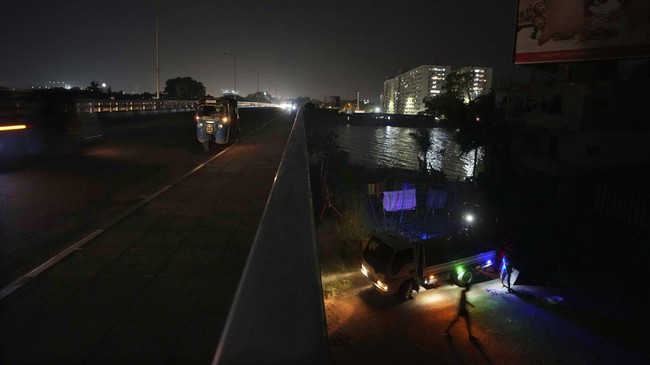
Sri Lanka experienced a nationwide power outage on Saturday (17 October 2026) after a disruption to the country’s electricity grid. Local authorities suspect that solar power plants generated more electricity than was needed for consumption.
According to international media reports, the outage left the entire country without electricity from the main grid for more than two hours. At the time of reporting, it was unclear when supplies would be fully restored.
State-owned electricity distributor Electricity Distribution Lanka (EDL) said engineers were working to repair the disruption, which affected the entire grid. The company suspected that excess solar power was the cause.
Sri Lankan Energy Minister Anura Karunathilaka said the government hoped electricity supplies could be restored gradually.
“We have asked owners of rooftop solar systems to disconnect their systems until further notice, to support restoration efforts,” he said in a brief statement.
Not the first time
A nationwide blackout in Sri Lanka suspected to have been caused by excess solar generation is not unprecedented.
In February 2025, the country’s entire electricity grid was also disrupted when solar power generation exceeded consumption on a sunny Sunday. It took more than six hours to restore supplies then.
Sri Lanka currently has just over 3,000 megawatts (MW) of installed solar power capacity. Daytime electricity demand, meanwhile, ranges from 2,000 MW to 2,500 MW.
The scale of solar generating capacity relative to daytime electricity demand is suspected to be one factor behind imbalances in the power system.
Tax incentives introduced by the government have also encouraged people to switch to solar power. Consumers can sell surplus electricity generated by their systems to the national grid.
However, the increase in electricity generated by multiple solar sources has created challenges for power providers seeking to balance supply and demand.
The Sri Lankan government aims to increase solar power capacity to nearly 4,400 MW over the next three years. That target represents an increase of about 388% compared with capacity in 2024.
The incident underscores the challenge Sri Lanka faces in expanding renewable energy use. Solar power is an alternative energy source that the country continues to develop, but growing generation capacity requires a grid that can respond quickly to changes in supply and maintain system stability.
Source: jawawa.id (https://jawawa.id/newsitem/asian-country-plunged-into-darkness-as-national-power-grid-fails-1792288213)
Originally published by CNBC Indonesia (https://www.cnbcindonesia.com/news/20261018063710-4-777159/negara-asia-ini-gelap-gulita-listrik-nasional-padam), translated from Indonesian