
Asia Remains an Investment Magnet, Indonesia Urged to Strengthen Competitiveness
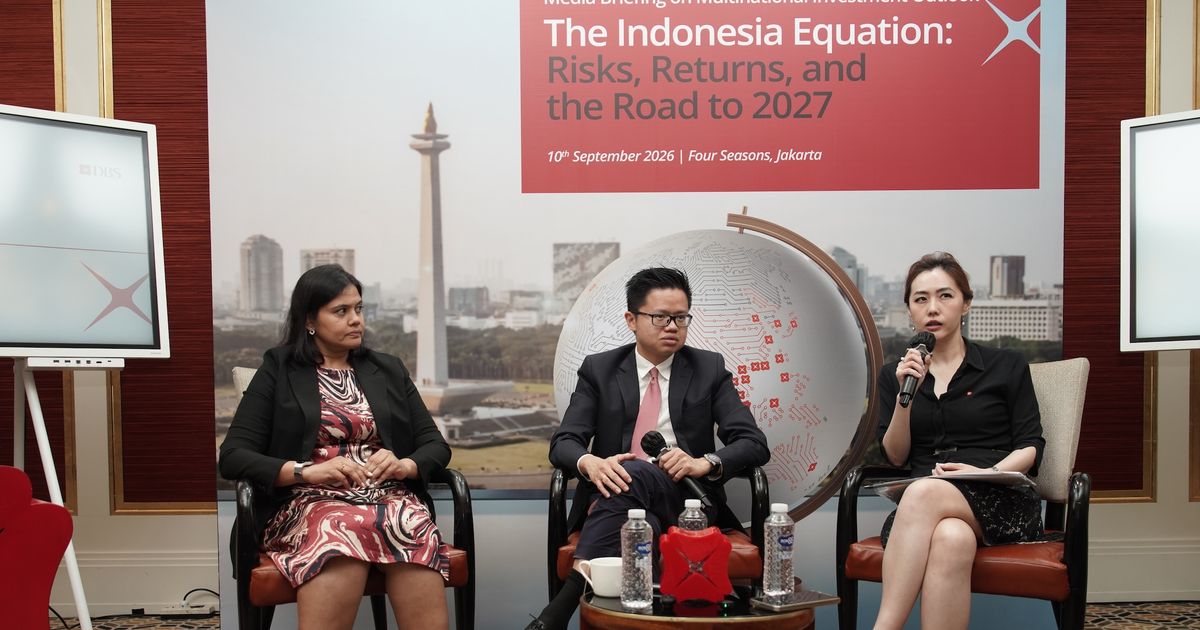
Asia remains the primary magnet for global foreign investment in 2025. Foreign Direct Investment (FDI) in East Asia has reached US$ 245 billion, while Southeast Asia recorded an increase from approximately US$ 225 billion in 2024 to nearly US$ 250 billion in 2025.
This data indicates that Southeast Asia is becoming one of the fastest-growing FDI regions in the world. This condition is driven by the relocation of global supply chains, the expansion of the manufacturing sector, and increasing interest from international investors in the ASEAN market.
Radhika Rao, Senior Economist at DBS Group Research, stated that the increasingly multipolar global economic development opens opportunities for Indonesia to strengthen its position as a new growth centre. “The increasingly multipolar global economic development presents great opportunities for Indonesia to strengthen its position as a new growth centre, as investment, manufacturing, and global supply chains become more diversified,” said Radhika.
According to Radhika, Indonesia’s future advantage lies not only in its natural resources and market size but also in its ability to attract technology-based investment. This capability is required to strengthen domestic value chains, develop the digital economy, and maintain policy and macroeconomic stability.
Radhika also noted that the direction of US interest rates and global market conditions will affect capital flows, the Rupiah exchange rate, and Indonesia’s funding towards 2027. Therefore, multinational companies need to consider the impact on capital costs and financial planning.
Investment realisation in Indonesia continues to show a positive trend. This is reflected in the achievements of the first semester of 2026, which have almost reached 50% of the annual growth target of 7.2%.
Riyatno, Deputy for Investment Climate and Investment Development at the Ministry of Investment and Downstreaming/BKPM, stated, “Amid global dynamics and increasingly intense competition, Indonesia’s investment potential remains very large with quite good economic resilience.”
He added that the Ministry of Investment and Downstreaming/BKPM remains committed to creating a more conducive investment climate through end-to-end investment services. These steps include investment sector roadmaps, regulatory reforms, and the streamlining of company licensing through the OSS Version 2 application, which is now supported by AI and blockchain technology. “So that it becomes more integrated to ensure a more efficient investment process,” he said.
Indonesia is considered to be in a strategic position to attract large-scale investment with the support of a combination of supply-side and demand-side drivers. However, competition between countries in the region to attract investment is also becoming increasingly fierce.
From a financing perspective, Natalia Ratulangi, Head of Large & Multinational Corporates, Institutional Banking Group at Bank DBS Indonesia, said the needs of multinational companies are becoming increasingly diverse. These needs relate not only to financing but also to efforts to overcome the impacts of interest rate volatility, exchange rates, regulatory policies, and local economic sentiment.
“Therefore, banking partners are needed who can also provide sharp insights to navigate local market trends, both globally and sectorally,” said Natalia.
Natalia explained that DBS’s connectivity in Asia, the latest digital banking platforms, and experts across various sectors strengthen the bank’s capabilities. DBS provides end-to-end banking solutions to support the increasingly complex needs of multinational companies.
Source: jawawa.id (https://jawawa.id/newsitem/asia-remains-an-investment-magnet-indonesia-urged-to-strengthen-competitiveness-1789098702)
Originally published by investortrust.id (https://investortrust.id/macro/115900/asia-tetap-jadi-magnet-investasi-indonesia-diminta-perkuat-daya-saing), translated from Indonesian