
Asia Receives Just 12% of Global Royalties as Law Minister Supratman Prepares Copyright Act Revision
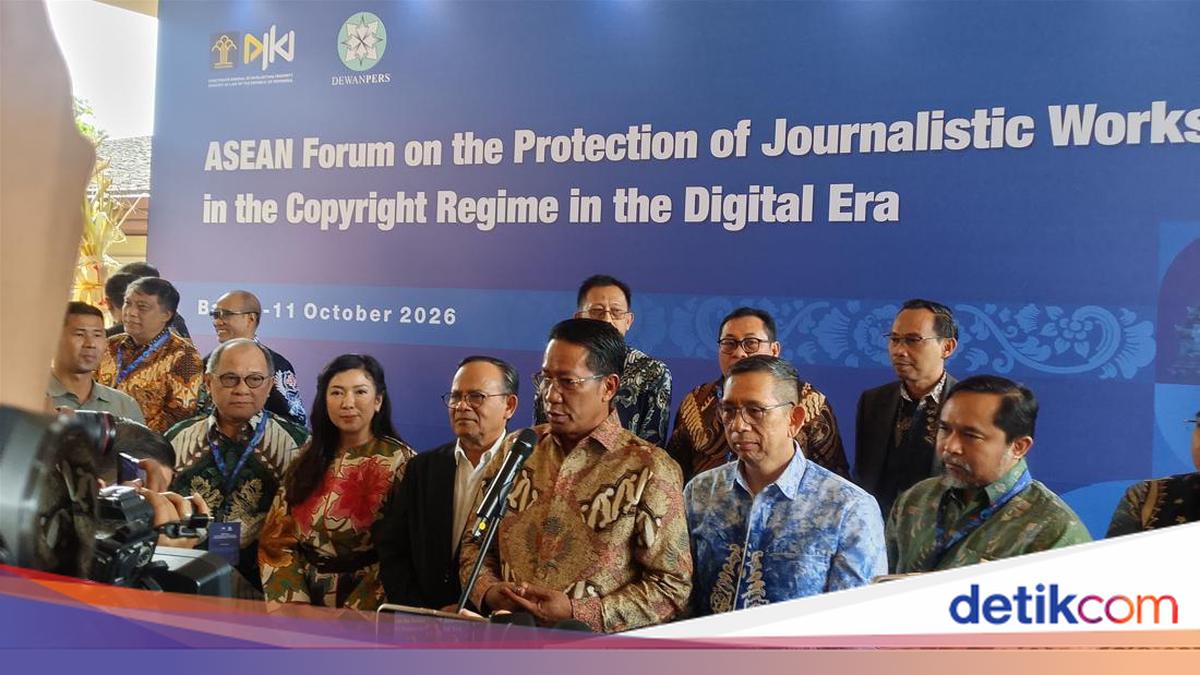
Asia receives only 12% of global copyright royalties, which are said to total €15 billion. Law Minister Supratman Andi Agtas has highlighted this disparity and is preparing a revision of the Copyright Act, including measures to protect journalistic work.
Supratman made the remarks at a forum in Bali on Saturday (10 October 2026) discussing the protection of journalistic work in the digital era, attended by press stakeholders and representatives of ASEAN countries.
“Asia receives only 12% of the total royalties enjoyed by the public. Africa receives only 1%. You can imagine the disparity,” Supratman said in his opening remarks.
He said the imbalance underscored the importance of strengthening intellectual property protection and improving Asian countries’ ability to monetise their work.
The government is now drafting a revision to the Copyright Act to reinforce protections, including for journalistic work. Media companies, journalists and industry players are expected to contribute feedback so the rules can accommodate the interests of all parties.
“By bringing journalistic products within the copyright regime, the use of journalistic work would, of course, carry consequences in terms of economic rights,” he said.
Supratman said recognising journalistic work under copyright law could create economic opportunities for the press industry. Information distribution via digital platforms is expanding rapidly, while the economic benefits from the use of journalistic work are considered to be unfairly distributed.
Journalistic work includes articles, photographs and news videos. In the digital ecosystem, such material can be copied, disseminated or reused by digital platforms, including as a source of information for artificial intelligence (AI) technology.
Problems arise when such use is not accompanied by adequate licensing, attribution and compensation arrangements for rights holders.
Copyright protection does not, however, mean that news facts or events can be monopolised. Protection applies to the original expression resulting from journalistic work, such as article writing, analysis, photography and video production.
Press Council highlights media’s economic imbalance
Press Council chairman Komaruddin Hidayat has also drawn attention to changes in the distribution of information in the digital era. Journalists remain information producers, but distribution and advertising businesses are increasingly controlled by digital platforms.
“Much of the flow of information is driven and disseminated by AI. Yet journalists were originally the source producers,” he said.
Komaruddin said the issue was not merely about media companies’ income, but also the sustainability of journalism as one of the pillars of democracy.
He stressed that the Press Council did not oppose technological developments or social media. However, the digital ecosystem needed to be built fairly so journalistic work received proper recognition and the quality of information consumed by the public was maintained.
The government is also encouraging cooperation among ASEAN countries to strengthen cross-border protection of journalistic work. Supratman proposed setting up a consultation forum through the Press Council or an ASEAN Press Council to gather input from member countries.
The forum is expected to develop a shared understanding of copyright protection, information exchange and best practices, ensuring that journalistic work is used transparently and fairly compensated.
Source: jawawa.id (https://jawawa.id/newsitem/asia-receives-just-12-of-global-royalties-as-law-minister-supratman-prepares-copyright-act-revision-1791611444)
Originally published by detikBali (https://www.detik.com/bali/bisnis/d-8700674/asia-cuma-kebagian-12-royalti-global-menkum-supratman-siapkan-revisi-uu), translated from Indonesian