
Asia in Turmoil: Yen, Yuan, Rupiah, and Ringgit All Under Pressure
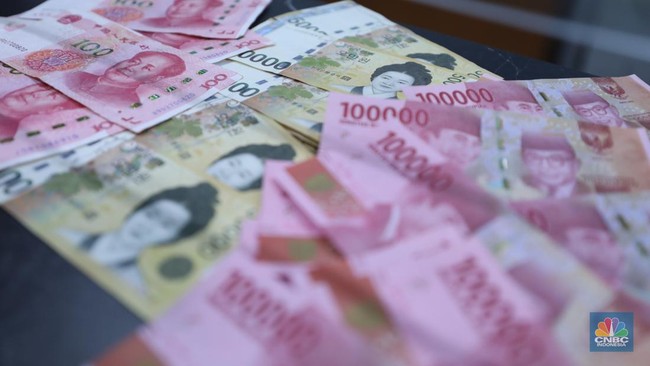
Jakarta, CNBC Indonesia - Asian currencies were collectively under pressure from the US Dollar during trading on Thursday (1/10/2026). The pressure was widespread across the region, with all monitored currencies moving into the red this morning.
Based on Refinitiv data as of 09:15 WIB, ten monitored Asian currencies were recorded weakening against the US Dollar. The Japanese Yen recorded the deepest decline, depreciating 0.46% to JPY 158.11/US.TheThaiBahtfollowedwitha0.30.
The Indonesian Rupiah also weakened by 0.25% to the level of Rp17,915/US.AnidenticaldeclinewasexperiencedbytheSouthKoreanWonandtheMalaysianRinggit, whichstoodatKRW1, 360.1/US and MYR 4.084/US$ respectively. The Philippine Peso corrected by 0.17% to PHP 62.716/US, followedbytheSingaporeDollarweakeningby0.12 and the Taiwan Dollar dropping by 0.11% to TWD 31.902/US$.
Meanwhile, the Chinese Yuan and Vietnamese Dong recorded the narrowest declines, at 0.02% and 0.01% respectively.
Pressure on Asian currencies this morning occurred alongside the strengthening of the US Dollar. At the same time, the US Dollar Index (DXY) rose 0.15% to the level of 101.596. The US Dollar also remains near its two-month high after recording a gain of approximately 2% throughout September. The strength of the greenback continues to be supported by high US Treasury yields, particularly in long-term tenors.
The 10-year US Treasury yield rose by 4 basis points to 5.293%, while the 30-year tenor increased by 4.5 basis points to 5.639%.
This rise in yields occurred amidst receding expectations for a Federal Reserve interest rate hike in October. Market participants are now pricing in a roughly 33% chance of a rate hike, down from almost 50% the previous day and approximately 70% at the start of the week, after the US Personal Consumption Expenditures (PCE) price index for August came in below estimates.
Nevertheless, strong consumer spending and an upward revision to US second-quarter economic growth continue to maintain expectations that the Fed may raise interest rates again this year.
“The US Dollar currently appears more sensitive to movements in the 10-year Treasury yield than to expectations regarding when the next Fed rate hike will occur,” said Ray Attriment, Head of FX Strategy at National Australia Bank, as quoted by Reuters.