
Asia Green Zone: Ringgit and Yen Strong, Why is the Rupiah Weak?
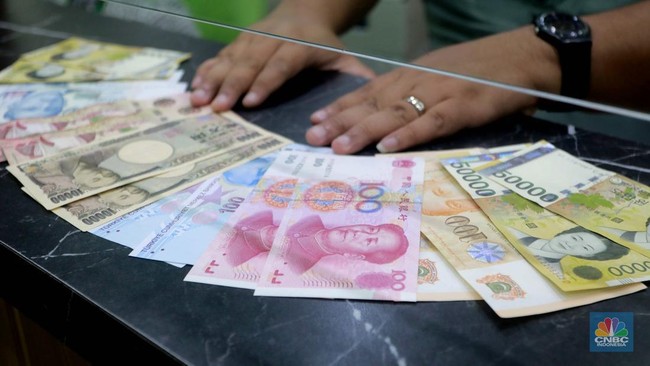
The majority of Asian currencies were able to strengthen against the US Dollar in the final trading session of the week, Friday (25/09/2026). This appreciation occurred as the US Dollar underwent a slight correction this morning, although it remains at a high level.
According to Refinitiv data as of 09:07 WIB, out of nine monitored Asian currencies, seven strengthened against the US Dollar, while only two weakened.
The Malaysian Ringgit recorded the sharpest gain this morning, rising by 0.29%. The Japanese Yen followed with a 0.25% increase to a position of JPY158.43/US$.
The Taiwan Dollar strengthened by 0.21%, while the Thai Baht rose by 0.18%. South Korea’s Won also gained 0.14%, followed by the Philippine Peso at 0.11% and the Vietnamese Dong at 0.05%.
Amidst the strengthening of most regional currencies, the Indonesian Rupiah entered the red zone. The ‘Garuda’ currency weakened by 0.14% to a position of Rp17,910/US$.
The Singapore Dollar was another currency that weakened this morning, with a slight correction of 0.01%.
The US Dollar’s upward momentum began to slow on Friday morning. The DXY corrected slightly by 0.06% to 101.223 after experiencing a strong rally in recent days.
Nevertheless, the US Dollar remains in a high-level area. The DXY has surged more than 1% throughout the week and is on its second consecutive weekly upward trajectory, a phenomenon last seen in June.
The greenback’s strength over the past week was primarily supported by a sharp rise in US government bond yields and growing expectations that the Federal Reserve (The Fed) will continue to raise interest rates.
Markets aggressively adjusted interest rate forecasts after the Fed raised rates last week. Robust US economic data and inflation risks from rising energy prices have further reinforced this conviction.
Several Fed officials have also maintained a hawkish tone. Philadelphia Fed President Anna Paulson stated that additional moderate tightening might still be necessary, while New York Fed President John Williams suggested one more rate hike could occur before the end of the year.
The surge in Treasury yields also supported the US Dollar. Bond selling even pushed long-term Treasury yields to their highest levels in over 20 years.
“While the dollar should receive support from higher yields, there are still concerns regarding the US fiscal position and uncertainty in US policymaking,” said Khoon Goh, head of Asia research at ANZ, as quoted by Reuters.
According to Goh, these conditions are one of the reasons the US Dollar is struggling to continue its rally despite increasing bond yields.
Oil prices have also returned to market focus. Brent surged more than 3% in Thursday’s trading to a weekly high after Houthi missile attacks on Saudi Arabia reignited concerns regarding supply disruptions.
The rise in energy prices has the potential to keep inflationary pressures high and leave the possibility of further Fed tightening on the table.