
Asia Consumes Half of World's Oil, Hormuz Becomes Critical Flashpoint
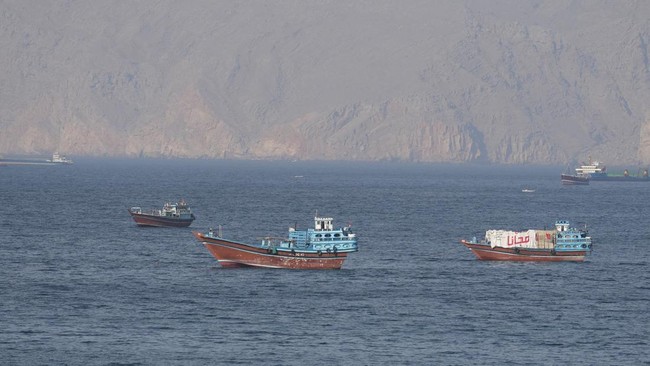
The Strait of Hormuz has once again become a point of vulnerability for the global energy market in 2026. Disruptions in this strategic shipping lane highlight the extreme vulnerability of nations that remain dependent on oil imports.
Asia is the most exposed region. More than half of the world’s oil imports flow into this area, with China, India, Japan, and South Korea serving as the primary buyers.
Data from the OPEC Annual Statistical Bulletin 2026 reveals the largest oil importers in 2025. These calculations include crude oil, including lease condensate, as well as refined petroleum products.
China Leads as the World’s Oil Import Giant
China was the world’s largest oil importer in 2025, with total imports reaching approximately 13.8 million barrels per day, equivalent to 18.1% of total global oil imports. This figure does not entirely reflect domestic consumption, as a portion of the oil entering China is also used to replenish strategic reserves.
However, China’s imports began to face pressure when oil prices surged due to disruptions in the Strait of Hormuz. According to the US Energy Information Administration (EIA), China’s crude oil imports declined in the second quarter of 2026, partly due to reduced supplies from Iraq.
Amidst supply uncertainty, China has continued to strengthen its oil reserves. The EIA estimates that China’s oil reserves reached approximately 1.49 billion barrels in the second quarter of 2026. This substantial reserve serves as a buffer for China when global supplies are disrupted.
Asia Secures Half of the World’s Oil
China is not the only oil giant in Asia. India imported approximately 6.2 million barrels per far in 2025, followed by South Korea at 3.8 million barrels and Japan at 3.3 million barrels per day. Combined, the five largest importers account for about 46% of global oil imports.
Regionally, the Asia-Pacific imports approximately 38.2 million barrels per day, or about 50.1% of total global oil imports. This dependency makes the Strait of Hormuz highly strategic for Asia.
In the first half of 2025, approximately 89.2% of crude oil and condensate passing through Hormuz flowed towards Asian markets. China, India, Japan, and South Korea were the four largest destinations, collectively accounting for about 74% of all crude oil and condensate flows through the strait. Singapore also ranks among the major importers with around 2.8 million barrels per day, despite its relatively small domestic market needs. Meanwhile, Indonesia sits at 13th position with imports of approximately 1.4 million barrels per day, or about 1.9% of the global total.
Hormuz Disruptions Cause Oil Flows to Plummet
Asia’s heavy reliance on Hormuz means that disruptions in the strait are immediately felt in global oil trade flows. The EIA noted that the volume of oil and petroleum liquids passing through Hormuz fell from 21.6 million barrels per day in the fourth quarter of 2025 to approximately 14.9 million barrels per day in the first quarter of 2026. The decline sharpened further in the second quarter of 2026, when oil flows through Hormuz plummeted to around 4.9 million barrels per day.
Supply disruptions have also spread to other markets. Saudi Aramco stated it would reduce crude oil exports to buyers in Europe in October following disruptions to the East-West pipeline network caused by drone attacks, which rendered the route unable to operate normally. This situation demonstrates how disruptions in a single strategic trade route can quickly spread to energy markets across various regions.
The US Continues to Import Despite Being a Major Exporter
The United States (US) held the position of the world’s second-largest oil importer with approximately 7.9 million barrels per day in 2025. However, the US is also a major oil exporter. The EIA noted that US exports reached approximately 10.7 million barrels per day, covering both crude oil and petroleum products.
Such large volumes of imports and exports can occur simultaneously due to differences in oil types, refinery requirements, production locations, and destination markets. In 2025, about 57% of US crude oil imports came from Canada, which serves as the primary supplier for US refineries. Conversely, a portion of US oil production with different characteristics is exported to markets requiring those specific types.
Thus, high import volumes do not necessarily mean a country lacks oil. Refinery structures, oil types, production locations, trade routes, and a nation’s position in the global energy trade all determine import and export flows.
This data illustrates how vital Asia is on the global oil trade map. China remains the largest importer, while India, Japan, and South Korea drive Asia’s position as the primary destination for global oil. This dependency ensures that disruptions in strategic routes like the Strait of Hormuz have the potential to impact energy prices, transportation costs, and industrial activities across various nations.
Source: jawawa.id (https://jawawa.id/newsitem/asia-consumes-half-of-worlds-oil-hormuz-becomes-critical-flashpoint-1790139343)
Originally published by CNBC Indonesia (https://www.cnbcindonesia.com/research/20260923095154-128-770116/separuh-minyak-dunia-diborong-asia-hormuz-jadi-titik-kritis), translated from Indonesian