
Asia Conquers the Dollar in Droves, Rupiah Weeps Alone
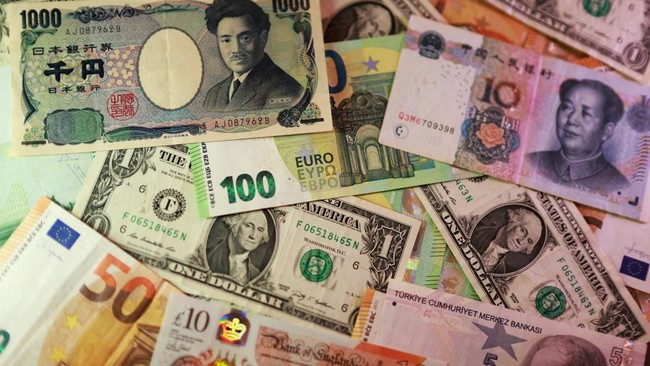
Jakarta, CNBC Indonesia - Most Asian currencies strengthened this week. However, the rupiah slumped instead.
The rupiah exchange rate closed under pressure against the US dollar on the final trading day of the week, Friday (17/4/2026).
According to Refinitiv data, the rupiah ended trading ahead of the weekend in the red zone with a 0.32% correction to the level of Rp17,180/US.Thatlevelbecametherupiah′snewall − timeweakestclosingposition.ThissituationalsobroughttherupiahclosertothepsychologicallevelofRp17, 200/US. Throughout this week, the rupiah fell 0.56%.
The rupiah’s weakening today was mainly influenced by external factors, particularly the strengthening of the US dollar in the global market, which once again pressured other countries’ currencies, including the rupiah.
The rupiah’s performance was in stark contrast to other Asian currencies. Almost all Asian currencies strengthened this week. The largest gain was recorded by the won, which jumped 1.23%.
“Pressure on the rupiah is coming from almost all directions: capital outflows in Indonesian bonds, limited central bank ammunition, and the fact that this country is a net clean energy exporter amid a highly uncertain geopolitical situation,” said Glenn Yin, director of research at broker ACCM, quoted from Reuters.
The rupee has also improved after being severely shaken at the beginning of April.
“In the short term, the rupee is expected to move in the range of 92.50-94 per US dollar because central bank measures have contained one-way weakening pressure,” said a foreign exchange salesperson at a foreign bank.
After being at the bottom of Asian currencies until the end of March, the rupee has strengthened around 2% since the first policy package was announced on 27 March, making it the second-best performing currency among major Asian currencies in that period.
However, so far in 2026, the rupee remains the weakest in the region because investors continue to monitor weak capital flows and risks to the economy due to high energy prices.
In contrast, India, the Philippines, and Indonesia are closer to the economic breaking point, with thinner buffers and greater sensitivity to imported energy costs,” wrote ING analysts in their note.