
Asia Becomes World Economic Shield, Controlling 60% of Global Foreign Exchange Reserves
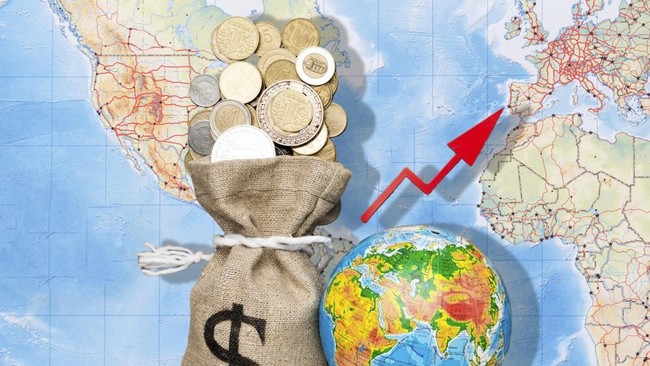
Foreign exchange reserves are a crucial line of defence for a country. When financial markets are volatile, a currency weakens, or foreign investors pull out their funds, these reserves can be used to absorb the pressure. Acting much like a national emergency fund, central banks can deploy reserves to stabilise exchange rates, pay for essential imports, service external debt, and maintain investor confidence.
According to the IMF’s International Reserves and Foreign Currency Liquidity (IRFCL) data, which excludes gold holdings and covers the latest reporting periods from mid-2025 to the second quarter of 2026, China ranks first globally with foreign exchange reserves of US$3.41 trillion. This figure places China far ahead of other nations. Japan is in second place with US$1.26 trillion, followed by Switzerland in third with US$932.3 billion. Taiwan holds fourth position with US$602.5 billion, and India rounds out the top five with US$543 billion, further solidifying Asia’s strong presence on the list of the world’s largest reserve holders.
Looking at the top ten, seven are Asian economies. In addition to China, Japan, Taiwan, and India, the list includes Hong Kong with US$442.1 billion, South Korea with US$423.1 billion, and Singapore with US$419.3 billion. Collectively, these seven Asian nations control more than half of the world’s total foreign exchange reserves. Their combined reserves amount to approximately US$7 trillion, which is around 55% of the global total of roughly US$13 trillion. This massive accumulation is largely attributed to growth models reliant on exports, sustained trade surpluses, and deliberate policies to build substantial financial buffers.
The drive to amass such large reserves stems significantly from the trauma of the 1997 Asian financial crisis. During that period, many countries in the region experienced severe pressure, with collapsing exchange rates and massive capital outflows, forcing some to seek external assistance to stabilise their economies. The experience prompted governments across Asia to build up their foreign exchange reserves as a form of self-protection, providing ample room to withstand external shocks without depending on foreign aid. Consequently, for many Asian nations, reserves are not merely a symbol of economic prestige but a vital tool for maintaining stability during turbulent times in global markets.
In stark contrast, the United States, despite being the world’s largest economy, ranks only 13th with foreign exchange reserves of US$244.6 billion, placing it behind nations like Singapore, South Korea, Thailand, and Brazil. This apparent anomaly is explained by the unique role of the US dollar as the world’s primary reserve currency. Since international trade, global investments, and other central banks’ reserves are predominantly held in dollars, the US has no need to stockpile large amounts of foreign currency. It can meet its international obligations using its own currency, a privilege not shared by other nations that must hold significant foreign exchange reserves to manage their exchange rates and fend off market pressures.
While holding large reserves offers clear advantages in terms of crisis preparedness and investor confidence, it is not without cost. These funds are typically parked in safe but low-yielding assets, such as government bonds from developed countries, meaning the capital is not being used to stimulate domestic economic activity. Governments and central banks must therefore balance the need for economic security with the opportunity cost of not deploying these funds elsewhere. This dynamic also highlights that global financial influence is not determined by economic size alone. While the US remains the centre of the monetary system due to dollar dominance, the sheer scale of Asia’s foreign exchange reserves underscores the region’s critical importance in global trade, manufacturing, and capital flows.
Source: jawawa.id (https://jawawa.id/newsitem/asia-becomes-world-economic-shield-controlling-60-of-global-foreign-exchange-reserves-1782705109)
Originally published by CNBC Indonesia (https://www.cnbcindonesia.com/research/20260626125742-128-745972/asia-jadi-tameng-ekonomi-dunia-kuasai-60-cadangan-devisa-global), translated from Indonesian