
ASEAN’s proposed resilience measures must go into ‘full gear’, but domestic priorities a stumbling block
analysis Asia
ASEAN’s proposed resilience measures must go into ‘full gear’, but domestic priorities a stumbling block
The war in the Middle East has hit Southeast Asia’s energy, fertiliser and food supply simultaneously, prompting new regional solutions - but turning them into action could prove difficult, say observers.
CEBU, Philippines: In a packed media conference room near the luxury beach resorts on Mactan island in central Philippines, President Ferdinand Marcos Jr made an assessment of the urgent task ahead for Southeast Asian countries.
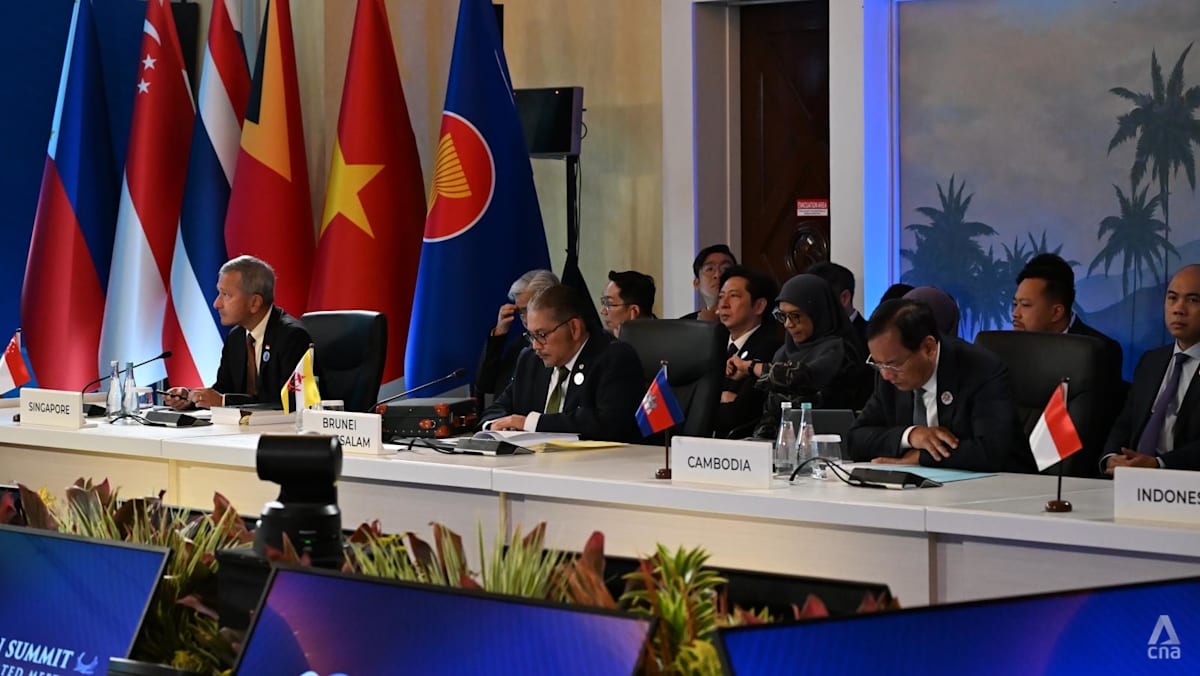
The ongoing Middle East conflict has wrought supply disruptions that hit the region hard, as leaders of the Association of Southeast Asian Nations (ASEAN) gathered on the island last Friday (May 8) to endorse measures aimed at boosting cooperation on energy and food security as well as improving coordination during crises.
“We needed it last month. Forget about next month, six months, a year from now. We needed it yesterday, if not sooner, sort of thing. So, that’s the way we are approaching the problem,” Marcos said.
The 48th ASEAN Summit that concluded on Friday saw leaders propose new ideas like a regional fuel stockpile and a standby mechanism for food security to cushion against the impacts of the Strait of Hormuz closure - and potentially similar incidents in the future that could strain crucial fuel and fertiliser supplies to the region.
They also agreed to consider a “crisis communication and coordination protocol” for foreign ministers to ensure a “coherent, timely and coordinated” regional response to crises that impact multiple sectors.
Experts weigh in on the need for these ideas and the challenges of turning them into reality.
TO SHARE OR STOCKPILE FUEL
Marcos told reporters on Friday that individual ASEAN member states could independently decide how they were going to get energy during the fuel supply crisis caused by the Middle East conflict.
“It’s left to individual countries to make their own arrangements on how to gain supply, because we are all in a different situation,” he said.
But he insisted that ASEAN members were pulling in the same direction on the regional fuel stockpile proposal, saying that leaders had “unanimously agreed” on its principle though officials were still figuring out operational details.
“So, we are trying to even out those differences between countries. We are making our own arrangements, but at the same time we are coming together and developing the idea that we will have a fuel reserve (of) all the different kinds of fuel,” he added.
Disruptions in the Strait of Hormuz have unsettled fuel supplies and pushed up prices across the region. The strait, which connects the Persian Gulf to the Indian Ocean, handles about a quarter of the world’s seaborne oil trade, with roughly 80 per cent of these shipments bound for Asia.
During the plenary session on Friday, Singapore Prime Minister Lawrence Wong acknowledged that ASEAN ministers had discussed the fuel stockpile, though he also called for the swift ratification of ASEAN Petroleum Security Agreement (APSA), which was last renewed in 2025.
APSA, which allows member states to support each other’s oil and gas needs during supply disruptions, also recommends joint oil stockpiling as a medium to long-term measure to minimise exposure to disruptions.
First signed in 1986, the agreement obliges ASEAN members to individually or collectively enhance petroleum security, with cooperation on a voluntary and commercial basis.
Under APSA’s coordinated emergency response measures, all member states should endeavour to supply petroleum to the distressed country at the aggregate amount equal to 10 per cent of its normal domestic requirement for at least 30 days.
On Apr 14, Marcos reportedly urged member states to operationalise APSA and activate these measures, using the current energy crisis as a “live” test to glean “immediate” lessons.
“This mechanism, once tested and activated regularly, could serve as a meaningful buffer for smaller economies during exactly the kind of disruption that we are experiencing today,” he said during a virtual energy resiliency summit hosted by Japanese Prime Minister Sanae Takaichi.
Still, APSA is generally seen as a last-resort coordination mechanism meant for severe fuel shortages, and as with many other ASEAN mechanisms, would first require consultation and agreement among member states.
While an ASEAN regional fuel stockpile is a “good idea”, the reality is that the bloc’s formal energy-security architecture is “still not fully ready”, said Joanne Lin, coordinator of the ASEAN Studies Centre at Singapore’s ISEAS-Yusof Ishak Institute.
“The APSA has yet to enter into force because not all member states have completed ratification,” she said, referring to the third and latest version renewed in 2025.
The third version was updated to reflect modern energy risks and gas integration, with more emphasis on broader regional energy resilience including diversified fuels and crisis coordination.
But during times of crisis, most governments will still need to ensure that they have enough supply for their own citizens, Lin said.
“They will be cautious about locking themselves into obligations that may constrain national flexibility, and this is precisely the kind of dilemma that the agreement is meant to address,” she said.
“It shows that in a real crisis, national needs will still come before regional commitments.”
Sharon Seah, principal fellow at the ISEAS-Yusof Ishak Institute, believes APSA will “not immediately” help member states during the current Middle East crisis.
“One reason is that the ratification process will take time,” she told CNA, noting that the second APSA signed in 2009 took four years to be ratified by all member states.
And even if the latest version was ratified expeditiously, the agreement would still be “voluntary and commercial”, she said.
“If everyone is in distress like the current crisis, then there’s limited utility.
Source: jawawa.id (https://jawawa.id/newsitem/aseans-proposed-resilience-measures-must-go-into-full-gear-but-domestic-priorities-a-stumbling-block-1778453570)
Originally published by CNA (https://www.channelnewsasia.com/asia/asean-fuel-stockpile-food-security-domestic-priority-6111996)