
ASEAN's Energy and Food Resilience at the Limits of the Global System
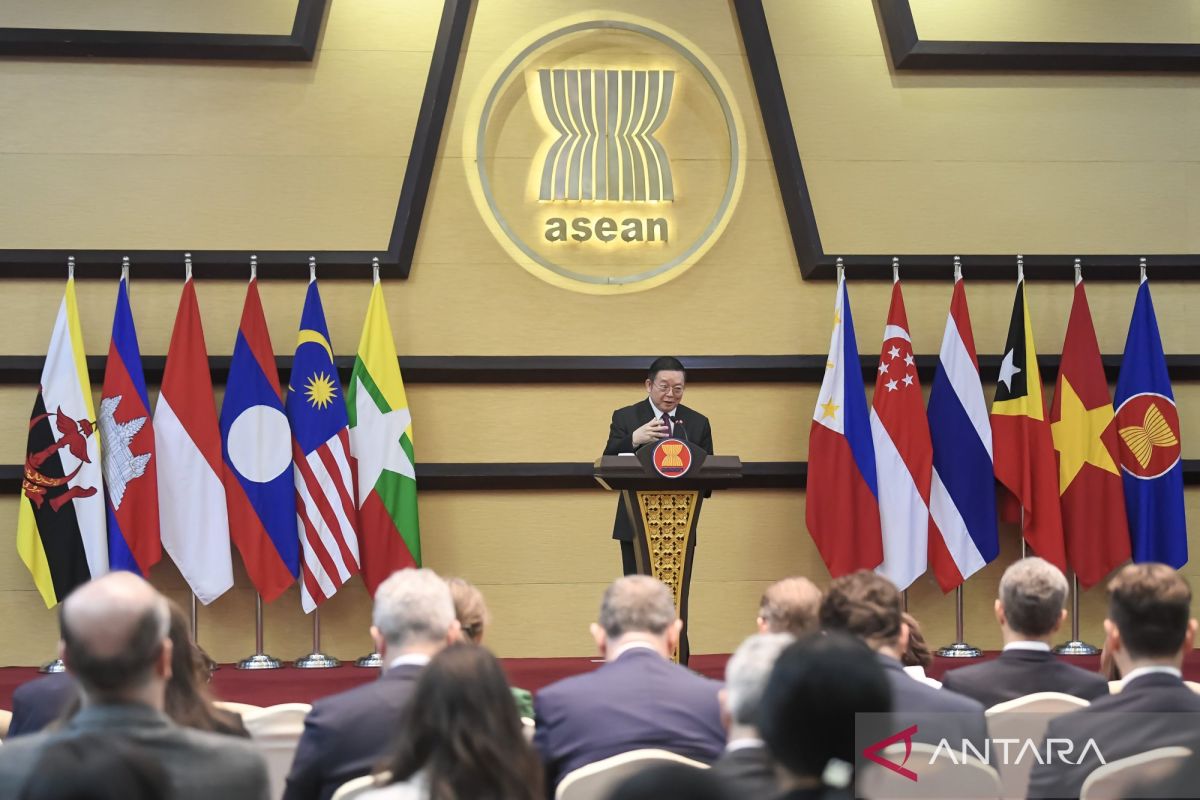
ASEAN now faces increasingly narrow choices: to adapt fundamentally or slowly lose relevance amid a global system changing faster than its institutional capacity.
Jakarta (ANTARA) - The crisis in the Middle East once again serves as a mirror that Southeast Asia is not on the periphery of the global system, but rather tightly connected to the world’s energy and food networks, which are now moving in increasingly volatile, interconnected, and unpredictable ways.
Oil price fluctuations, disruptions to shipping routes, and pressures on food supply chains are no longer mere side effects of geopolitics. All of these have transformed into direct channels that transmit political instability into cross-regional economic shocks.
In such a global structure, ASEAN’s resilience is no longer determined by geographical distance from crisis centres, but by how strongly it is connected to a world system increasingly losing its ability to stabilise itself.
Awareness that external risks have now become a permanent condition is beginning to emerge at the 48th ASEAN Summit in Cebu, Philippines. That meeting marked a change in the region’s perspective on the nature of the threats it faces.
What emerged was not just policy consensus, but recognition that resilience must now be built in a world that makes instability not an exception, but a basic condition shaping the direction of the global economy.
Agreements to strengthen regional energy and food security indicate an important shift, from a sectoral approach to risk management that views energy, food, and logistics as an interconnected chain of dependencies.
However, that change in perspective has not yet been matched by equivalent institutional transformation. Agendas such as regional food reserves, energy interconnections, and logistics coordination do show a direction towards integration, but still stop at coordinative designs without the single execution capacity when a crisis arrives.
Most ASEAN instruments still operate within national logics that are aligned, rather than becoming a collective capacity capable of acting in unison. The region’s issues now are no longer a lack of political agreement, but the absence of a shared engine capable of turning consensus into rapid action.