
ASEAN Urged to Remain Vigilant Over External Interference in South China Sea
As it turns 60, ASEAN continues to face tests in navigating the region. The South China Sea (SCS) remains one of the most complex challenges in the area. Various external parties are attempting to insert their interests into ASEAN’s efforts to find a peaceful solution to the South China Sea issue.
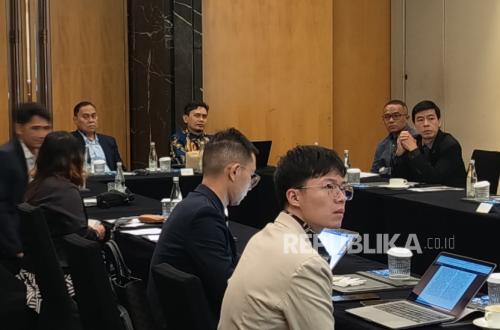
The Indonesia Strategic and Defense Studies (ISDS), an independent research institute in Jakarta, has sought to synthesise ideas on a peaceful solution for the South China Sea. This effort included a Focus Group Discussion (FGD) in Jakarta on 1 July 2026. The forum, titled “Maintaining ASEAN Centrality and Managing the South China Sea Dispute: Strategic Dilemmas, Institutional Limits, and Regional Solutions,” was attended by a number of diplomats and regional academics.
ISDS CEO Dwi Sasongko explained that the contemporary geopolitical landscape presents a series of severe structural challenges that test the limits of the institution’s cohesion. “The core principle of ‘ASEAN Centrality’ is increasingly challenged by great power competition and unresolved sub-regional friction,” he said in his opening remarks.
The overlapping territorial and maritime claims in the SCS represent one of the most complex, highly militarised, and strategically vital geopolitical flashpoints of the 21st century. Through the FGD, ISDS sought to encourage a reaffirmation of ASEAN’s position as the institutional framework for managing regional security and ensuring that external geopolitical interests do not marginalise regional diplomatic efforts.
“We encourage a breakthrough from unproductive legal and military postures, and focus on sustained, consensus-based diplomatic dialogue to manage the overlapping maritime claims,” he stated.
According to Dwi, ISDS stresses the importance of preventing kinetic escalation. “Designing and implementing practical risk-reduction mechanisms to avoid inadvertent military conflict that would disrupt global trade, harm regional economies, and undermine regional welfare,” he said.
Dwi believes that countries in the region can focus their resources on economic development, poverty reduction, and human resource enhancement, rather than being dragged into a costly and destabilising regional arms race. “A stable and peaceful ASEAN is our common interest. We believe that this forum can contribute to achieving that goal,” he concluded.