
ASEAN Summit and Prabowo's Strategic Diplomacy
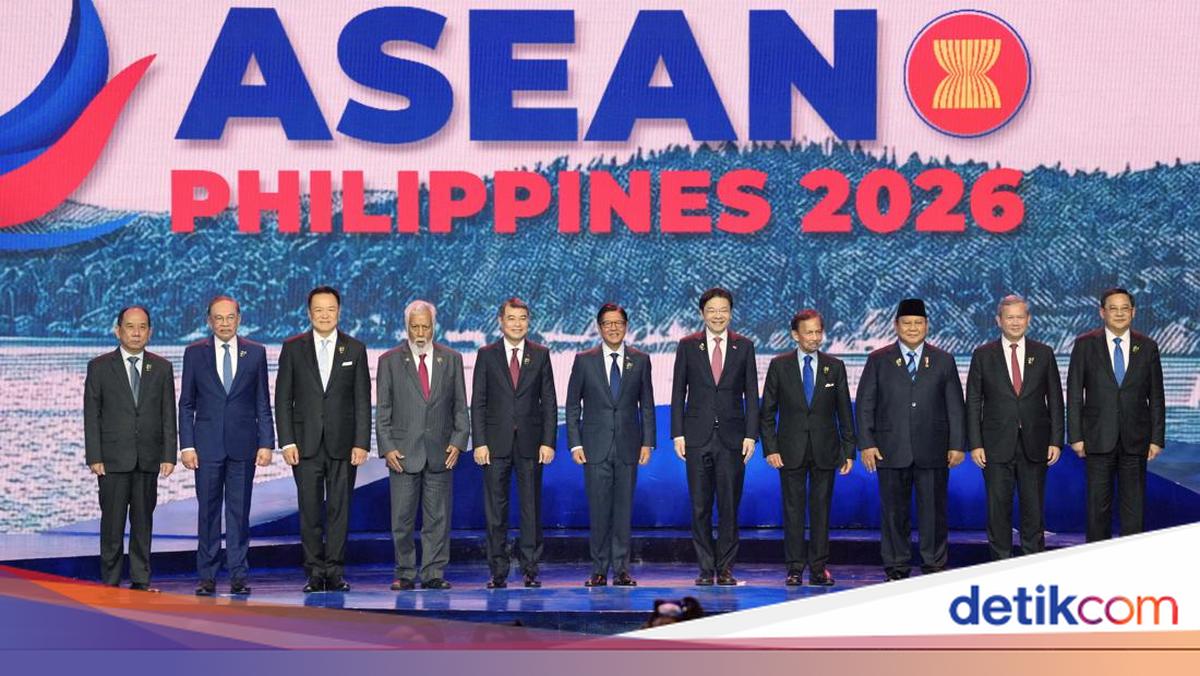
President Prabowo Subianto’s presence at the 48th ASEAN Summit in Cebu, Philippines, on 7-8 May 2026, serves as a crucial moment to gauge the direction of Indonesia’s diplomacy. Prabowo travelled to the Philippines to discuss ASEAN cooperation, strengthening economic connectivity in the BIMP-EAGA subregion, and issues of energy resilience amid global geopolitical dynamics.
Of course, this is not merely a ceremonial agenda. ASEAN is now at a new point of pressure. Southeast Asia must confront the impacts of global conflicts on energy supplies, food prices, trade routes, and economic stability.
It is increasingly intriguing that the focus of this ASEAN Summit places the energy crisis and food resilience as primary issues, particularly due to the effects of the Middle East conflict on Southeast Asian countries that still rely on energy imports.
This is where Prabowo’s diplomacy must be read as strategic diplomacy. Not just diplomacy of presence, handshakes, and photo opportunities. But diplomacy that carries national interests, reads the global power map, and transforms Indonesia’s geographical position into political bargaining power.
Conceptually, diplomacy cannot be separated from the relationship between national interests, power, and balance. Henry Kissinger (1994) asserted that diplomacy is the art of managing power so that it does not turn into open conflict, while maintaining balance to protect a state’s interests in a dynamic international order.
This view is then enriched by Joseph S. Nye (2004), which is a state’s ability to influence other actors through the appeal of values, culture, legitimacy, and credibility. Nye also developed the idea of smart power in The Future of Power (2011), namely a state’s intelligence in proportionally combining hard power and soft power.
In this context, Prabowo’s diplomacy can be read as an effort to build Indonesia’s influence not only through firm political and defence positions, but also through the ability to embrace, build trust, and offer tangible contributions to regional stability and global peace.
Prabowo appears to be building that pattern. Indonesia does not want to be a country that only reacts to global changes. Indonesia wants to help determine the direction.
This is evident from several diplomatic steps that the government calls results-oriented diplomacy, starting from Indonesia’s membership in BRICS, the setting of zero per cent trade tariffs in 27 European Union countries, the Hajj Village agreement in Saudi Arabia, to Indonesia’s involvement in Palestinian peace efforts.
These steps are important because the world is entering an era of geo-economics. Countries are not only fighting with weapons, but also with energy, food, investment, technology, ports, critical minerals, and supply chains. Therefore, when Prabowo brings food and energy issues to the ASEAN forum, the substance is not merely economic, but an issue of sovereignty.
Energy is power. Food is stability. Sea routes are the lifeline of trade. In political geography studies, states that can control space, resources, and connectivity will have greater bargaining positions.
Indonesia is in that strategic position. As the world’s largest archipelagic state, Indonesia is at the crossroads of the Indo-Pacific, close to vital routes such as the Malacca Strait, South China Sea, Sulawesi Sea, Sulu Sea, Lombok Strait, and the Indonesian Archipelagic Sea Lanes.
This means Indonesia must not view geography merely as a map. Geography must become strategy. Indonesia’s seas are not a backyard, but a main corridor for trade, energy, logistics, defence, and regional diplomacy.
Based on the perspective of strategic defence studies, Prabowo’s diplomacy is also related to deterrence capacity. Deterrence capacity is not just about military equipment. Deterrence capacity is also formed by a strong economy, secure energy, active diplomacy, and a foreign policy position that is taken into account. A strong state does not only have weapons, but also networks, credibility, and the ability to read risks.
Therefore, Indonesia’s free and active diplomacy must appear more confident. Free and active does not mean passive. Free and active does not mean silence amid rivalries of great powers. Free and active means Indonesia does not become a subordinate of any power, but remains active in building peace, maintaining regional stability, and advocating for national interests.
In ASEAN, this position is very important. Southeast Asia today is an arena of influence tug-of-war. The South China Sea still holds potential for friction. Myanmar is not yet resolved. The Middle East conflict pressures energy. Global supply chains are fragile. Meanwhile, major countries continue to seek influence in the Indo-Pacific. In that situation, Indonesia must be present as an anchor of stability.
President Prabowo’s presence at the ASEAN Summit in the Philippines must be interpreted as a signal that Indonesia is not withdrawing from the regional stage. On the contrary, Indonesia wants to push ASEAN to be more agile in facing crises.
The potential of the ASEAN Summit in Cebu is very great, especially as the issues see ASEAN leaders focusing on preparing discussions regarding energy cooperation, food supplies, protection of ASEAN citizens abroad, freedom of navigation, and the importance of secure sea routes based on international law.
At this point, Indonesia’s diplomacy must work on two tracks at once. First, the pragmatic track by ensuring that energy, food, trade, investment, and connectivity cooperation provides direct benefits to the people. Second, the strategic track by ensuring Indonesia remains respected as a major power in Southeast Asia capable of maintaining regional balance.
Prabowo has the political capital to play that role. His background in defence makes him understand that the world does not entirely move with good intentions. In international relations, national interests remain the primary foundation. However, that experience must also be translated into