
ASEAN Power Grid Could Cut Electricity Costs
SINGAPORE – Cross-border electricity trading could help ASEAN countries reduce energy costs while strengthening supply security as electricity demand rises. Regional integration would allow countries with surplus energy to sell it to others in need, reducing the need to build new, more expensive power plants.
ASEAN Centre for Energy (ACE) Executive Director Razib Dawood said this was one of the main benefits of developing the ASEAN Power Grid (APG). Integrating electricity networks could help member states optimise the region’s unevenly distributed energy resources, he said.
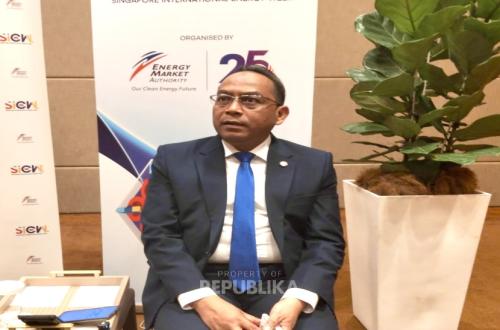
“It is about a larger market and efficiency. Efficiency means savings and avoiding waste,” Razib said in an interview on the sidelines of Singapore International Energy Week (SIEW) 2026 on Wednesday (28 October 2026).
Razib cited electricity trading between Sarawak, Malaysia, and West Kalimantan, Indonesia. Under a bilateral arrangement between Sarawak Energy and PLN, Indonesia can receive hydroelectric power from Sarawak.
That supply offers West Kalimantan an alternative to using more expensive diesel-fired power plants. The example shows that countries do not have to wait until all their domestic infrastructure is complete before making use of energy resources in neighbouring countries, Razib said.
“Indonesia buys electricity from Sarawak because its energy is cheaper. It does not have to wait until all the infrastructure has been built,” he said.
Electricity trading can also help when a country faces a supply shortfall. With interconnected grids, neighbouring countries can help meet demand during disruptions or spikes in consumption.
Without such support, shortages could force operators to impose rolling blackouts, potentially harming economic activity. Electricity interconnection therefore also plays a role in strengthening the region’s energy supply reliability.
Razib said ASEAN should expand cooperation, which has so far largely taken place bilaterally, into multilateral electricity trading. Arrangements involving more countries could improve the efficiency of power plants and transmission networks.
He cited Laos, which has hydropower and wind resources but a relatively limited domestic market. Access to neighbouring markets could give renewable energy projects in Laos a larger pool of potential buyers.
Vietnam, for example, already buys electricity from Laos. Such cooperation could be expanded so that more countries benefit from the energy resources available across the region.
Razib said power generation and grid development should take account of the relationship between energy-resource locations and centres of demand. Renewable energy resources are not always close to the cities or industrial areas that need electricity.
Transmission infrastructure, including undersea cables and inter-island links, is therefore a crucial component of the APG’s development. These facilities are needed to connect energy sources with areas requiring electricity.
Razib also stressed that electricity integration did not mean countries had to disregard their national interests. Each country could continue strengthening its domestic grid while using energy trading to improve efficiency.
“ASEAN is not forcing every country to agree on everything. Those that are ready can move faster,” he said.
Razib said regional cooperation was becoming more important as global uncertainty prompted countries to strengthen energy security. ASEAN has substantial energy resources and a large market, giving it the opportunity to make better use of both through cross-border trade.
With broader integration, member states could reduce wasted investment, expand their supply options and build a more resilient energy system. Cooperation would also enable ASEAN countries to use available energy resources more efficiently.
“Together, we can go further and faster,” Razib said.