
ASEAN Needs to Strengthen Transboundary Forest Fire Haze Management
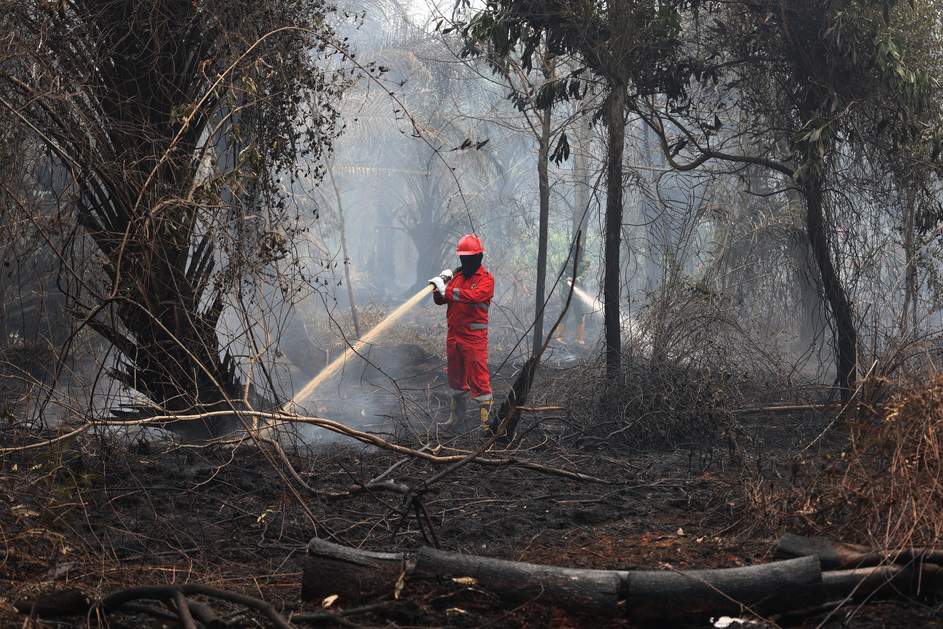
Haze caused by forest and land fires (karhutla) in Kalimantan has once again become a transboundary issue after smoke enveloped several regions in Malaysia and the Philippines. This situation underscores the need to strengthen ASEAN cooperation mechanisms so that haze pollution management is integrated and does not stop at individual national responses.
International observer Teuku Rezasyah stated that ASEAN countries need to strengthen the capacity and coordination of stakeholders to face the issue of haze crossing national borders. ASEAN essentially already possesses a foundation for cooperation through the ASEAN Agreement on Transboundary Haze Pollution, which was ratified in 2002 and came into effect a year later. However, this agreement must be accompanied by stronger technical capabilities and coordination at both national and regional levels.
“Continuous education and training must be conducted among stakeholders in each country, using international-standard and accredited curricula,” said Rezasyable when contacted on Thursday (3/9).
Capacity building is vital because managing haze pollution requires a coordinated response, ranging from fire prevention and hot-spot monitoring to information exchange and management once smoke has moved into other countries. Inter-agency coordination within each country must also be improved. Teuku warned that forest fire management should not be hindered by sectoral interests.
Teuku also emphasised that the principle of sovereignty should not be used to ignore the environmental impacts felt by neighbouring countries. According to him, every country maintains the responsibility to ensure that activities within its territory do not cause serious impacts on others. Therefore, transboundary cooperation must be strengthened with mechanisms that allow ASEAN nations to act swiftly when haze pollution begins to spread.
“There must be no more sectoral ego within each country that leads to shifting responsibility,” he asserted.
Teuku believes Indonesia needs to take action. The central government and provincial governments in areas affected by forest fires are deemed to need to demonstrate responsibility to countries impacted by the haze. This, he continued, must be accompanied by concrete and measurable steps to prevent similar incidents from recurring. The government is also expected to strengthen law enforcement against parties proven to be involved in forest fires.
“The time has come for the central and provincial governments to sincerely apologise to neighbouring countries and provide a measurable problem-solving strategy,” he said.
Meanwhile, Malaysia has begun a three-day cloud seeding operation in Sarawak to restore hydroelectric dam water levels and reduce the impact of transboundary haze.
In Balikpapan, the Health Office recorded a 19.8 per cent increase in respiratory infections (ISPA) in August 2026 due to the haze. In the IKN (New Capital City) delineation area, air quality in Wonotirto reached unhealthy levels with an ISPU of 162, prompting the IKN Authority to advise residents to wear masks. Additionally, the Samarinda Police, alongside volunteers, distributed 10,000 free masks to citizens and motorists to anticipate health impacts from the ongoing forest fires.