
ASEAN Manufacturing Showdown: Malaysia Rebounds, Indonesia Weakens — Here's Why
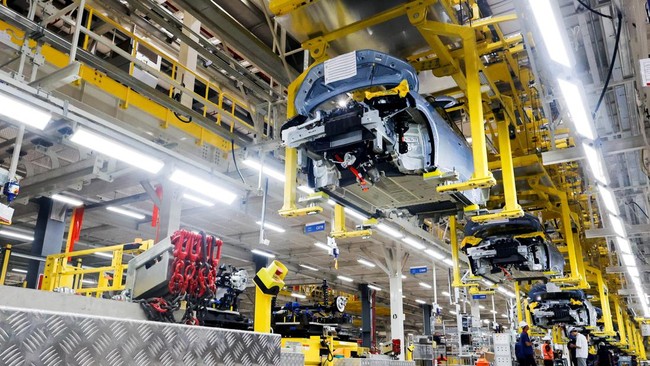
ASEAN’s manufacturing activity remained in expansion territory in June 2026, but its pace slowed further and pressure began to mount in several countries, particularly Indonesia and Myanmar. According to an S&P Global report released on Wednesday (1/7/2026), the ASEAN Manufacturing PMI fell to 50.5 in June 2026, from 51.5 in May. This level is the lowest in 11 months. The Purchasing Managers’ Index (PMI) for manufacturing is an indicator used to assess industrial activity conditions. A reading above 50 indicates expansion, while a figure below 50 signals contraction. Of the five ASEAN countries for which June 2026 manufacturing PMI data has been released, only three remained in expansion territory: Vietnam, the Philippines, and Malaysia. Meanwhile, Myanmar and Indonesia slipped into contraction. The slowdown in ASEAN manufacturing activity occurred because growth in new orders and production began to decelerate. New export orders also fell quite sharply again, indicating that overseas demand remains weak. However, there was some good news on the cost front. S&P Global noted that cost pressures in the ASEAN region eased in June. Input cost increases still occurred, but the pace was not as high as in the previous month.
Malaysia Returns to Expansion, Records Fastest Pace in a Month
Malaysia became one of the most interesting countries in June 2026. Malaysia’s Manufacturing PMI rose to 50.7, from 49.9 in May 2026. This increase brought Malaysia’s manufacturing sector back into expansion territory after being in contraction the previous month. On a monthly basis, Malaysia’s improvement was the fastest among the five ASEAN countries whose data has been released. The improvement was supported by a return to growth in production and new orders. Malaysia’s manufacturing output rose for the first time in three months, while new orders also increased again. S&P Global noted that the increase in new orders was driven by improved customer demand. This condition allowed Malaysian manufacturing companies to begin recording improvements, although the pace was still considered moderate. However, external pressures have not completely disappeared. Malaysia’s new export orders still fell because the war in the Middle East continued to pressure supply chains and global demand. Malaysian manufacturing companies also remained cautious. Purchasing activity for raw materials and employment levels tended not to change much compared to the previous month. In terms of prices, input costs did still rise, but cost pressures began to ease. Even so, selling prices were raised more quickly by companies, partly to maintain margins.
Philippines Strengthens Slightly, Vietnam Slows, Myanmar Under More Pressure
The Philippines still showed improvement in June 2026. The Philippines’ Manufacturing PMI edged up to 50.9, from 50.8 the previous month. This increase kept the Philippines’ manufacturing sector in expansion territory, although the pace of improvement remained limited. Output and new orders both increased for the second consecutive month, supported by better customer demand. Meanwhile, Vietnam recorded a PMI decline to 51.8, from 52.8 in May 2026. Despite the drop, Vietnam remained the country with the highest manufacturing PMI among the five ASEAN countries that have released data. Vietnam’s manufacturing output still grew, even recording the fastest pace in four months. However, new order growth became more moderate, including from exports. On the other hand, Myanmar remained in contraction territory with deepening pressure. Myanmar’s Manufacturing PMI fell to 47.4, from 49.3 the previous month. This decline indicates that Myanmar’s manufacturing activity is increasingly strained. Output and new orders both fell sharply, while raw material purchasing activity also weakened due to declining production needs. S&P Global also noted that Myanmar’s supply chain remains disrupted. Delivery times from suppliers lengthened again because materials were difficult to obtain and transport conditions remained challenging.
Indonesia’s Manufacturing PMI Hits Lowest Level
Regrettably, Indonesia became the country with the lowest Manufacturing PMI among the five ASEAN nations. Indonesia’s Manufacturing PMI fell sharply to 46.9 in June 2026, from 50.0 in May. This figure indicates that the country’s manufacturing sector has re-entered contraction territory with quite heavy pressure. The decline marks a weakening of Indonesia’s manufacturing conditions for the second time in three months. It also matched the position of June 2025 and became the lowest level in the past year. Usamah Bhatti, Economist at S&P Global Market Intelligence, said the health of Indonesia’s manufacturing sector deteriorated twice in three months as it closed the first half of 2026. The main pressure came from a decline in new orders. Demand for Indonesian manufactured goods weakened again, both from domestic and foreign sources. New export orders also fell at the sharpest pace since August 2021. This condition shows that Indonesia’s manufacturing industry is facing pressure not only from the domestic market but also from global demand. S&P assessed that the negative demand trend prompted companies to reduce output for four consecutive months. The decline in production in June was even the sharpest since April 2025. "In response to these circumstances, companies reduced their workforce and purchasing activity substantially, while inventories also declined amid weakening demand conditions," Bhatti said in the S&P report. S&P also noted that goods producers cut their workforce more deeply in June. The pace of workforce reduction was solid and the largest since September 2021. In addition to pressuring employment, companies also reduced raw material purchasing activity. Stocks of finished goods also decreased.