
ASEAN Foreign Exchange Reserves Rise Collectively, While Malaysia Declines
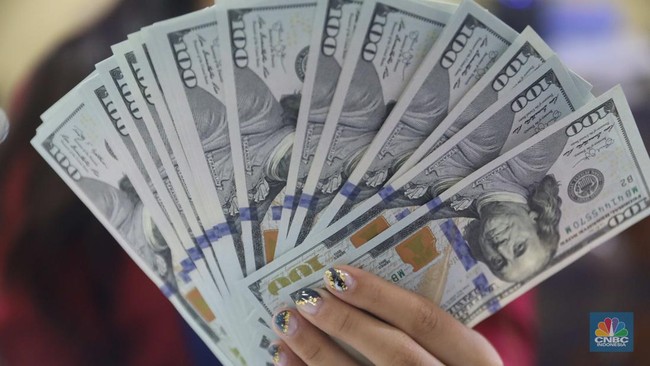
Indonesia’s foreign exchange reserves have increased once again after a decline in July 2026, growing by US$1.2 billion in August 2026.
According to a report from Bank Indonesia (BI), the nation’s foreign exchange reserves reached US$146.5 billion at the end of August 2026. This figure represents an increase from the position at the end of July 2026, which stood at US$145.3 billion.
This rise reverses the previous movement of Indonesia’s reserves. In July 2026, the position had dropped by US$300 million, from US$145.6 billion to US$145.3 billion.
Bank Indonesia explained that the increase in foreign exchange reserves in August was primarily driven by tax and service revenues, as well as the drawdown of the government’s foreign loans.
This addition to the reserves occurred amidst the payment of the government’s foreign debt and the rupiah exchange rate stabilisation policies implemented by BI in response to global financial market uncertainty.
The current position of Indonesia’s foreign exchange reserves is equivalent to 5.4 months of imports, or 5.3 months of imports and government foreign debt payments. This amount remains above the international adequacy standard of approximately three months of imports.
“Bank Indonesia assesses that these foreign exchange reserves are capable of supporting external sector resilience, as well as maintaining macroeconomic and financial system stability,” said Ramdan Denny Prakastoro, Executive Director of the BI Communications Department, in a press release on Monday (7/9/2026).
Foreign exchange reserves serve as a vital buffer during periods of global financial market volatility. These funds can be utilised to meet foreign currency requirements, settle foreign obligations, and assist the central bank in maintaining exchange rate stability.
How does Indonesia’s foreign exchange reserve position compare with other Southeast Asian nations?
Most Southeast Asian countries’ foreign exchange reserves tended to increase in August 2026. Out of the five countries that have reported their reserves for the August period, four recorded an increase. Only Malaysia experienced a decline.
The five countries involved are Thailand, Singapore, Malaysia, the Philippines, and Indonesia.
In terms of total volume, Singapore remains in the top position among the five Southeast Asian nations. Its foreign exchange reserves reached 550.73 billion Singapore dollars in August 2026, an increase of 1.42 billion from 549.30 billion in the previous month. It should be noted that Singapore reports its reserves in Singapore dollars, whereas the data for Thailand, Indonesia, Malaysia, and the Philippines use US dollars.
Following Singapore, Thailand recorded foreign exchange reserves of US$283.14 billion. Indonesia followed with US$146.5 billion. The next positions were held by Malaysia with US$132 billion and the Philippines with US$104.81 billion.
Looking at the trend of changes, Thailand recorded the largest increase in foreign exchange reserves among the five nations. Thailand’s reserves surged by US$7.69 billion, from US$275.45 billion to US$283.14 billion, representing a percentage increase of approximately 2.79%.
The Philippines followed with an increase of US$1.50 billion, with its reserves growing from US$103.32 billion to US$104.81 billion. Indonesia followed with an increase of US$1.2 billion to US$146.5 billion, reversing the decline seen in July 2026.
Amidst the increases in the other four countries, Malaysia was the only one to experience a decline. Its reserves decreased by US$100 million, from US$132.1 billion to US$132 billion.
Source: jawawa.id (https://jawawa.id/newsitem/asean-foreign-exchange-reserves-rise-collectively-while-malaysia-declines-1789372730)
Originally published by CNBC Indonesia (https://www.cnbcindonesia.com/research/20260914112908-128-767661/devisa-asean-ramai-ramai-naik-malaysia-malah-turun), translated from Indonesian