
ASEAN Economy 2026: Vietnam Leads, Thailand Struggles, Where Does Indonesia Stand?
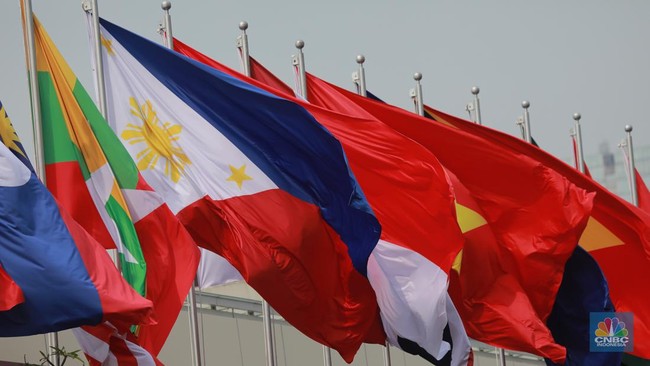
Vietnam is set to become the fastest-growing economy in the ASEAN region according to World Bank projections for 2026 and 2027. The ‘Blue Dragon’ nation is expected to see its economy expand by 7.4% in 2026 and 7.3% in 2027, supported by the manufacturing industry and exports of goods related to Artificial Intelligence (AI) technology.
“Manufacturing and the export of high-tech goods and products related to Artificial Intelligence (AI) have recently supported stronger-than-expected growth, and this trend is projected to continue,” stated the World Bank in its East Asia and Pacific Economic Update for October 2026. Economic activity is also expected to be bolstered by increased domestic stimulus stemming from structural reforms and the expansion of public investment. However, the World Bank predicts that inflation in Vietnam will average 4.2% in 2026 due to rising costs for fuel, housing, and utilities.
Following Vietnam, Indonesia is positioned as the country with the highest economic growth in the ASEAN region. The World Bank has raised its economic growth projection for Indonesia in 2026 to 5.2%, an upward revision of 0.5% from the 4.7% forecast in its April 2026 report. Growth for 2027 is expected to remain stable at 5.2%. Indonesia’s economic activity is supported by the increased implementation of government priority programmes, state-related investments, and energy subsidies.
Malaysia follows with a projected economic growth of 5.1% in 2026 and 4.7% in 2027, driven by domestic demand. The neighbouring nation’s economy is also supported by inflation, which is projected to remain relatively stable as targeted fuel subsidies limit the impact of rising energy prices on households.
Laos ranks fourth among ASEAN nations with the highest projected economic growth, at 4.1% in 2026 and 3.7% in 2027, driven by strong power plant performance and investment inflows. Timor-Leste also enters the top five with growth forecasts of 4.1% in 2026 and 3.8% in 2027. However, the World Bank notes that growth in Timor-Leste is expected to slow in 2026 compared to 4.5% in 2025 as temporary public spending measures end. Furthermore, the closure of the last producing oil fields in 2025 marks the end of the oil revenue stream that has financed the country and supported economic growth for two decades.
The Philippines is projected to achieve 3.7% growth in 2026, increasing to 5.2% the following year. The 2026 projection is a decrease from the 4.4% realised in 2025, caused by weakening domestic demand. Additionally, pressure from high energy prices is expected to drive inflation to 5.8% in 2026, weakening household purchasing power and increasing production costs, while weak public investment and low business confidence are expected to hinder investment growth.
Cambodia is projected to grow by 3.5% in 2026 and increase to 4% in 2027. This represents a slowdown from the 5.3% realised in 2025 due to a contraction in private consumption, alongside declining remittance inflows, high inflation, and slow credit growth, which significantly limit household purchasing power.
Myanmar and Thailand are the two countries with the lowest projected economic growth in ASEAN, at 2% each in 2026. In 2027, Myanmar’s economy is expected to grow by 2.5% and Thailand’s by 2.3%. Thailand’s economic slowdown from 2.4% in 2025 is due to the impact of high energy prices on the tourism and logistics sectors.
Meanwhile, Myanmar’s economy presents a story of reversal from -1.3% in 2025. The economy is expected to recover, supported by gradual reconstruction efforts and business adaptation. However, prolonged conflict, electricity shortages, labour constraints, foreign exchange restrictions, and weak domestic demand are expected to keep economic activity well below pre-crisis levels.
Source: jawawa.id (https://jawawa.id/newsitem/asean-economy-2026-vietnam-leads-thailand-struggles-where-does-indonesia-stand-1791341640)
Originally published by CNBC Indonesia (https://www.cnbcindonesia.com/news/20261007085607-4-773960/ekonomi-asean-2026-vietnam-juara-thailand-paling-parah-ri-gimana), translated from Indonesian