
ASEAN, China Industry Discuss Value-Added Cooperation Trends
Guangzhou (ANTARA) - Lim Dickson, President of PT Jia He Group, is one of the Indonesian business figures who has long fostered cooperation with partners in China.
At a recent trade conference in China, Lim said that Indonesia’s abundant resources and large market demand, combined with China’s strengths in technology and manpower, are mutually complementary, making the prospects for cooperation between the two countries quite promising.
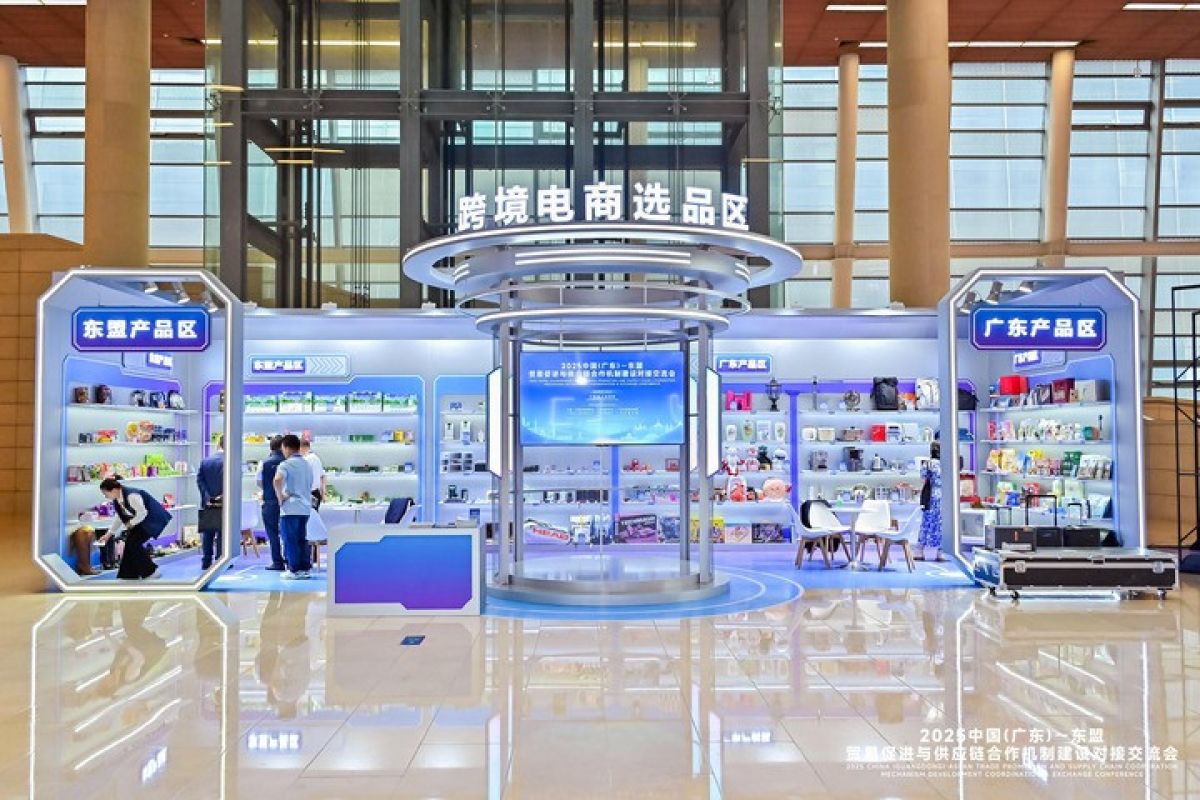
The China (Guangdong)-ASEAN Supply Chain Cooperation Mechanism Exchange and Matching and Trade Promotion Conference 2026, held in Guangdong Province, southern China, on Thursday (16 July), brought together officials, business figures, industry representatives and academics from China and ASEAN countries.
The conference focused primarily on empowering AI for industry, new energy, and the coordinated development of industrial and supply chains.
In his speech, Lim said his company has collaborated with partners in China for decades, working in sectors such as energy, agriculture, fisheries and mining.
“A number of new achievements in waste-to-energy power plants and photovoltaic-plus-fisheries power projects have been realised thanks to feasibility studies, resource alignment and policy coordination. Many Chinese companies have chosen us as their partner to drive investment in Indonesia,” Lim said.
Regarding the development of Indonesia-China cooperation, Lim highlighted that cooperation between the two sides is shifting towards sectors with higher added value. He also expressed his hope that more AI companies would forge partnerships with Indonesian counterparts in order to reach the global market.
Meanwhile, Thanousone Phonamat, Vice President of the Lao National Chamber of Commerce and Industry, said Laos possesses unique geographical advantages and expressed hope that Laos and China would pursue further cooperation in AI talent training and digital skills, new energy manufacturing, agricultural product processing, and multimodal rail-plus-maritime cargo routes.
The audience agreed that supply chain cooperation between Guangdong in China and ASEAN has entered a higher stage, with regional industrial and supply chains becoming increasingly deeply integrated, the development of chains in several sectors better coordinated, and cooperation platforms and channels growing more mature.
According to Zhang Lizhong, Secretary-General of the ASEAN-China Centre, China and ASEAN must proactively build a more stable, efficient and sustainable regional supply chain system, focusing on the digital economy, the green economy and AI, while developing digital infrastructure and green supply chains, in order to drive industrial chains towards a higher level of development.