
ASDP Strengthens Service Capacity, Government Accelerates Solutions for Ketapang-Gilimanuk Port Congestion
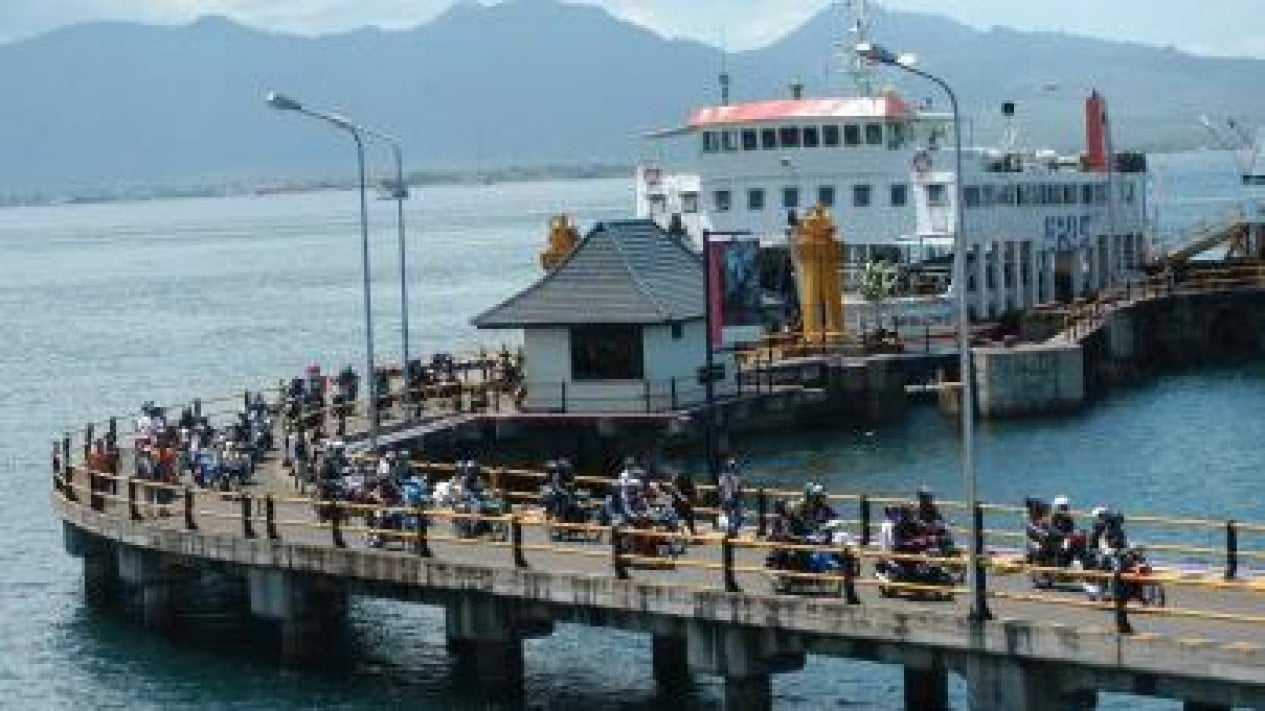
PT ASDP Indonesia Ferry (Persero) has affirmed its commitment to accelerating various operational measures alongside infrastructure development as a long-term solution. This responds to the Government’s efforts to speed up the handling of congestion on the Ketapang–Gilimanuk crossing through strengthened cross-sector coordination.
ASDP Chief Executive Heru Widodo said the company had coordinated intensively with the Ministry of Transport, regional governments, the Harbour Master and Port Authority (KSOP), the police, Gapasdap, INFA, and logistics transport associations to ensure the response is carried out in an integrated manner.
“We understand the impact felt by the public and businesses due to the congestion on the Ketapang–Gilimanuk route. Therefore, we are not only focusing on daily operational handling, but also accelerating the resolution of the root of the problem through strengthening service capacity and cross-sector collaboration,” said Heru, quoted from his statement on Thursday, 16 July 2026.
On the ground, ASDP continues to optimise vessel operating patterns, maximise fleet capacity, prepare additional parking areas for logistics vehicles so that queues do not spread onto the national road, and encourage service users to purchase tickets in advance via the Ferizy app to manage the distribution of vehicle arrivals at the port.
As part of infrastructure strengthening, ASDP is also preparing capacity increases at Ketapang and Gilimanuk ports through the phased construction of three pairs of movable bridges at Piers 1, 2, and 3, each with a 50-tonne capacity, targeted for completion in 2029. The development also includes the construction of a connecting access road between Ketapang and Bulusan to smooth the flow of vehicles.
“ASDP is ready to carry out the government’s instructions and will continue to strengthen services so that the Ketapang–Gilimanuk route becomes increasingly reliable, safe, and able to anticipate the growth of public mobility and national logistics in a sustainable manner,” Heru emphasised.
Previously, at a meeting between Transport Minister Dudy Purwagandhi and East Java Governor Khofifah Indar Parawansa at the Grahadi State Building in Surabaya on Wednesday (15 July), a number of strategic measures were agreed to increase service capacity whilst ensuring the smooth flow of logistics and public mobility in the corridor connecting Java and Bali.
Transport Minister Dudy Purwagandhi stressed that the government has prepared various alternative solutions to be implemented in stages, ranging from the construction and optimisation of piers, increasing the capacity of existing piers, the operation of larger vessels, to optimising supporting ports such as Jangkar and Tanjungwangi, as well as the use of Celukan Bawang Port in North Bali as an alternative route during peak periods.