
ASDP Implements Arrive-Unload-Depart Scheme to Accelerate Traffic at Gilimanuk Strait
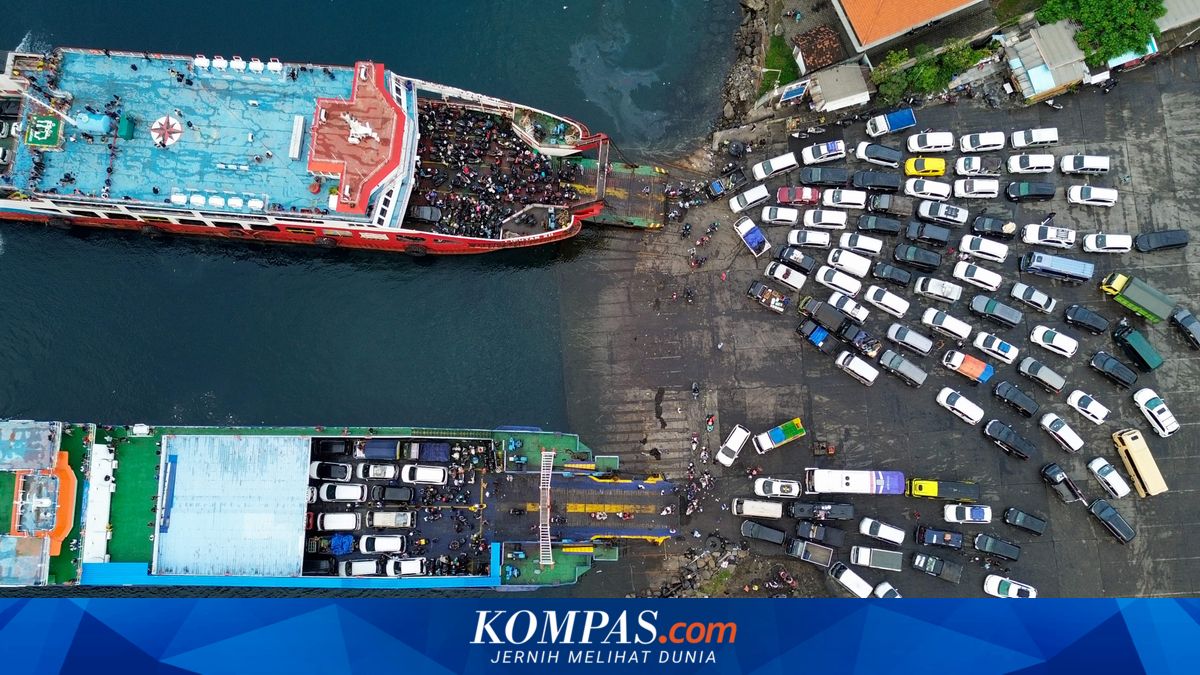
JAKARTA — PT ASDP Indonesia Ferry (Persero) has ensured that vehicle traffic to Gilimanuk Port continues to flow smoothly despite heavy queuing recorded during the 2026 Lebaran transport period.
The congestion has been driven by increased public mobility as travellers attempt to cross earlier before the temporary closure of the Gilimanuk–Ketapang and Padangbai–Lembar routes in observance of Nyepi (the Balinese New Year) on 18–20 March 2026.
Beyond the high volume of vehicles heading to the port, queuing conditions have also been influenced by traffic dynamics along the route to the Gilimanuk area, including public activity at various service points such as fuel filling stations and other travel support facilities.
Deputy President Director of PT ASDP Indonesia Ferry (Persero) Yossianis Marciano stated that the company is mobilising all operational capacity to ease congestion and maintain the smooth delivery of ferry services.
“ASDP is making various maximum efforts by optimising vessels, terminals, and operational management to keep vehicle traffic flowing. We understand that many users are racing against time before the port closure during Nyepi, so we are deploying all our resources to accelerate ferry services,” Yossianis said in a written statement on Tuesday (17/3/2026).
Meanwhile, General Manager of ASDP’s Ketapang branch, Arief Eko, stated that working with partners on the ground, various traffic management measures have been implemented to help facilitate vehicle flow to the port.
From an operational standpoint, the Ketapang–Gilimanuk route is currently operating under a very high-capacity operation pattern, deploying 34 vessels to increase service capacity. ASDP has also implemented the Arrive-Unload-Depart (TBB) scheme at several terminals, namely MB2, MB4, LCM, and Bulusan.
“A total of 24 vessels are deployed for the TBB scheme, where vessels arriving at Ketapang Port immediately discharge cargo and promptly depart without loading new vehicles, thus vessel turnaround becomes faster,” said Arief.
The surge in public mobility is evident from passenger and vehicle movement data. On Monday (16/3/2026) from 00:00 to 23:59 WIB (H-5), a total of 76,495 passengers crossed from Bali to Java via Gilimanuk Port.
For vehicles, a total of 14,398 motorcycles, 6,350 four-wheeled vehicles, 1,339 trucks, and 938 buses crossed during that period. In total, the number of vehicles crossing on H-5 reached 23,025 units.
Cumulatively, from H-10 to H-5, the number of passengers who crossed from Bali to Java reached 309,135 people, an increase of 0.7 per cent compared to the same period last year of 306,839 people.
The total number of vehicles that crossed during the same period was recorded at 97,787 units, an increase of 2.8 per cent compared to last year’s realisation of 95,080 units.
“With support from all stakeholders, ASDP continues to strive to maintain ferry services that are safe, smooth, and conducive so that public mobility and logistics distribution continue to operate effectively,” he said.