
Asbisindo Urges PFII to Be Developed as Global Sharia Financial Hub
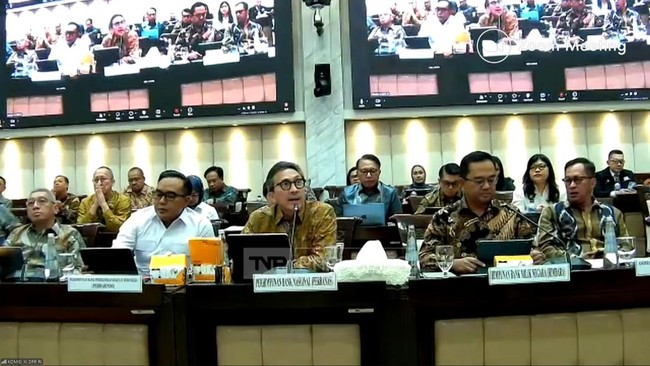
The Indonesian Sharia Bank Association (Asbisindo) has expressed support for the establishment of the Indonesian International Financial Centre (PFII). However, the organisation has requested that the design of the PFII not only focus on conventional financial transactions but also be developed as an international sharia financial centre. Asbisindo Secretary General Koko Tjatur Rachmadi stated that Indonesia has a significant opportunity to utilise the PFII to strengthen its position as a major player in the sharia finance industry, whilst attracting investors from countries with strong sharia ecosystems. This extends beyond banking to include the sukuk market, the halal industry, sustainable financing, and Indonesia’s integration with global investors and players, particularly in Organisation of Islamic Cooperation (OIC) countries, the Middle East, and Southeast Asia. According to him, Asbisindo’s support for the establishment of the PFII is accompanied by several caveats to ensure the development of the zone does not disrupt the stability of the national financial industry. Asbisindo stated that the PFII must maintain financial system stability, sharia compliance, fair competitiveness with the domestic industry, and consumer protection for existing investors in Indonesia. Furthermore, it must not become a space for regulatory arbitrage, tax avoidance, or financial activities lacking real economic substance. Koko also highlighted the potential for unequal treatment between business actors operating in the PFII and national sharia banks if the incentives provided are not balanced. ‘There is a risk of unequal treatment between PFII players and domestic banks. If financial institutions in the PFII receive much more lenient facilities compared to national sharia banks, competitive distortions could occur,’ Koko said during a Public Hearing of the PFII Bill Working Committee at the House of Representatives Commission XI on Thursday. Therefore, the organisation urged that Sharia Commercial Banks, Sharia Business Units, and domestic sharia financial institutions be given equal and aligned access to participate in the PFII. Furthermore, Koko noted that cross-border sharia financial governance aspects also require attention. He said differing interpretations of contracts across various jurisdictions could potentially cause problems if not anticipated from the outset. ‘Because of this, the PFII needs to have a clear mechanism for fatwa recognition, standard harmonisation, and sharia dispute resolution,’ Koko stated. He continued by providing several inputs. Firstly, regarding objectives, Asbisindo suggested the government explicitly add goals to strengthen sharia finance, the halal industry, sustainable financing, and Indonesia’s integration with global financial markets. Secondly, in terms of scope, Asbisindo believes it is necessary to affirm that PFII activities cover both conventional and sharia financial services, including sharia banking, sukuk, sharia investment, takaful, Islamic fintech, Islamic trade finance, and sharia wealth management. Regarding sharia governance, he said the coordination mechanism should not only involve the Financial Services Authority (OJK) and Bank Indonesia but also the National Sharia Board of the Indonesian Ulema Council (DSN MUI), the Deposit Insurance Corporation (LPS), and other authorities ensuring sharia compliance. Koko mentioned the need for a Sharia Board or Committee for the PFII, considering the establishment of a PFII Sharia Advisory Council to provide guidance and harmonisation of international and national standards. ‘In terms of licensing, it must be fast and competitive, yet still based on fit and proper tests, prudential principles, anti-money laundering measures, and sharia compliance,’ Koko continued. The next point, deemed most important, concerns incentives. Incentives must be granted selectively, based on substance, and linked to national economic benefits, such as tax incentives. ‘For example, in sharia, there are products that could become our uniqueness in the sharia banking industry, which are expected to massively attract global investors,’ Koko asserted. Regarding the protection of domestic industry, Asbisindo proposed that national sharia banks must be granted equal rights and opportunities. ‘To establish, let’s say, branches, units, or electronic business vehicles within the PFII,’ Koko said. For dispute resolution, Asbisindo views the need to establish a special court for the PFII to provide adequate competence for resolving sharia economic disputes and international sharia arbitration options. In terms of supervision, integrated oversight and the full involvement of existing associations are necessary. ‘In conclusion, Mr Chairman, Asbisindo fully supports the establishment of the PFII as long as the bill guarantees sharia financial integration, strong sharia governance, equal treatment for the domestic industry, prudential supervision, and a real contribution to the national economy,’ Koko concluded.