
Asbisindo Proposes PFII Design Must Accommodate Sharia Finance
Asbisindo needs to ensure that sharia commercial banks, sharia business units (UUS), and domestic sharia financial institutions are given equal and aligned access to participate in the PFII.
Jakarta (ANTARA) — The Indonesian Sharia Banking Association (Asbisindo) has proposed that the design of the Indonesia International Financial Centre (PFII) should accommodate not only conventional finance but also sharia finance, so that the district can become Indonesia’s international centre for sharia finance.
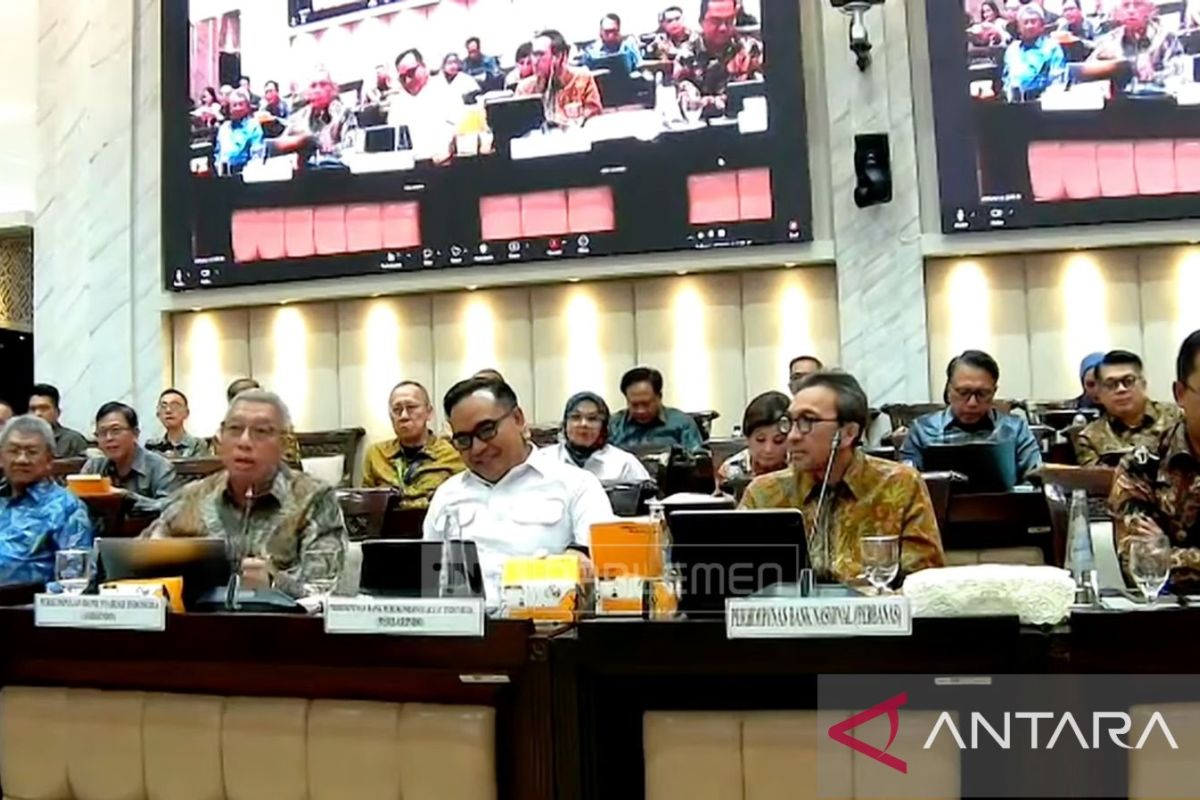
“Asbisindo in principle supports the establishment of the PFII, provided its design makes it not only a centre for conventional international financial transactions, but also Indonesia’s international centre for sharia finance,” said Asbisindo Secretary-General Koko Tjatur Rachmadi during a public hearing (RDPU) of the Working Committee for the PFII Draft Law (Panja RUU) in Jakarta on Thursday.
According to Asbisindo, the PFII should promote the development of the Islamic banking industry, the sukuk market, the halal industry, sustainable financing, and stronger integration between Indonesia and global investors, particularly from member states of the Organisation of Islamic Cooperation (OIC), the Middle East, and Southeast Asia.
However, this support comes with several caveats. Asbisindo stressed that the PFII must safeguard financial system stability, sharia compliance, fair competition with the domestic industry, consumer and investor protection, and must not become a space for regulatory arbitrage, tax avoidance, or financial activities lacking genuine economic substance.
Asbisindo also warned of the risk that the PFII could develop merely as an offshore financial centre without making a real contribution to the national economy.
“Therefore, tax incentives, licensing, and other facilities must be linked to indicators of tangible benefit. Incoming investment, real-sector financing, job creation, skills transfer, increased transactions on the domestic financial market, and support for micro, small and medium enterprises, especially in the halal industry,” Koko said.
In addition, Asbisindo highlighted the potential for unequal treatment between businesses operating in the PFII and domestic banks. If financial institutions in the PFII receive far more relaxed facilities than national Islamic banks, Koko said, competitive distortion could occur.
“Asbisindo needs to ensure that sharia commercial banks, sharia business units (UUS), and domestic sharia financial institutions are given equal and aligned access to participate in the PFII,” he said.
Asbisindo also requested that the legal and administrative specialities of the PFII should not diminish the application of prudential principles, oversight by the Financial Services Authority (OJK), Bank Indonesia’s (BI) monetary policy, deposit guarantees from the Deposit Insurance Corporation (LPS), or sharia governance.
The government was also asked to affirm in the law that the PFII remains part of the Unitary State of the Republic of Indonesia (NKRI) and is subject to Indonesian sovereignty.
Furthermore, Asbisindo highlighted the risk of inconsistent sharia compliance. For this reason, the PFII is considered to need a mechanism for recognising fatwas, harmonising standards, and resolving sharia disputes to address differences in the interpretation of contracts in cross-border sharia financial products.
The association also emphasised that the PFII must avoid the stigma of being a tax haven by implementing beneficial ownership standards, preventing money laundering and terrorism financing, ensuring tax transparency, and enabling cross-jurisdiction reporting.
As input for the PFII Bill, Asbisindo proposed that sharia finance development be explicitly included as one of its main objectives.
The scope of the PFII’s activities is also proposed to cover conventional and sharia financial services, including Islamic banking, sukuk, sharia investment, takaful, Islamic fintech, Islamic trade finance, and Islamic wealth management.
On governance, Asbisindo proposed establishing a coordination mechanism involving the OJK, BI, the National Sharia Council of the Indonesian Ulema Council (DSN-MUI), the LPS, and other relevant authorities.
The association also urged the formation of a PFII Sharia Advisory Council to support the harmonisation of national and international sharia standards.
On licensing, Asbisindo viewed fast and competitive processes as important, while still prioritising fit and proper tests, prudential principles, money laundering prevention, and sharia compliance.
Incentives are also proposed to be granted selectively based on substance and benefit to the national economy, including encouraging the development of distinctive sharia products capable of attracting global investors.
Regarding protection of the domestic industry, Asbisindo proposed that national Islamic banks be given equal opportunity to open branches, units, desks, or electronic business vehicles in the PFII.
On dispute resolution, the association supports the establishment of a special PFII court with competence to handle sharia economic disputes, accompanied by options for international sharia arbitration.
“In conclusion, Asbisindo fully supports the establishment of the PFII provided the bill to be issued guarantees the integration of sharia finance, strong sharia governance, equal treatment for the domestic industry, prudential oversight, and a real contribution to the national economy,” Koko said.