
As Warfare Grows More Sophisticated, Business in Old-Style Weapons Remains Strong
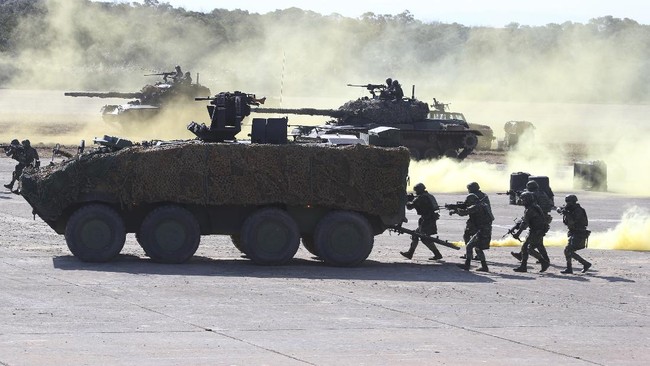
Jakarta, CNBC Indonesia – Drone technology and artificial intelligence (AI) are rapidly changing the face of modern warfare. However, demand for tanks, fighter jets and other conventional military equipment remains strong.
According to CNBC on Saturday (7 November 2026), the latest financial results from defence companies in the United States and Europe show that conventional weapons continue to drive annual growth, even as demand surges for advanced sensors, autonomous systems and anti-drone technology.
Rather than displacing traditional arms manufacturers, the emergence of drones and autonomous warfare is creating new business opportunities for many of the same companies.
Lockheed Martin recorded a 24% increase in missile-business revenue in the third quarter of 2026. Meanwhile, RTX secured contracts worth billions of dollars for long-established missile systems.
In Europe, German defence equipment supplier Renk reported a 46% surge in orders for its military vehicle business in the first nine months of the year.
However, the financial results also show that the distinction between conventional weapons and new defence technology is becoming increasingly blurred.
German defence electronics company Hensoldt reported a 52% increase in revenue from its optronics business. The company’s chief financial officer told CNBC that most of the growth came from conventional military equipment, including tanks and armoured vehicles.
Meanwhile, Rheinmetall’s air-defence business, which includes anti-drone systems, recorded revenue growth of 63%. This came despite the company cutting its full-year performance forecast because of delays to several projects.
According to Morningstar, drones are increasingly changing conventional military platforms rather than replacing them. Tanks and other weapons are now becoming more integrated into interconnected, data-driven battlefield networks.
Nevertheless, concerns remain that new technologies could displace demand for conventional military equipment.
Outside the battlefield, NATO plans to invest more than US$40 billion in developing anti-drone capabilities over the next five years. NATO Secretary-General Mark Rutte has warned that drones have fundamentally changed the landscape of modern warfare.
Even so, Hensoldt Chief Financial Officer Christian Ladurner said demand for conventional military equipment remains one of the company’s main growth drivers.
Ladurner said Hensoldt’s rapidly growing optronics business, which supplies optical and sensor technology, has also benefited from European governments’ efforts to replenish stocks of conventional military equipment. This is happening even as new battlefield technologies receive greater attention.
He also highlighted rising demand for air-defence systems as militaries face an increasingly diverse range of threats, from small drones to ballistic missiles.
Source: jawawa.id (https://jawawa.id/newsitem/as-warfare-grows-more-sophisticated-business-in-old-style-weapons-remains-strong-1794063023)
Originally published by CNBC Indonesia (https://www.cnbcindonesia.com/news/20261107185047-4-783208/perang-makin-canggih-bisnis-senjata-jadul-ternyata-masih-laris), translated from Indonesian