
As Wallets Dry Up, Is IDR 5.4 Million in Social Assistance the Solution?
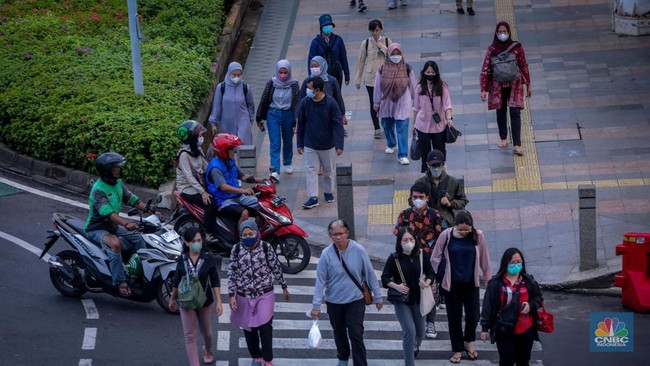
Jakarta, CNBC Indonesia - Indonesian citizens are facing concerns over declining incomes, reflected in the drop of Bank Indonesia’s Consumer Confidence Index (IKK) main components in May 2026. The Current Income Index (IPSI), for instance, is now at 123.2, down from this year’s high of 128.1, accompanied by a decline in the Consumer Expectation Index to 136.5 from 136.9. The survey also showed the saving-to-income ratio fell to 17.5% from 18.2%. Strategic Research Manager at the Center of Reform on Economics (CORE) Indonesia, Yusuf Rendy Manilet, stated that the pressure is not solely due to price increases but is beginning to affect income and labour market conditions. Amid this situation, the government is designing incentives to maintain purchasing power, including compensating for the rise in fuel prices, such as Pertamax, favoured by the middle class. National Economic Council (DEN) Chairman Luhut Binsar Panjaitan has proposed a social assistance scheme in the form of direct cash transfers to targeted recipients, with an accumulated value of IDR 5.4 million, intended to replace existing subsidy schemes. However, economists argue that boosting public optimism about income recovery requires structural changes to facilitate access to decent jobs and wages, rather than relying on the nominal value of direct cash assistance. M. Rizal Taufikurahman, Head of Macroeconomic and Financial Research at the Institute for Development of Economics, stated that while cash transfers can support short-term purchasing power and consumption, they only suppress symptoms without solving the root problem: the need for decently paid employment. He urged the government to focus on job creation, accelerating investment, strengthening the industrial and MSME sectors, and increasing productivity. Rizal emphasised that healthy consumption is sustained by rising public incomes, not perpetual government aid. Senior Researcher at CSIS Department of Economics, Deni Friawan, added that rather than increasing nominal cash transfers from the demand side, the government should improve the supply side. In the short term, he suggested cash-for-work programmes or nationally funded internship schemes, which provide both work experience and income to support purchasing power. The government confirmed that direct cash assistance is still under consideration for this year, but focused solely on the lower class. Coordinating Minister for Economic Affairs Airlangga Hartarto stated that stimulus for the middle class, affected by Pertamax price increases, would be provided through other schemes, such as internship programmes.