
As US Seeks to Break the Alliance, China and Russia Grow Closer, Says Global Analyst
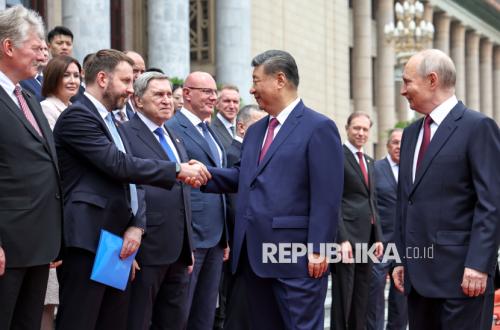
Russia–China relations have evolved into a stable strategic partnership that increasingly determines the direction of global politics, amid rising rivalry between Beijing and Washington, according to Fyodor Lukyanov, a Russian foreign policy analyst, in a piece for Russia Today. The article appeared as President Vladimir Putin visited Chinese President Xi Jinping in Beijing on Tuesday, 19 May 2026. Putin’s visit followed Beijing’s reception of a visit by U.S. President Donald Trump some time earlier.
Lukyanov argues that Moscow–Beijing ties are no longer merely pragmatic, but are built on long-term strategic needs in the Eurasian region.
According to Lukyanov, speculation about a ‘big triangle’ forming between Russia, China, and the United States has again gained traction after Putin’s trip to China not long after Trump’s visit to Beijing.
But he notes that the Putin–Xi meeting cannot be viewed in the same framework as the US–China relationship.
‘The United States and China are strategic rivals, and that rivalry is not something temporary,’ Lukyanov wrote. He added that the era of symbiotic economic relations between Washington and Beijing ‘has now ended.’
In his article, Lukyanov says U.S. pressure on China has reinforced Beijing’s closeness with Moscow. According to him, Washington’s strategy to create distance between Russia and China has not yielded the desired results.
‘Many American strategists openly state that the United States should engineer a split between Moscow and Beijing to preserve global supremacy,’ he wrote.
‘However, in practice, U.S. pressure often produces the opposite result, pushing the two Eurasian powers closer together.’
Lukyanov says the Russia–China relationship now extends across various sectors, from politics, trade, energy, finance, to military coordination. He argues that strengthened ties between the two countries have become a significant factor in current global dynamics.
While acknowledging potential frictions in trade, investment, and regional influence, Lukyanov says these differences are not fundamental.