
As the US Softens its Stance on Myanmar, Will the EU Maintain Its Blockade?
The US government has quietly approached Myanmar’s authorities, holding two rounds of talks since September. The discussions were led by US State Department representative Michael Vance, alongside US diplomats, first in Naypyidaw and then in Tokyo in early October.
Washington wants to crack down on online scam centres, secure the release of detained US businessman Adam Castillo and possibly gain access to Myanmar’s rare-earth resources. The market for these valuable minerals is currently dominated by the US’s rival, China.
Meanwhile, governments in Southeast Asia are also easing their policies of isolating Myanmar’s military leadership, despite the country’s elections being described as unfree. Several ASEAN members have now restored direct diplomatic contact with Naypyidaw.
The European Union, however, continues to reject the legitimacy of the country’s military junta. The bloc did not change course after the 2025–26 election that made military chief Min Aung Hlaing president; the military controls the political system.
EU sanctions remain in force
The EU responded to the February 2021 military coup in Myanmar by suspending direct financial assistance to the government, imposing sanctions and sharply reducing diplomatic cooperation with the military authorities.
The sanctions target 105 people and 22 entities linked to the military. In April, the EU extended the measures for a further 12 months.
At the same time, Brussels provides humanitarian assistance to displaced communities and Rohingya refugees, and supports civil society organisations.
The EU has not withdrawn Myanmar’s preferential trade access, however, amid concerns that doing so would affect workers, particularly the young women who make up much of the garment industry workforce. Myanmar–EU trade was worth about €4 billion (Rp80 trillion) last year, up from €3.4 billion in 2019.
Brussels backs ASEAN peace deal
The civil war triggered by the 2021 coup is estimated to have killed 100,000 people. Rebel groups continue to control or contest large areas of Myanmar, and more than four million people have been displaced within the country, according to UN data.
The EU “continues to maintain its policy of not recognising the current military regime”, given “the ongoing violence and attacks against its own population”, an EU spokesperson told DW.
At the same time, the bloc is “closely monitoring developments in the discussions and positions of the United States, Japan, ASEAN countries and other key actors, alongside representatives of Myanmar’s military regime”.
“The EU also supports ASEAN’s efforts, particularly the Five-Point Consensus, which has not been fully implemented,” the spokesperson added, referring to the peace agreement proposed by ASEAN in 2021.
Myanmar diplomats make contact with European counterparts
After the coup, ASEAN took the unprecedented step of excluding Myanmar’s military leaders from the organisation’s highest-level meetings after the junta failed to implement the regional peace plan.
ASEAN’s stance, however, is beginning to shift. Some member states, particularly Myanmar’s neighbour Thailand, have expressed frustration at the stalled efforts to end the country’s civil war.
Last week, Thai Foreign Minister Sihasak Phuangketkeow welcomed Washington’s renewed engagement and indicated that ASEAN members would hold substantive discussions on Myanmar’s future at the ASEAN summit in Manila next November.
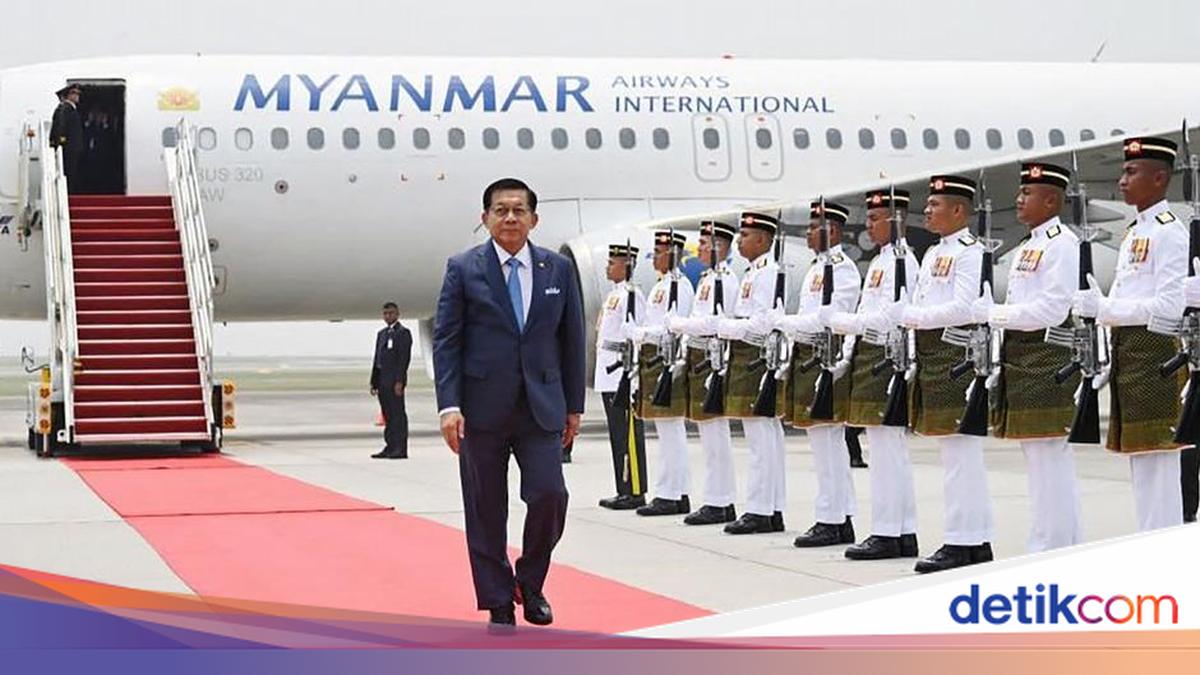
Myanmar’s authorities are also seeking to end their diplomatic isolation. In September, the country’s leader, Hlaing, gave an interview to Time magazine, his first to a major Western media outlet since the coup began. The interview was seen as an effort to rebuild ties with Western governments.
On 22 October, the London-based human rights organisation Burma Campaign UK accused the British government of a “significant shift” after the Foreign Office hosted Win Zeyar Tun, chargé d’affaires at Myanmar’s embassy in London, at an ASEAN diplomatic meeting days earlier.
According to an article published by Intelligence Online this month, the Myanmar regime’s chargé d’affaires in Brussels, Khin Thidar Ay, has also made contact with European politicians, including Czech MEP Ondřej Dostál, a member of the European Parliament’s delegation for Southeast Asia.
EU isolation has yielded little
Kristina Kironska of Palacký University Olomouc in the Czech Republic, an expert on EU policy towards Myanmar, told DW that the EU had no strong reason to follow Washington’s softening approach.
The US strategy “appears to pursue specific interests”, such as rare-earth mining and cybercrime, she said.
However, the most important rare-earth mining operations are no longer controlled by the military, but by rebel groups such as the Kachin Independence Organisation in Kachin State.
“It remains to be seen what the US can achieve through negotiations with the junta,” she said.
The EU has long presented itself as a defender of democracy and human rights in Myanmar. “So abandoning that now because the US is exploring a new, potentially more transactional approach would damage the EU’s credibility,” Kironska said.
“At the same time, isolation has achieved little. The question, therefore, is not whether the EU should engage, but with whom and under what conditions.”
Balancing Myanmar’s rebel groups and military junta
The EU must weigh the risks of its choices. If Washington, ASEAN governments and other regional powers deepen their engagement with Myanmar’s government, the EU risks being further marginalised in discussions about the country’s political future.
But greater engagement with the military could damage Brussels’ relations with Myanmar’s democratic opposition and ethnic resistance organisations, many of which control large areas.
“The key question for Brussels is whether it can remain a credible defender of democracy while ensuring it still has a meaningful voice in negotiations over Myanmar’s future,” Sabe Soe, director of the NGO Burma Centre Prague, told DW.
One option for Brussels would be to maintain sanctions on military leaders and their businesses while expanding diplomacy through ASEAN, the UN and other regional partners. The EU could also make any easing of restrictions conditional on humanitarian access, greater political freedoms and progress towards peace.
Soe also suggested that the EU could pursue economic engagement in areas administered by revolutionary forces and ethnic resistance groups, offering an alternative to engagement centred on the military authorities in Naypyidaw.
This approach would allow the EU to remain involved in Myanmar’s future without recognising a military-backed government, he said.
For now, Brussels appears to have little appetite for a fundamental policy change. That could shift, however, as more governments reopen negotiations with Myanmar’s generals.