
As the US Prepares for a Major War, Audit Reveals $285 Billion in Military Base Maintenance Backlog
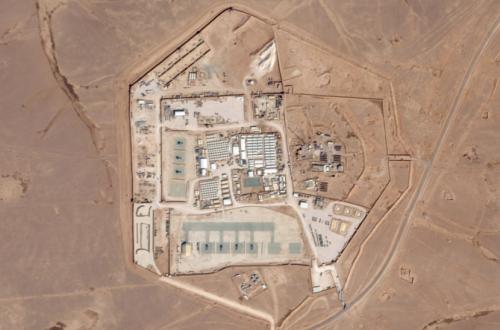
JAKARTA — The United States is preparing its military bases to withstand 90 days without relying on the electricity grid or civilian supplies if a major war breaks out.
But behind the ambition to build defences capable of operating independently, a US government audit has exposed a fundamental problem: the Pentagon faces an accumulated backlog of about US$285 billion in maintenance across military facilities, while some infrastructure continues to deteriorate because of insufficient funding.
The findings appear in a report by the US Government Accountability Office (GAO), the federal watchdog, published on 21 August 2026. It found that the Department of Defence’s deferred maintenance needs had more than doubled in five years, rising from US$137 billion in fiscal 2020 to about US$285 billion in fiscal 2025.
The figure highlights the scale of the infrastructure challenge facing the US military as the government works to design bases that are more resilient to attacks and supply disruptions.
The contrast became more pronounced after the Pentagon introduced its FORTRESS America programme on 30 September 2026. The programme is intended to ensure that key US military installations remain operational if cyber-attacks, sabotage, power-grid disruption or supply-chain failures cripple civilian infrastructure. However, the GAO report shows that even keeping existing facilities fit for use has yet to receive all the funding required.
Fox News Digital reported on Sunday (25 October 2026) that the Pentagon is developing requirements for major military bases to sustain essential operations independently for at least 90 days. Citing planning documents reviewed by its editorial team, the outlet said this would require electricity, water, fuel and communications that do not depend on outside assistance.
Other media outlets, including The War Zone and Anadolu Agency on 26 October, subsequently covered the plan as part of preparations for a possible major conflict that could disrupt US national infrastructure. However, the 90-day target remains a planning objective reported by the media, not evidence that all bases have achieved this capability. The Pentagon has also not published a deadline for full implementation or the total cost of meeting the target.
The issue identified by the GAO is distinct from the specific needs of the FORTRESS programme. The US$285 billion figure is an estimate of accumulated maintenance and repair work deferred across military facilities in fiscal 2025; it is not a budget for independent power generation or the cost of building FORTRESS. Nevertheless, both issues raise the same question: how ready is US military infrastructure to sustain prolonged operations when its support systems face extraordinary pressure?
Two 90-day and funding targets, two different realities
The GAO report, titled Installation Maintenance: Better Information on Risks and Challenges Needed to Improve Oversight of DOD Facility Conditions, says the US Department of Defence had more than 736,000 facilities worldwide in fiscal 2025. The military property portfolio is estimated to be worth US$2.6 trillion and includes buildings, support installations and other structures used for military operations and personnel accommodation.
About one-third of US military buildings are more than 50 years old. This creates substantial and ongoing maintenance needs, particularly as some facilities were built when military operational requirements differed considerably from the demands of modern warfare.
Since 2014, the Pentagon has set a target for each service to allocate routine maintenance funding equal to at least 90 per cent of the needs calculated using the Facilities Sustainment Model (FSM). The model estimates the cost of maintaining facilities based on factors including floor area, building type, location and other cost variables.
However, the GAO found that the Army, Navy and Air Force generally requested budgets of only about 80 per cent of the recommended level from fiscal 2021 to 2025. The Marine Corps’ maintenance funding requests fell from about 80 per cent to 40 per cent over the five-year period; Pentagon officials said this was linked to a shift in priorities towards restoration and modernisation projects.
The two 90s now reveal a paradox in US defence policy. On the one hand, the Pentagon wants its facilities to last 90 days without civilian support. On the other, its longstanding target of funding 90 per cent of routine maintenance needs has not been met, even as some vital infrastructure deteriorates.
In its audit of eight selected installations, the GAO found that none of the base maintenance offices reported receiving funding at the 90 per cent target. Facility managers acknowledged that they had to prioritise repairs and defer other work because available funds were insufficient to meet all needs.
This does not mean that every US military base faces the same degree of deterioration. However, the fact that all eight installations examined had funding shortfalls points to a problem that cannot be explained simply as temporary damage to one building or a single base.
Even a B-52 bomber base is deteriorating
One of the most striking examples was Minot Air Force Base in North Dakota, which is among the US locations operating B-52 strategic bombers. The GAO reported that the bomber parking apron had exceeded its estimated service life by more than 30 years, while full replacement of the surface remained unfinished.
By September 2024, base managers had replaced only about one-third of the area requiring repairs. The ageing remainder continues to need patchwork work, requiring personnel to carry out additional inspections to reduce the risk of debris that could endanger aircraft.
According to the GAO, the base had spent about US$3.5 million repairing the ageing infrastructure, in addition to the extra labour needed for routine inspections. Base officials said repeated repairs to a facility that had exceeded its service life could prove less efficient than replacing it entirely.
Source: jawawa.id (https://jawawa.id/newsitem/as-the-us-prepares-for-a-major-war-audit-reveals-285-billion-in-military-base-maintenance-backlog-1793091186)
Originally published by Republika (https://news.republika.co.id/berita/tnk4k8451/as-bersiap-perang-besar-audit-ungkap-masalah-pangkalan-militer-285-miliar-dolar), translated from Indonesian