
As the US Attacks Qeshm, How Does Benteng Island Control the Strait of Hormuz?
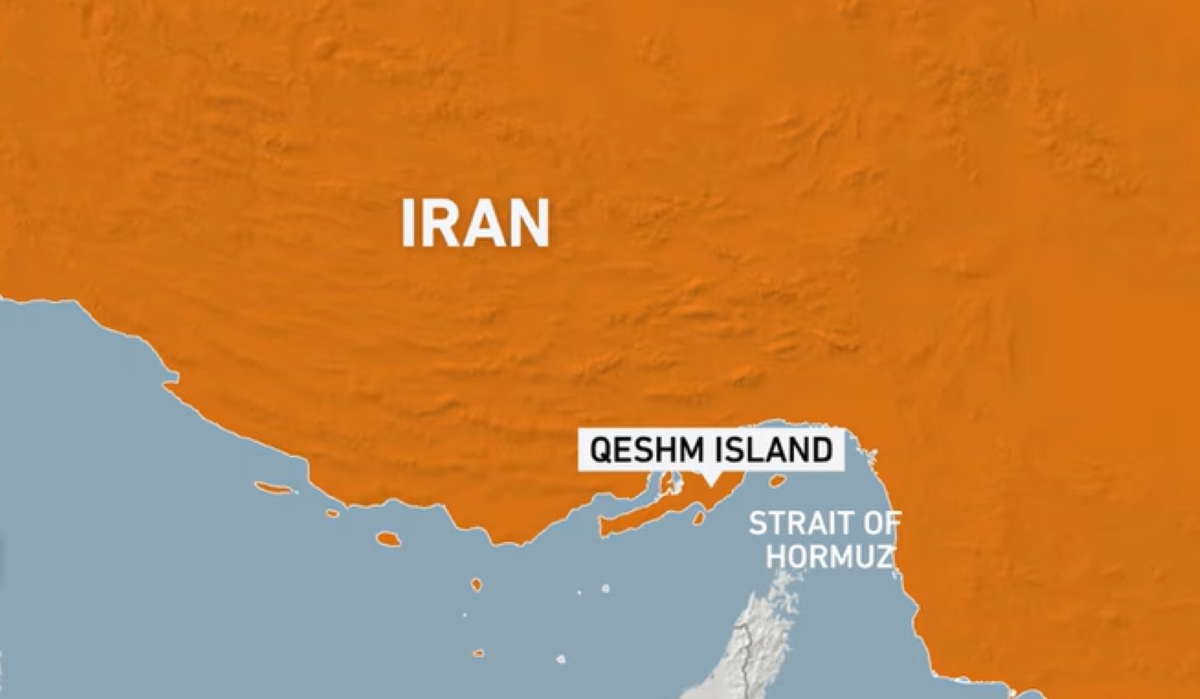
The United States military launched its latest airstrikes against Qeshm Island, an Iranian fortified territory near the Strait of Hormuz, on Wednesday. This move comes amidst slowing diplomatic channels and renewed Iranian attacks against neighbouring nations.
US Central Command (CENTCOM) stated that the strikes targeted ground control towers on Qeshm Island as an act of self-defence. The US claims that Iran previously attempted to attack Kuwait and Bahrain using missiles, though those attempts failed. Local residents reported hearing heavy explosions in the early hours of the morning on the 558-square-mile island. Qeshm holds immense strategic value and has been utilised throughout conflicts to target vessels traversing this vital international shipping lane.
Historically, Qeshm Island served as a base for the Royal Indian Navy until 1863 before falling under full Iranian control. Today, Tehran has transformed the island, once a destination for salt cave tourism, into a military stronghold equipped with missiles, drones, and fast boats. Can Kasapoglu, a defence analyst from the Hudson Institute, described Qeshm as a primary denial hub for the Islamic Revolutionary Guard Corps (IRGC). Satellite imagery indicates that Iran has positioned much of its anti-ship missile arsenal in underground launch sites known as ‘missile cities’.
These strikes occur as US President Donald Trump seeks to push for a peace agreement to end hostilities that have persisted since mid-March. Trump has emphasised that his priority is preventing Iran from acquiring nuclear weapons, while Tehran demands the lifting of port blockades and access to billions of dollars in frozen oil revenues. Although senior US officials stated that the recent strikes do not signify the cancellation of the ceasefire agreement, the escalation on the ground indicates an increasingly fragile situation. In addition to Qeshm, Kharg Island, which handles 90 per cent of Iran’s oil exports, remains a critical point under intense US intelligence surveillance.
The Strait of Hormuz remains a global flashpoint, as one-fifth of the world’s oil and liquefied natural gas traffic passes through it. Further disruptions in this region are feared to trigger surges in global energy prices and worsen economic stability across the Middle East.