
As the public adopts AI, Ministry of Home Affairs warns civil servants against routine-based work
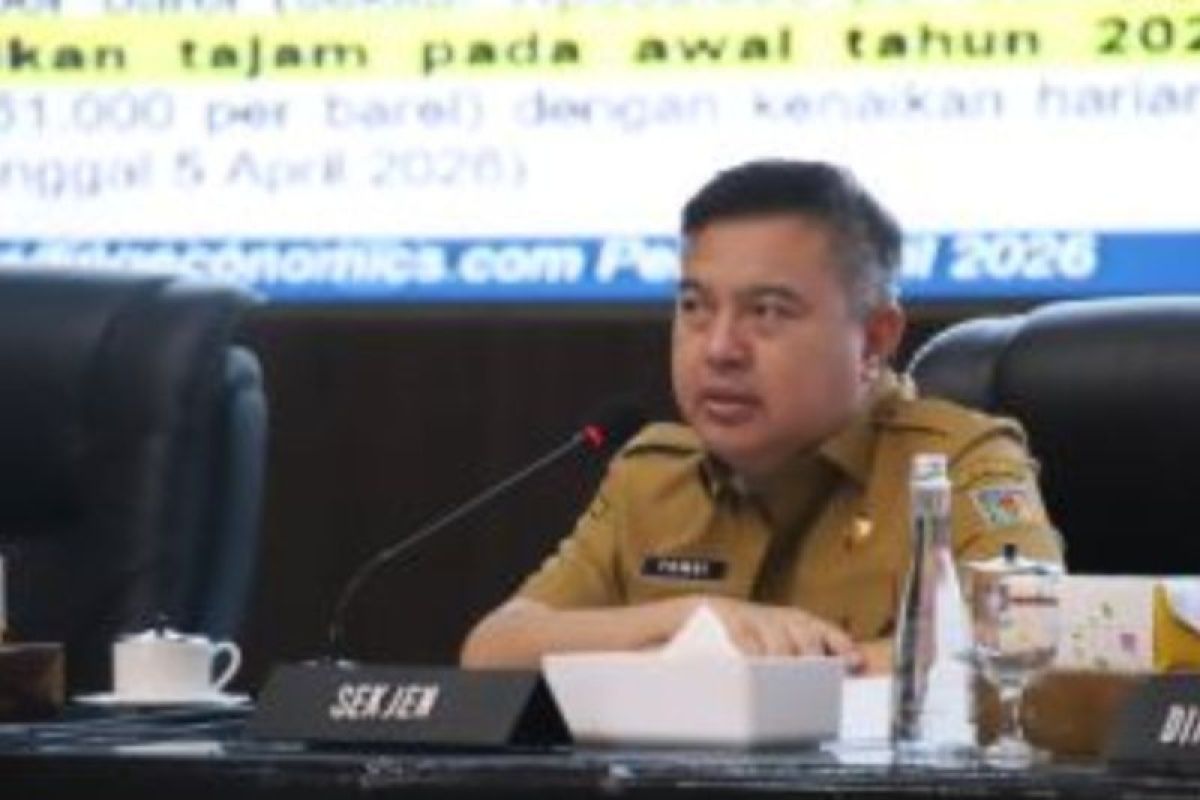
Jakarta (ANTARA) - The Secretary General of the Ministry of Home Affairs, Tomsi Tohir, has reminded civil servants (ASN) not to remain stuck in routine work patterns amidst the expanding use of artificial intelligence (AI) by the public.
Tomsi stated in Jakarta on Monday that the development of generative AI has transformed methods of analysis, administration, and service delivery, requiring officials to be capable of adapting to these changes.
“If we continue to work routinely while the public out there is using AI, a gap will emerge where speed and comprehensiveness affect how we make decisions. Consequently, public perception of us as civil servants will inevitably change,” he said.
These remarks were made during a briefing for the Administrator Leadership Training (PKA) and Supervisor Leadership Training (PKps) Wave V for Non-Tax State Revenue (PNBP) for the 2026 Fiscal Year, held online on Monday.
According to him, routine tasks are increasingly being automated alongside technological advancements, while the need for rapid decision-making continues to rise. Simultaneously, public expectations regarding government services are reaching new heights.
“As the public becomes smarter, civil servants are naturally required to become smarter as well. Furthermore, 81.72 per cent of the population is already using digital services that are increasingly open, easy, and transparent,” he noted.
Based on data from the National Civil Service Agency (BKN) as of 1 September 2026, the number of civil servants in Indonesia is recorded at approximately 6.7 million people. This figure has increased following new recruitments and the restructuring of non-ASN personnel.
By comparison, on 1 January 2026, the number of civil servants was recorded at 6,546,083, consisting of 3,557,697 permanent civil servants (PNS), 2,040,965 government employees with work agreements (PPPK), and 947,421 part-time PPPK.
Tomsi stated that the changes facing officials relate not only to technology and AI but also to economic and geopolitical volatility, shifting skill requirements, and the rapid flow of information that impacts public trust.
To navigate these conditions, he encouraged PKA and PKP participants to shift their work and leadership patterns from sectoral and partial thinking to a strategic, systemic, comprehensive, and cross-sectoral approach.
According to Tomsi, this transformation must be supported by collaborative leadership and the ability to build networks, as various issues cannot be resolved by a single unit or agency alone.
“Adaptation and collaboration are mandatory values, not optional styles. Therefore, when change occurs, adjusting is an obligation,” he said.
Regarding public services, Tomsi identified seven primary expectations the public has for civil servants, including fast, easy, and uncomplicated services, as well as a friendly and respectful attitude towards the community.
Furthermore, civil servants are required to act with integrity and be free from illegal levies, remain professional and competent, be responsive to public issues, act fairly and non-discriminatorily, and produce beneficial policies and programmes.
“This is part of the integrity and bureaucratic performance that serves as a national priority,” he added.
Tomsi requested that training participants bring this spirit of change to their respective agencies and not merely perform administrative duties.
“Continue to implement change within the administration of government so that it becomes more effective, better, more beneficial, and achieves its goals faster, producing civil servants who think critically and understand the significance of change,” concluded Tomsi.
Source: jawawa.id (https://jawawa.id/newsitem/as-the-public-adopts-ai-ministry-of-home-affairs-warns-civil-servants-against-routine-based-work-1790611234)
Originally published by Antara (Indonesian) (https://www.antaranews.com/berita/5762303/masyarakat-pakai-ai-kemendagri-ingatkan-asn-jangan-bekerja-rutin), translated from Indonesian