
As the Iran conflict intensifies, Germany edges closer to Gulf states
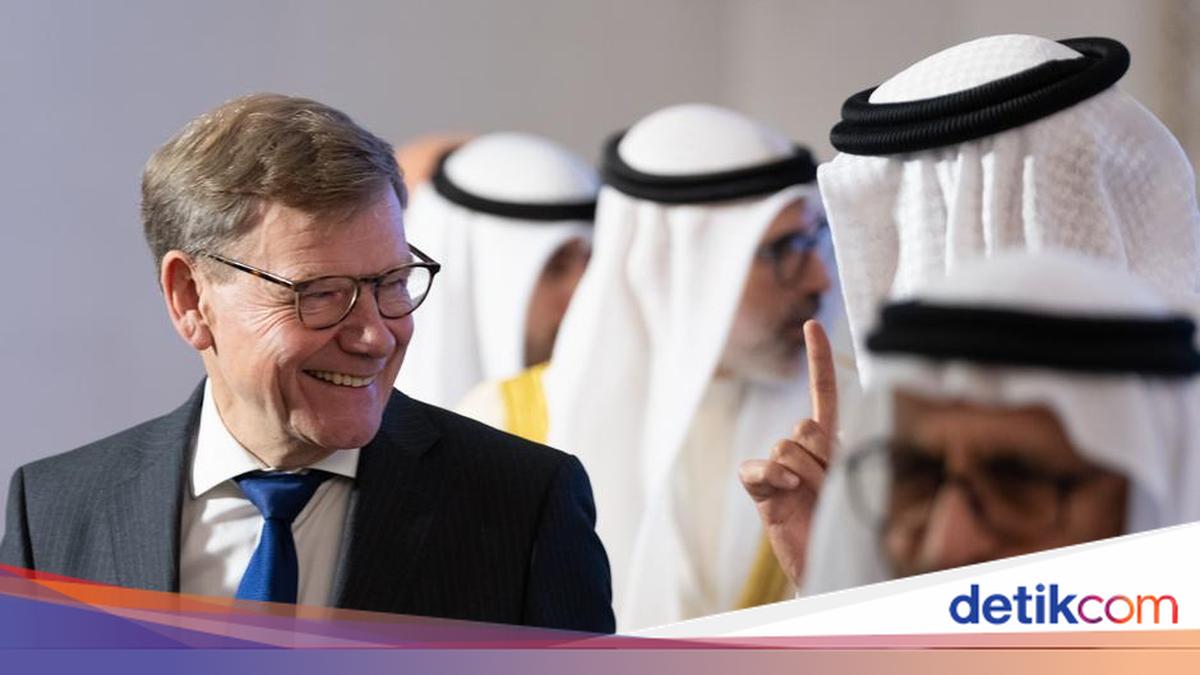
German Foreign Minister Johann Wadephul appears to be deliberately presenting a contrasting direction in Berlin’s diplomacy. In the past week, the foreign minister has been actively driving the lobbying machine, described by the Foreign Ministry as a ‘dense’ and ‘exceptional’ week.
On Monday (18 May), the Christian Democratic Union (CDU) politician received visits from Turkish Foreign Minister Hakan Fidan. Subsequently, Wadephul attended a Ukraine energy-security conference at his office with representatives from the German Ministry for Economic Affairs. In more than four years of war against Russia, Ukraine is seen as having learned how to protect its energy infrastructure from external attacks—an experience now regarded as relevant for Germany.
Wadephul then hosted UAE Foreign Minister Sheikh Abdullah bin Zayed, and Jordan’s Crown Prince Hussein bin Abdullah. These visits were viewed as the week’s most significant diplomatic agenda.
Merz ‘disappointed’
German Chancellor Friedrich Merz had earlier signalled a shift in Berlin’s diplomacy. At the end of April, almost two months after the outbreak of fighting between the United States, Israel and Iran, Merz said he was ‘disappointed’ with the approaches of Washington and Tel Aviv.
After an internal party meeting in Berlin, Merz said that the initial hopes of US President Donald Trump and Israeli Prime Minister Benjamin Netanyahu for a swift solution had not materialised.
‘Therefore, we, as part of Europe, want to continue pushing for a diplomatic solution. We will continue to coordinate closely with the United States, but we also have our own European ideas about how this conflict should be resolved,’ Merz said.
The statement underlines that Germany is now betting on diplomacy. The main focus is directed at the Gulf states which have long been targets of threats and attacks. Those states are increasingly uneasy in the face of the protracted conflict and Russia’s support for Iran.
Germany seeks to be a preferred partner
DW’s Berlin bureau chief Max Hofmann regards Wadephul’s approach as centring on one key factor: trust. ‘Not all Gulf states can be treated alike, but the core issue is reliability,’ he said.
According to Hofmann, the United States is now seen as failing to perform its traditional role as regional protector. The war and its fallout are thought to threaten both the security and the economic model of the Gulf states.
‘Their strategy of mediating between Iran and the West has failed. In such a situation, Germany again appears attractive for sticking to a rules-based international order,’ he said.
A similar view was expressed by Philipp Dienstbier, head of the regional programme at the Konrad-Adenauer-Stiftung in Amman, Jordan. He said Germany’s approach to the Gulf states is not surprising. ‘Even before the Iran war broke out, Chancellor Merz and Economy Minister Katherina Reiche had already visited the Gulf region to show interest in long-term strategic cooperation,’ Dienstbier told DW. ‘This shows that the Gulf region is already high on Berlin’s agenda.’
From Brunei to the Strait of Hormuz
The strategy was also evident in Wadephul’s meeting with Brunei’s Sultan Haji Hassanal Bolkiah this week. Brunei currently holds the ASEAN chair, the Southeast Asian bloc heavily affected by Iran’s closure of the Strait of Hormuz.
The reopening of that strategic shipping lane is a major concern for Germany. ‘Sooner or later the strait will be reopened. The Gulf states are also developing alternative transport routes,’ Hofmann said. ‘In the long term, the region could play an important role as a supplier of green hydrogen for Germany.’
Although supporting Berlin’s diplomatic approach, Dienstbier says political backing for the Gulf states should be followed up with concrete steps. ‘Germany must offer closer cooperation in air defence and drone countermeasures,’ he said.
Diplomacy for a UN Security Council seat
Wadephul’s active role as a host of diplomacy is also linked to Germany’s ambition to win a non-permanent seat on the United Nations Security Council. The UN General Assembly will vote on June 3. For the European group, Germany is competing with Austria and Portugal. The outcome remains hard to predict.
In this context, every meeting with a UN member state’s representative is seen as an important diplomatic asset for Berlin.