
As the host of APEC 2026, China will turn plans into action
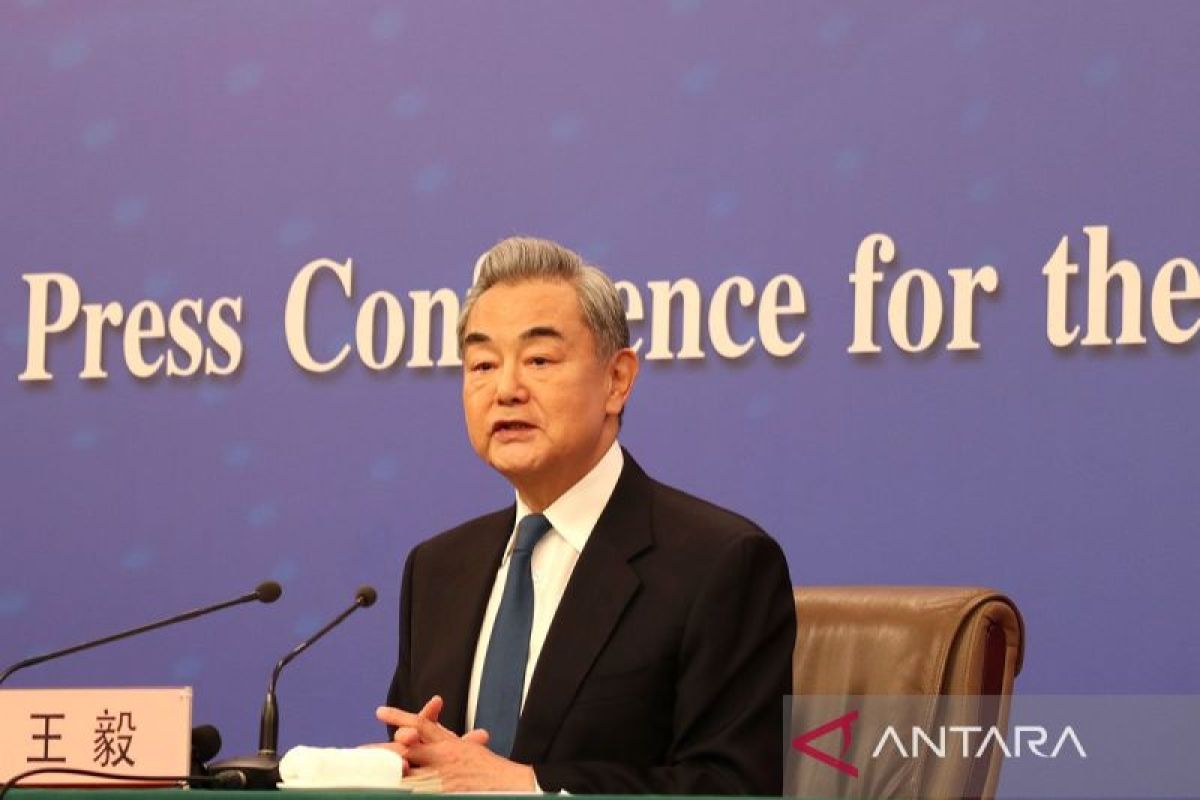
Beijing — Chinese Foreign Minister Wang Yi said that as the host of the Asia-Pacific Economic Cooperation (APEC) 2026, China wants to truly realise the organisation’s plans into real action. ‘As a good host, all of China's work throughout the year will focus on one thing: turning the development of an Asia-Pacific community from a plan into action, from blueprints into reality,’ said Foreign Minister Wang Yi at a press conference on ‘China's diplomacy and foreign policy’ in Beijing on Sunday. China will host APEC 2026 under the broad theme ‘Building an Asia-Pacific Community for Shared Prosperity’. The summit is planned for November 2026 in Shenzhen, Guangdong Province. ‘The concept of the Asia-Pacific community has been proposed for decades, but this concept must not stop on paper and must not be limited to a visionary level. We hope to find the answers in Shenzhen, to rally consensus among all parties,’ said Wang Yi. The APEC 2026 summit is expected to clarify priority areas and articulate viable steps so that the development of the Asia-Pacific community becomes a shared consensus and a lived practice for people in the region. ‘APEC Shenzhen will focus on three main priority areas—openness, innovation, and cooperation—to once again clarify the direction of Asia-Pacific cooperation at a crossroads and to rally strength once more,’ said Wang Yi. Wang Yi said China will build the main pillars for developing the Asia-Pacific community, coordinate various routes toward the Asia-Pacific Free Trade Area (FTAAP) and plan arrangements for regional connectivity. ‘In addition, we are actively promoting three major transformations: digitalisation, artificial intelligence, and the environment. Throughout this year we will organise more than 300 activities in many cities and provinces, and all APEC members will have the opportunity to contribute,’ added Wang Yi. China has hosted three times: in 2021 in Shanghai, 2014 in Beijing, and in 2026 in Shenzhen. ‘Over the past 25 years, APEC has traversed a journey of challenges and ups and downs in regional cooperation, while also witnessing that the original intent of China and the Asia-Pacific to walk together has never wavered,’ said Wang Yi. Shenzhen, Wang Yi said, is an important window into China's reform and opening-up, a bright showcase for China's distinctive socialism and a vanguard of innovation in the Guangdong–Hong Kong–Macao Greater Bay Area. ‘We are prepared, with all parties, to push APEC to again set sail from Shenzhen towards the goal of an Asia-Pacific Community,’ added Wang Yi. APEC is a forum for cooperation among 21 economies around the Pacific Rim, established in 1989. APEC members are Australia, Brunei Darussalam, Canada, Chile, China, Hong Kong-China, Indonesia, Japan, Korea (South Korea), Malaysia, Mexico, New Zealand, the Philippines, Peru, Papua New Guinea, Russia, Singapore, Taiwan, Thailand, the United States, and Vietnam. Cooperation within APEC is non-political in nature, marked by the membership of Hong Kong and Taiwan. APEC members are referred to as ‘economies’ because each member interacts with one another as an economic entity, and not as a country. The main objective of APEC is laid out in the long-term vision document APEC Putrajaya Vision 2040, agreed in 2020. This vision supersedes the Bogor Goals, which had been APEC’s long-term vision since 1994.