
As Lombok Volcano Erupts, Eruption Material Spreads to Bali and Java
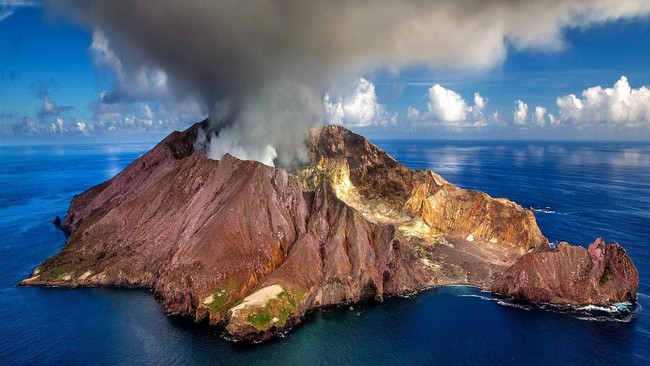
The connection between environmental changes caused by the Samalas eruption and archaeological remains in Bali has become a primary focus of archaeological research at BR_IN. The eruption of Mount Samalas in Lombok in 1257 AD did not only leave material traces spread as far as Bali, but also opened new perspectives in understanding environmental changes and the dynamics of life in ancient Balinese society.
Archaeological and geological evidence shows that volcanic disasters can be one of the factors that helped shape the journey of societies and governance in the past. “The relationship between natural phenomena and archaeological remains is an important aspect that needs to be continuously studied,” said the Head of the Research Organisation for Archaeology, Language, and Literature (Arbastra) at BRIN, Heri Jogaswara, during a webinar on the impact of the Samalas eruption.
According to Heri, research into the impact of disasters on past societies has the potential to reveal new findings and understandings regarding the history of the Nusantara archipelago. However, re-reading the history of past societies through traces of environmental change requires a multidisciplinary approach, specifically combining archaeology and geology. Therefore, collaboration between BRIN, the Indonesian Archaeological Association (IAI), universities, and various related parties must be strengthened to develop research while preserving Indonesia’s cultural heritage.
Re-reading the History of Ancient Bali
I Gusti Made Suarbhawa, a researcher at the Centre for Prehistoric and Historical Archaeology Research (PR APS) at BRIN, stated that Samalas eruption material in the form of tephra was found in soil layers at several archaeological sites in Bali. These findings serve as important indicators for reading the changes that occurred in ancient Balinese society. Previously, changes or gaps in governance during certain periods were largely linked to political dynamics and Bali’s relationship with kingdoms in East Java. Geological and archaeological evidence now opens the possibility of viewing environmental factors as part of the sequence of causes that influenced these changes.
One significant finding is located at Pura Gelang Agung, Pelaga, North Badung. Archaeological and geological research in 2018 identified a tephra layer consisting of sand and pumice at a depth of approximately 100-130 centimetres. This layer of volcanic material was found associated with structures and artefacts estimated to date from the 11th-12th centuries. Damage to several structures and archaeological findings at the site is believed to be related to the impact of the massive Samalas eruption.
“The traces of Samalas eruption material are not only found in Lombok. The eruption material also spread to Bali, Sumbawa, and Java,” said Suarbhawa. According to Suarbhawa, geological data shows that eruption deposits cover parts of Bali with varying thicknesses. This information is crucial for merging geological evidence with archaeological data so that researchers can trace the relationship between environmental changes and the lives of past societies.
With this approach, the history of ancient Bali is not only read through changes in power and political relations. Environmental factors, including natural disasters, must also be placed as part of the context that shaped societal life and the development of civilisation.
Impact Beyond the Eruption Zone
The Chairman of the Indonesian Archaeological Association (IAAI), Marsis Sutradara, stated that various traces of volcanic eruptions in Indonesia show that natural disasters can have widespread impacts on human life. The influence can even relate to the sustainability of settlements, kingdoms, and entire civilisations. He noted that the Samalas eruption is a significant event for observing how natural phenomena can affect human life across different regions.
In line with this, the Chairman of the Indonesian Geological Association (IAGI) Bali, Ida Bagus Oka Agastya, stated that the scale of the Samalas eruption demonstrates that the impact of an eruption cannot be understood solely by the damage around the volcano. “Volcanic ash can cover vegetation, disrupt agricultural production, affect soil hydrological systems, and cause health issues, particularly to the respiratory system. Disruptions to food sources and the environment can also lead to population displacement and changes in societal life patterns,” explained Oka.
According to Oka, the Samalas experience shows that volcanic disasters cannot be understood from a purely geological perspective. The impact can ripple through various aspects of life, ranging from the environment, food, and health to the economy and social structures. Therefore, multidisciplinary studies regarding the responses of past societies to disasters are relevant to modern mitigation efforts. Evacuation patterns, adaptability, and the recovery processes reflected in archaeological remains and historical sources can serve as knowledge to understand the resilience of communities in facing disasters.