
As Indonesia tightens spending, Prabowo's travel-heavy diplomacy comes under scrutiny
analysis Asia
As Indonesia tightens spending, Prabowo’s travel-heavy diplomacy comes under scrutiny
Critics question whether Indonesia President Prabowo Subianto’s overseas trips are producing measurable economic and political returns at a time when the administration is championing spending cuts and budget efficiency at home.
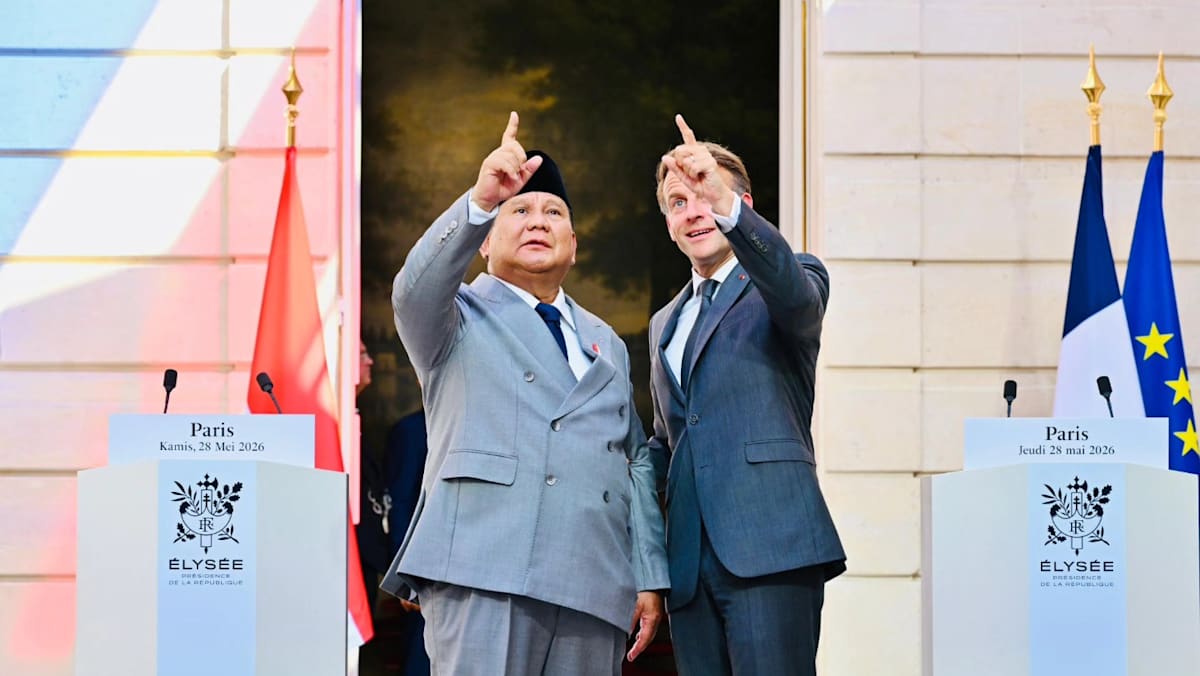
SINGAPORE/JAKARTA: Indonesian President Prabowo Subianto’s latest and fourth trip to France in late May has reignited public scrutiny over his travels, particularly over repeated visits to the same country within less than two years since taking office.
For instance, Malaysia has been his most frequently visited destination with five trips, followed by France and the United Arab Emirates (UAE) with four each. The United States, Britain, Egypt and Russia have each hosted him three times.
Debate has also resurfaced over one of the defining features of his presidency so far: an intensive overseas diplomacy campaign at a time when his administration is championing budget efficiency at home.
The Presidential Secretariat quoted by local media reports said Prabowo and his delegation stayed at the Four Seasons Hotel George V, a luxury hotel near the Eiffel Tower.
Indonesian media outlet Tempo reported that the palace booked 27 rooms for three nights, including a presidential suite and a grand premier suite, at an estimated cost of EUR281,640 (US$327,000).
For Bhima Yudhistira, executive director of the Center of Economic and Law Studies (CELIOS), the figures underscored a broader concern about the value of the president’s overseas engagements.
“Prabowo’s trip was unnecessary. It’s far too extravagant. Just look at the hotel bill alone, 5.7 billion rupiah (US$316,000) for the delegation, while the results remain questionable,” he said in an interview with CNA.
Former Indonesian ambassador to the United States, Dino Patti Djalal, is among those who have openly questioned Prabowo’s jetsetting diplomacy.
According to Dino, Prabowo has spent roughly one out of every six days abroad since taking office. The issue, he argued, is not simply the frequency of travel but whether Indonesia is relying too heavily on a diplomacy model centred on face-to-face engagement.
The criticism by Dino drew a swift response from Cabinet Secretary Teddy Indra Wijaya, who argued that direct diplomacy remains essential in an increasingly uncertain world.
“We need to cultivate good relationships,” Teddy said in an Instagram video posted by the Cabinet Secretariat.
Building trust between leaders before a crisis emerges is not a luxury, he argued, but a strategic necessity, adding that relationships developed today may prove crucial when countries need support, cooperation or assistance in the future.
At issue is whether Prabowo’s travel-heavy diplomacy represents a strategic investment in Indonesia’s future or an expensive foreign policy approach, with benefits that are difficult to measure, say experts.
Some analysts argue the trips should be viewed as a long-term diplomatic investment rather than judged solely on their immediate costs.
WHY IS PRABOWO TRAVELLING SO MUCH?
The travel scrutiny comes as Prabowo pursues an ambitious efficiency drive at home.
The president has said government spending cuts have generated savings exceeding 300 trillion rupiah, which are being redirected towards flagship programmes such as free nutritious meals, school renovations and infrastructure projects. He has repeatedly criticised what he considers wasteful spending by state institutions.
“Reduce seminars, especially official trips. Comparative studies? What else is left to study?” Prabowo said during a November 2024 political event.
Yet his own international schedule has remained busy.
Less than a month after taking office, Prabowo embarked on a 16-day diplomatic tour covering China, the United States, Peru, Brazil, Britain and the UAE.
Since then, he has attended a steady stream of international summits, bilateral meetings and state events spanning Southeast Asia, Europe, the Middle East, North America and Latin America.
Publicly available travel records show that Prabowo has undertaken 54 overseas trips covering 29 countries since taking office.
In comparison, his predecessor Joko “Jokowi” Widodo made 16 state visits while former president Susilo Bambang Yudhoyono made 10 overseas trips in their first full years in office.
Former ambassador Dino believes virtual diplomacy should play a larger role, particularly for meetings that do not require direct presidential participation.
Indonesia could also make greater use of bilateral engagements on the sidelines of major international gatherings and allow the foreign ministry to handle more tactical diplomatic missions, he said.
“With a video call that costs virtually nothing, the state could save hundreds of billions of rupiah in overseas travel expenses while achieving broadly similar substantive outcomes,” Dino added.
He also called for greater transparency around presidential travel, arguing that some overseas visits have been undertaken without sufficient public explanation.
“There needs to be greater accountability and transparency because the public often does not know where the president is overseas,” he said.
The government has disputed much of that criticism.
Cabinet Secretary Teddy said the size of presidential delegations has been significantly reduced compared with previous administrations. While overseas trips in the past could involve more than 120 people, Prabowo’s delegations now typically consist of around 50 to 60 members.
“The size of President Prabowo’s delegation has been cut by more than half compared with previous administrations,” he emphasised.
He also rejected suggestions that the president’s foreign engagements were largely ceremonial.
“It is completely wrong to say these trips are simply about appearances,” said Teddy.
“We cannot wait until a crisis emerges before asking for help. We need to build strong relationships first.
“If an emergency a