
As Indonesia, Malaysia mull tougher visa rules to counter foreign criminals and scammers, what are potential drawbacks?
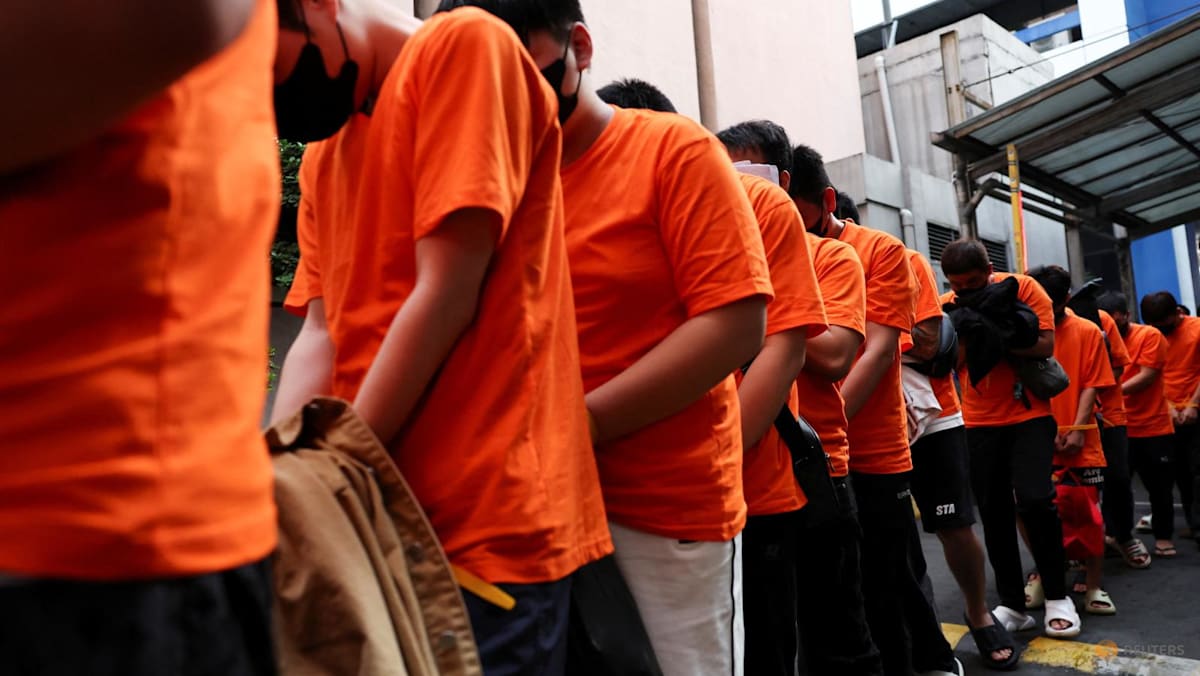
As Indonesia, Malaysia mull tougher visa rules to counter foreign criminals and scammers, what are potential drawbacks?
Indonesia and Malaysia are considering tighter visa and immigration rules to combat criminal networks and scam syndicates that make use of foreigners, but experts caution that there are diplomatic and economic costs to consider.
JAKARTA: Memories of a traumatic past came rushing back when Ahmad received a message from a friend about a police raid on an online gambling hub in Jakarta on May 7.
The images were hauntingly familiar: hundreds of workers from different nationalities crammed inside a run-down building where they ate, slept and worked under constant surveillance, rarely allowed outside.
To Ahmad, it looked painfully similar to the scam and gambling compound in Laos where he was held for six months in 2024, forced to cheat victims online while living under the constant threat of beatings, electrocution and other violence from a ruthless criminal syndicate.
He managed to return to Indonesia only in late 2024 after paying his captors about US$20,000 for his release.
“For a long time, I thought those criminals only operated in faraway countries,” Ahmad, not his real name, told CNA.
What unsettled the 28-year-old most was where the May 7 raid had taken place: a 20-storey white-and-blue building standing on one of Jakarta’s busiest streets.
“I passed that building every day. It’s barely 2km from where I work, where I’m trying to rebuild my life after escaping Laos,” he said, his voice trembling.
Analysts say the Jakarta raid was not an isolated incident, but part of what appears to be a broader shift in Southeast Asia’s sprawling cyber scam industry.
For years, many of the region’s largest scam and online gambling hubs operated out of loosely governed special economic zones in the border areas of Cambodia, Myanmar and Laos, where criminal syndicates were able to build billion-dollar operations.
But as governments in those countries come under mounting international pressure to crack down on these illegal operations, experts believe some syndicates are beginning to relocate - or expand - into other Southeast Asian countries such as Indonesia and Malaysia.
“The possibility of Indonesia or Malaysia becoming hotbeds for human trafficking into scam centres is very real,” Matt Friedman, chief executive officer of anti-human trafficking organisation The Mekong Club, told CNA.
The concern is increasingly shared by officials in Indonesia and Malaysia, where hundreds of foreigners and locals suspected of being involved in scam and online gambling operations have been arrested since early May.
Authorities in both countries believe criminal syndicates have been exploiting lax immigration controls and visa-free travel arrangements among members of the Association of Southeast Asian Nations (ASEAN), and are proposing tighter visa and immigration rules.
“Cases of foreigners involved in illegal activities, including those coming from countries granted visa-free entry facilities, give rise to (a need for) evaluation of policies,” Hendarsam Marantoko, director general of the Indonesian Immigration Office told AFP on May 13.
Currently, travellers from all ASEAN countries can stay visa-free in Indonesia for up to 30 days. Chinese and Japanese nationals, meanwhile, must obtain visas on arrival that are valid for 30 days and can be extended once for another 30 days.
Meanwhile, Malaysia’s police chief Mohd Khalid Ismail said at a press conference on May 15 that Malaysia’s visa policy “makes it easier for foreign criminals to operate in the country”.
In Malaysia, travellers from all ASEAN countries can stay visa-free for up to 30 days with the exception of Myanmar (14 days).
Meanwhile, Japanese nationals can enter visa-free for up to 90 days while Chinese citizens are allowed visa-free entry for up to 30 days per visit, with a maximum cumulative stay of 90 days within a 180-day period.
Thailand, which has also seen a rise in the number of crimes involving foreign nationals in recent years, on May 19 announced that it will reduce visa-free stays for travellers from more than 90 countries including Europe’s 29-nation Schengen area, the United States and several South American countries.
Foreign Minister Sihasak Phuangketkeow had said that the plan to reduce visa-free stays was part of a crackdown on transnational crime.
The new visa-free duration would be decided on a country-by-country basis, Thai authorities said, with most foreign nationals granted stays of up to 30 days, while some could receive only 15 days.
But experts warn that tightening visa rules, particularly ASEAN’s long observed visa-free arrangements, could trigger diplomatic and economic backlash.
“Whether or not tightening immigration policies will be effective in preventing such crimes is questionable. These syndicates are highly resourceful and can adapt quickly,” Trubus Rahadiansyah, a public policy expert from Jakarta’s Trisakti University, told CNA.
A DETERRENT OR JUST A TEMPORARY SETBACK?
Officials and experts say scam syndicates often rely on foreign recruits who were brought into a country through fake job advertisements promising lucrative positions in customer service, marketing or technology.
Once inside the compounds, many victims find themselves trapped - their passports confiscated and movements restricted - before being coerced into carrying out online scams targeting victims around the world.
“These organisations prefer foreign recruits due to their vulnerability, lack of local ties, and lower likelihood of reporting crimes, which facilitates exploitative practices and minimises risks to the syndicates,” Friedman said.
This explains why relatively few locals have been arrested in many recent raids.
On May 6, Indonesian authorities arrested around 200 foreigners - most of them Chinese nationals - at an apartment complex in Batam allegedly being used for cross-border online scam operations.
Two days later, police