
As Global Crisis Worsens, China Suddenly Becomes a Saviour
The global memory chip shortage crisis has impacted consumer electronics businesses, including smartphones, laptops, and gaming consoles. This phenomenon highlights the United States’ dependence on Chinese supply chains. Even the US tech giant, Apple, is reported to be lobbying the Donald Trump administration to be permitted to purchase memory chips from China’s CXMT (ChangXin Memory Technologies).
CXMT is a Chinese semiconductor company that has been blacklisted by the Pentagon due to alleged links to the Chinese People’s Liberation Army (PLA). Quoting a Financial Times report, sources familiar with the matter stated that Apple is lobbying for White House approval. This step is being taken to reduce financial pressure resulting from the surging prices of memory chips in the global market.
One source mentioned that Apple approached the US Department of Commerce more than a single month ago. Additionally, the tech giant has been lobbying several other government officials and political allies in Washington. Currently, Apple is not actually prohibited from purchasing chips from CXMT or YMTC, another Chinese memory chip manufacturer.
However, the Pentagon has included both companies on the Chinese Military Company list, also known as the 1260H list, which contains dozens of Chinese firms suspected of having ties to the PLA and deemed a potential threat to US national security.
Apple’s pressure comes after the company recently raised prices for MacBooks and iPads. This decision wiped approximately US$263 billion from Apple’s market capitalisation in a single day, marking the second-largest daily market value decline in the company’s history. Apple cited the unsustainable rise in memory chip prices as the primary reason for increasing consumer product prices, following similar policies previously adopted by several other consumer electronics companies.
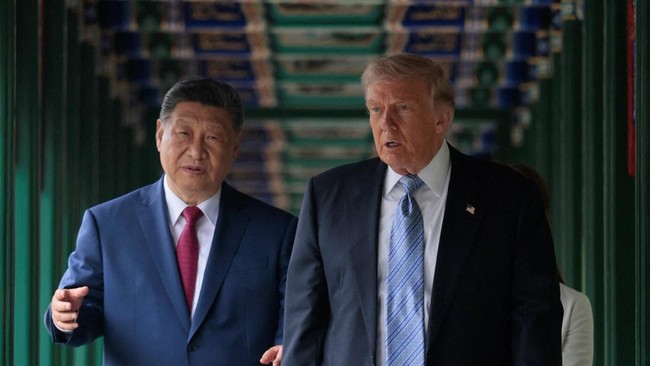
If Apple succeeds in making CXMT a memory chip supplier, it is believed the company could reduce the cost pressures currently imposed by component suppliers. This lobbying campaign follows the meeting between President Donald Trump and Chinese President Xi Jinping in Beijing last month. Prior to that meeting, and during the period before their second meeting in South Korea last October, the US government was known to have withheld the implementation of new technology export restrictions that could impact Chinese companies.
Although the Pentagon’s 1260H list poses a reputational risk to the listed companies, in many cases, the list does not carry direct legal consequences. The US Department of Commerce had actually included CXMT in a package of Chinese companies planned for the Entity List trade restrictions last year. However, the US government requested that the process be delayed as the Trump administration was engaged in intense negotiations with Beijing to ease the trade war.
Nevertheless, most sources suggest it remains unclear whether Apple will receive assurances from the Trump administration, including certainty that CXMT will not be added to the Entity List in the future. For context, Trump approved the sale of Nvidia’s advanced H200 AI chips to China last year, a decision said to have faced opposition from many of his administration officials.
Last February, the Pentagon briefly updated the 1260H list before withdrawing it less than an hour later. Several sources stated the list was withdrawn because the White House was angered upon discovering that CXMT and YMTC had been temporarily removed. When the Pentagon re-published the list this month, both Chinese memory chip companies were re-included.
Apple’s move is also expected to trigger fierce opposition from the US Congress if the Trump administration grants approval. “Apple choosing to partner with a Chinese military company would be a massive mistake,” said John Moolenaar, the Republican Chairman of the US House China Committee. “Helping the Chinese Communist Party succeed in dominating critical supply chains will make our nation’s tech industry and economy increasingly dependent on China, at a time when we should instead be building secure technology supply chains with our allies.”
Apple previously faced criticism in 2022 when considering the use of YMTC memory chips for iPhones sold in China. At that time, Marco Rubio, then a senior Republican member of the US Senate Intelligence Committee, told the Financial Times that Apple was playing with fire.