
As Electric Boats Enter Villages, Fishermen Can Sail More Cost-Effectively
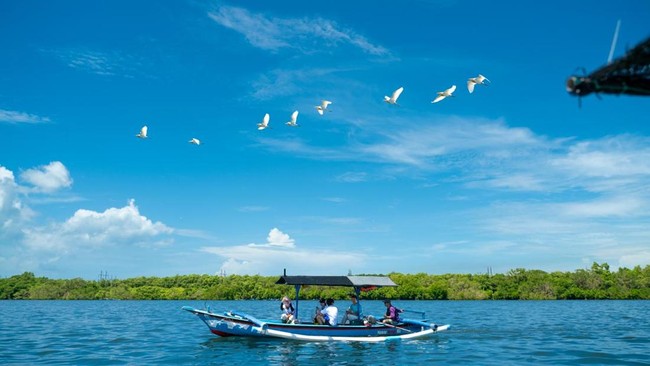
The sea may appear as a beautiful blue expanse from afar. However, for the community of Kelan Village, Bali, the sea is more than just a view. It is where they earn their livelihoods, raise their families, and build their futures. Therefore, protecting the sea means protecting their own source of life.
This awareness has driven the coastal community of Kelanc Village to find ways to ensure economic activities continue while preserving the environment that sustains them. One such method involves a new way of fishing, utilising cleaner energy while protecting the coastal ecosystem.
Through the Independent Energy Village (DEB) programme, ‘Keluarga Nelayan Lestari’ (KENALI), PT Pertamina International Shipping (PIS) is supporting the empowerment of coastal communities in Kelan Village through the use of clean energy that provides both economic and environmental benefits.
This support is realised through the construction of a multipurpose hall for the Tanjung Sari Joint Business Group (KUB), equipped with solar panels with a capacity of 8.72 kWp. This serves as a solar charging station to operate 10 batteries and five electric boat engines. This initiative helps fishermen increase operational efficiency while implementing more sustainable economic activities.
In addition to providing access to clean energy, the KENALI Programme also encourages changes in community behaviour regarding the preservation of the coastal environment. Together with the Kelan Village TPS3R, the community has successfully managed 183 kilograms of household waste that previously had the potential to pollute the sea. This step contributes to maintaining the cleanliness of the coastal area, which is the primary source of livelihood, while supporting the local ecosystem’s sustainability.
The impact of this programme has also created economic opportunities based on conservation through the development of mangrove ecotourism. The Kelan Village mangrove area, which serves as a habitat for various bird species, was previously difficult to utilise as a tourist destination because the noise from conventional boat engines had the potential to disturb the ecosystem.
Now, with electric boats operating more quietly, fishermen can take tourists through the mangrove area without disturbing wildlife habitats. In addition to introducing the richness of the coastal ecosystem to the wider public, this activity also provides additional income for fishermen of up to Rp350,000 per trip.
“In addition to earning extra income from ecotrips, our operational costs are also much more economical. Previously, fuel expenses could reach Rp600,000 per month; now, it is only around Rp200,000 as a reserve,” said I Wayan Wirtha, a member of KUB Tanjung Sari.
The empowerment carried out through the KENALI Programme does not stop with the fishermen. PIS also involves the wives and children of fishermen to strengthen the economic resilience of coastal families. The wives of fishermen receive financial literacy training and business mentoring to enable them to manage family income and develop value-added products from marine resources.
One of the beneficiaries, Ibu Luh, felt an increase in capacity in developing her processed fish business.
“Now I better understand how to create attractive packaging and strengthen product identity, so that the business I run has better market value,” she said.
Pjs. Corporate Secretary of PIS, Vega Pita, stated that business sustainability and environmental sustainability must grow together.
“PIS believes that the future of coastal communities and the health of the marine ecosystem are interconnected. Through access to cleaner energy and sustainable empowerment, we want to support the community in improving their welfare without sacrificing the environment that serves as their source of livelihood,” said Vega.
Through the KENALI Programme, PIS aims to demonstrate that sustainability is not only measured by business growth but also by the impact generated for society and the environment. For coastal communities, protecting the marine ecosystem means protecting the source of livelihood passed down from generation to generation.
Therefore, efforts to provide cleaner energy, strengthen the economy of fishing families, and encourage more responsible environmental management are important steps to ensure that the economic growth of coastal communities can proceed in tandem with the preservation of the marine environment as a shared source of life.
Source: jawawa.id (https://jawawa.id/newsitem/as-electric-boats-enter-villages-fishermen-can-sail-more-cost-effectively-1790175087)
Originally published by CNBC Indonesia (https://www.cnbcindonesia.com/news/20260923202501-4-770380/saat-kapal-listrik-masuk-desa-nelayan-bisa-melaut-dengan-lebih-hemat), translated from Indonesian