
As Dry Season Peaks, PJT II Maintains Water Supply for Agriculture
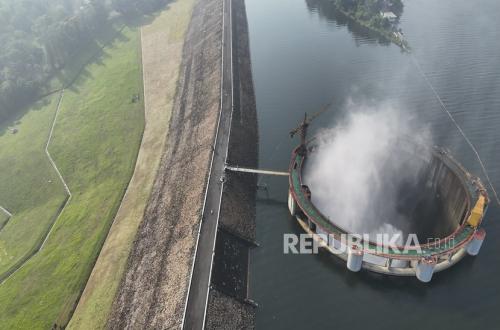
Entering the peak of the 2026 dry season, water availability in several regions is beginning to face pressure. This condition has prompted Perum Jasa Tirta II (PJT II), together with a number of related agencies, to regulate water distribution to maintain agricultural needs while also meeting public water demand.
One of the steps taken is adjusting irrigation water distribution to the availability of water in the field. PJT II is implementing a rotational delivery system in several irrigation service areas by considering planting patterns, water availability, and the needs of each region.
In the Jatigede and Rentang areas, for example, PJT II together with the Cimanuk Cisanggarung River Basin Agency (BBWS) is making adjustments to water management to maintain irrigation services amid limited supply.
PJT II President Director Imam Santoso said that water management during the dry season requires inter-agency cooperation. According to him, the limited water resources mean distribution must be carried out carefully so that the benefits of water can be felt optimally by the community.
“In dry conditions like today, we need to work together, share information, and take the most appropriate steps based on conditions in the field. PJT II is committed to ensuring that available water continues to provide the greatest possible benefit to the community, especially for agricultural needs and raw water,” said Imam.
PJT II Director of Operations and Maintenance Anton Mardiyono said that distribution arrangements are not solely related to the amount of water available, but also ensure that water reaches the users who need it.
“When water availability is limited, what we maintain is not only the amount of water, but how the water can reach the users who need it. Distribution arrangements are carried out dynamically by looking at actual conditions in the field, so that agricultural needs can still be served as optimally as possible,” said Anton.
In addition to regulating distribution, PJT II is handling a number of water resource infrastructure items that require attention. Repairs and reinforcement are being carried out at infrastructure points deemed potentially disruptive to the smooth distribution of water.
Handling the impact of the dry season is also being done to meet the community’s clean water needs. In Banten, for example, PJT II through its Social and Environmental Responsibility (TJSL) programme provided tanker truck assistance to BBWS Cidanau-Ciujung-Cidurian. PJT II is also cooperating with the Indonesian Red Cross (PMI) of Banten Province to help communities affected by drought.
Meanwhile, in Lampung, PJT II together with BBWS Mesuji-Sekampung and PT PLN Nusantara Power are monitoring a number of dams, including Batutegi, Way Sekampung, and Margatiga dams. This monitoring serves as one of the bases for determining water management measures in downstream areas.
Imam said the impact of the dry season differs from one region to another. Therefore, handling needs to be adjusted to the conditions and needs of each region.
“We realise that the impact of the dry season is not the same in every region. Therefore, the approach taken must also adjust to the needs of each area. Some require distribution arrangements for agriculture, some require clean water support, and some require more intensive monitoring. The most important thing is that all parties move together to find the best solution,” said Imam.
PJT II stated that water management during the dry season will continue to be carried out by considering water availability conditions and user needs. Inter-agency coordination is also an important part of maintaining irrigation services, raw water needs, and assisting communities facing the impact of drought.
Source: jawawa.id (https://jawawa.id/newsitem/as-dry-season-peaks-pjt-ii-maintains-water-supply-for-agriculture-1787849494)
Originally published by Republika (https://rejabar.republika.co.id/berita/tkfr1w349/kemarau-mencapai-puncak-pjt-ii-jaga-pasokan-air-untuk-pertanian), translated from Indonesian